Check Engine Light Flashing? What It Means and 5 Things to Do
Published Nov 18, 2026 · 7 min read · By Hassan, Owner of Roadmate Services
A solid check engine light is a note. A flashing one is a phone call. A check engine light flashing usually means a severe engine misfire: fuel is going through a cylinder unburned and into the exhaust, where it can overheat and damage the catalytic converter.
The answer is the same in all 5 steps below: slow down, get to a safe place, stop driving as soon as you can, and get the car to a mechanic. If it is shaking or losing power, that trip should be on a tow truck.
Quick answer: flashing check engine light at a glance
| Question | Answer | Source |
|---|---|---|
| What it usually means | A severe engine misfire: unburned fuel is going into the exhaust | Firestone, CarWhere |
| Why it is urgent | It can damage the catalytic converter, which is expensive to replace | CARB, NAPA |
| Can I keep driving? | As little as possible: only to a safe place to stop | CarWhere, NAPA |
| Light plus shaking | Stop when safe and have the car towed | SlashGear, CarWhere |
| Codes a shop will see | P0300 (random misfire), P0301 to P0308 (one cylinder) | CarWhere |
| Solid light instead | Not an emergency. Book a mechanic soon | NAPA, CARB |
| Rule of thumb | Flashing means stop soon. Shaking too means tow it. | |
From the California Air Resources Board OBD II fact sheet, NAPA Know How, Firestone Complete Auto Care and CarWhere, checked November 2026. General guidance. Your owner's manual comes first.
Dashboard lights come in a lot of shapes. This one is shaped like an engine and behaves like a smoke alarm.
What does a flashing check engine light mean?
Your engine burns fuel in each cylinder in turn. When one cylinder does not fire, that is a misfire. Firestone puts it plainly: a flashing light means the engine is misfiring and unburned fuel is going into the exhaust system.
That fuel reaches the catalytic converter, the part that cleans the exhaust. The California Air Resources Board says some faults make the light blink to show a problem that could be damaging the catalytic converter, and that replacing it can be expensive. Many carmakers ask you to get the car serviced as soon as possible when it blinks.
In short, a blinking light is the car protecting its most expensive exhaust part. It is the rare warning that is cheaper to obey than to ignore.
Solid vs flashing check engine light: 2 very different messages
Solid light: book a mechanic soon
A steady light means the car has stored a fault. It could be a loose gas cap, an oxygen sensor or a small leak in the evaporative system; Firestone lists eight common causes. If the car drives normally, you can usually get to a shop in the next few days. Do not wait months.
Flashing light: stop driving soon
NAPA says a flashing light likely points to something that cannot wait. Some cars also drop into "limp mode" and cut power to protect the engine. If yours suddenly feels weak on an on-ramp, that is not your imagination.
Check engine light flashing and the car shaking
Shaking, stumbling or jerking with a blinking light is the misfire you can feel. Treat it as the most urgent version. Stop as soon as it is safe and have the car towed rather than driving it to the shop.
The light flashes, then stops
A misfire can come and go, often under load on a hill or when you accelerate hard. SlashGear notes a flicker can also come from a wiring fault. The code is still stored, so have it read soon even if the light settles down.
5 things to do when the check engine light starts blinking
Get safe, then call. If you are on I-70, I-71 or I-270, do not stop in a lane. Signal, take the next exit if the car will make it, or pull as far onto the shoulder as you can. On the shoulder, hazards on and stay buckled in with the doors closed while you wait. If anyone is hurt or the car is stopped in traffic, call 911 first.
- Ease off the gas. No hard acceleration, no towing a trailer, no climbing at full throttle. CarWhere gives the same advice.
- Look at the other gauges. A red oil light or a temperature gauge in the red means turn the engine off as soon as you are stopped somewhere safe.
- Get to a safe place and stop. A parking lot or a side street is better than a highway shoulder.
- Check the easy things. Is the gas cap tight? Did the light start right after filling up with the wrong fuel? Note what happened just before it started blinking.
- Get the car to a mechanic. Drive there only if it is close and the car runs smoothly. If it shakes, loses power or the light keeps flashing, call for a tow.
A minute of notes helps the shop later: speed, weather, uphill or flat, and whether the car shook. Mechanics love a good witness statement.
Can you drive with a flashing check engine light?
Not for long. CarWhere's answer is to drive as little as possible, only far enough to reach a safe place to stop. NAPA says not to run the car longer than you have to and that you may need a tow. None of the sources we checked gives a safe number of miles, and we will not invent one.
The risk grows the longer you drive. Raw fuel keeps reaching a hot catalytic converter, and a misfiring car can lose power when you need it, such as merging onto the Outerbelt. If the shop is a few blocks away and the car runs smoothly, driving gently there is a judgement call. Across town at rush hour, it is not.
Turning up the radio does not fix a misfire. It just changes which noise you are ignoring.
6 common causes of a misfire (and a blinking light)
- Worn spark plugs. Old plugs cannot fire the fuel every time. Firestone lists bad spark plugs among the main check engine causes.
- A failing ignition coil or plug wire. One weak coil can take one cylinder out. A shop will often see a code for that cylinder (P0301 to P0308).
- A clogged or leaking fuel injector. Too little or too much fuel and the cylinder misfires.
- A vacuum leak. Extra air through a cracked hose upsets the mix, often worse at idle.
- Fuel trouble. Water in the fuel, the wrong fuel or a weak fuel pump. Our post on bad fuel pump symptoms covers the pump side.
- A mechanical engine problem. Low compression or a timing fault. These are shop jobs from start to finish.
After the repair, CarWhere suggests having the catalytic converter checked, because a long run of flashing can damage it and set a converter code (P0420 or P0430) later. Spark plugs are small, cheap and easy to forget, which is exactly how they end up running the show.
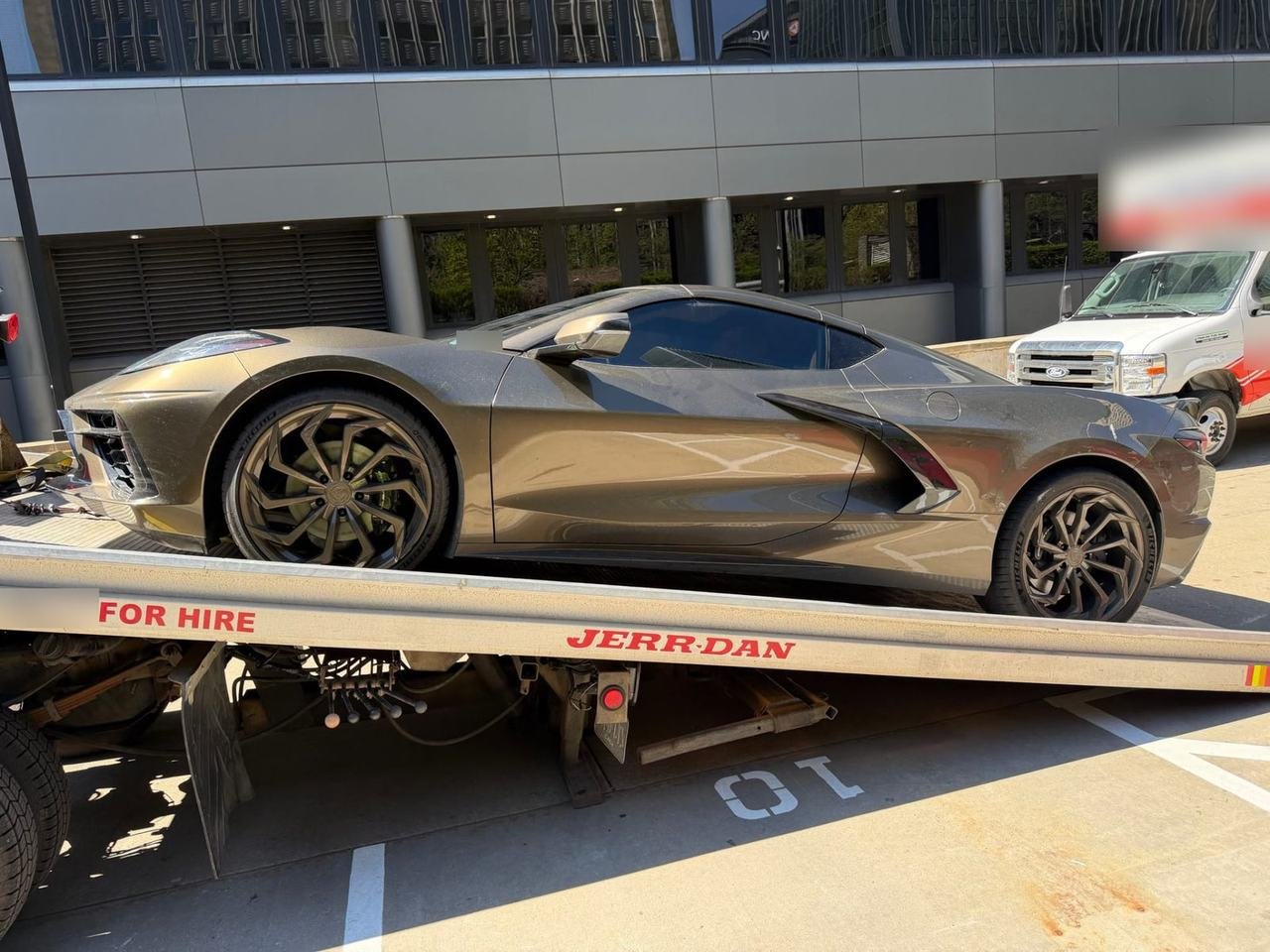
What we can and cannot do for a flashing check engine light in Columbus
We are honest about this one: Roadmate does not diagnose or repair engine misfires. Our technicians carry a scan tool, but a roadside visit cannot always pin down a fault like this, and the repair belongs in a shop. We will not send a technician to read a code and leave you where you started.
What we do, 6 AM to 8 PM daily:
- Tow the car to your mechanic with our own flatbed or a partner tow company. Our Columbus tow service is estimated at $125 to $275 for tows of about 1 to 15 miles; longer tows are quoted by phone.
- Help if the problem turns out to be something else, such as a dead battery, an empty tank or a flat tire.
One exception: if the car was filled with the wrong fuel at a gas station, or it is still leaking fuel, we do not tow it. Call a tow company or your mechanic, and call 911 or the fire department if fuel is leaking near anything hot.
When you do not need us: if the light is solid and the car drives normally, skip the tow and book a mechanic. If the light is flashing but your shop is around the corner and the car runs smoothly, many drivers make that short trip gently. Our guides on what to do if your car breaks down on the highway, an overheating engine and what a tow costs cover the next steps.
A good tow driver will not judge your car's noises. The engine has already said enough for both of you.
Frequently asked questions
Is it safe to drive with a flashing check engine light?
Only far enough to get somewhere safe. NAPA, CarWhere and the California Air Resources Board all treat a blinking light as urgent, because the misfire behind it can damage the catalytic converter. If the car is shaking or losing power, stop and have it towed.
Why is my check engine light flashing and my car shaking?
The shaking is the misfire you can feel: one or more cylinders are not firing, so the engine runs rough. Worn spark plugs and failing ignition coils are common causes. It is the clearest sign to stop driving and get the car to a shop.
What does it mean when the check engine light flashes and then stops?
Usually the misfire came and went, for example under load on a hill or when accelerating. SlashGear notes a light that flickers can also be a wiring fault. Either way the code is stored, so have it read soon and drive gently until then.
Can a loose gas cap make the check engine light flash?
A loose gas cap is a common cause of a solid check engine light, according to Firestone. It is not the usual cause of a flashing one. Tighten the cap anyway, but treat a blinking light as a misfire until a mechanic says otherwise.
Will a flashing check engine light reset itself?
The blinking can stop when the misfire stops, but the fault is still stored and the light often stays on solid. Clearing the code without fixing the cause only hides the warning. Have the code read and the misfire repaired.
Can low oil or a bad battery make the light flash?
Low oil has its own red warning light, and a charging problem has the battery light. A flashing check engine light is almost always about the engine misfiring. If you see a red oil or temperature light as well, stop the engine as soon as it is safe.
The bottom line
A flashing check engine light almost always means a severe misfire. Ease off, get somewhere safe, and stop driving as soon as you can, because the unburned fuel can damage the catalytic converter. If the car is shaking or losing power, have it towed to a mechanic. A solid light can wait for an appointment; a blinking one cannot.
Flashing light and a car that should not be driven?
Call (380) 288-2822, 6 AM to 8 PM daily, Eastern Time. We arrive in about 32 minutes on average, depending on traffic, weather and location, and the dispatcher confirms the price before anyone heads your way.
Here is to a steady dashboard, a smooth idle and a check engine light you forget exists.