Cold Cranking Amps Explained: What CCA Means and How Much You Need
Published Oct 23, 2026 · 6 min read · By Hassan, Owner of Roadmate Services
Think of CCA as your battery’s cold-morning push-up test. Cold cranking amps (CCA) are the amps a 12-volt battery can deliver at 0°F for 30 seconds while staying at or above 7.2 volts. The higher the number, the better the battery starts an engine in the cold. Match or beat the CCA your car calls for, and you are set.
Quick answer: cold cranking amps at a glance
| Question | Short answer |
|---|---|
| What CCA means | Amps a 12-volt battery delivers at 0°F for 30 seconds while staying at or above 7.2 volts |
| Where to find it | On the battery label; your owner's manual lists the minimum for your car |
| How much most cars need | About 250 to 600 CCA, depending on engine size (market figure, Relion) |
| More CCA than required | Fine. It costs more and the battery may be bigger |
| Less CCA than required | Slow or failed starts on cold mornings |
| CA vs CCA | Cranking amps (CA) are tested at 32°F, so the CA number is always higher |
| In one line | Match or beat the CCA in your owner's manual |
Sources: Battery University, BU-902a for the test; Relion for the 250 to 600 range. Market figures, not Roadmate measurements.
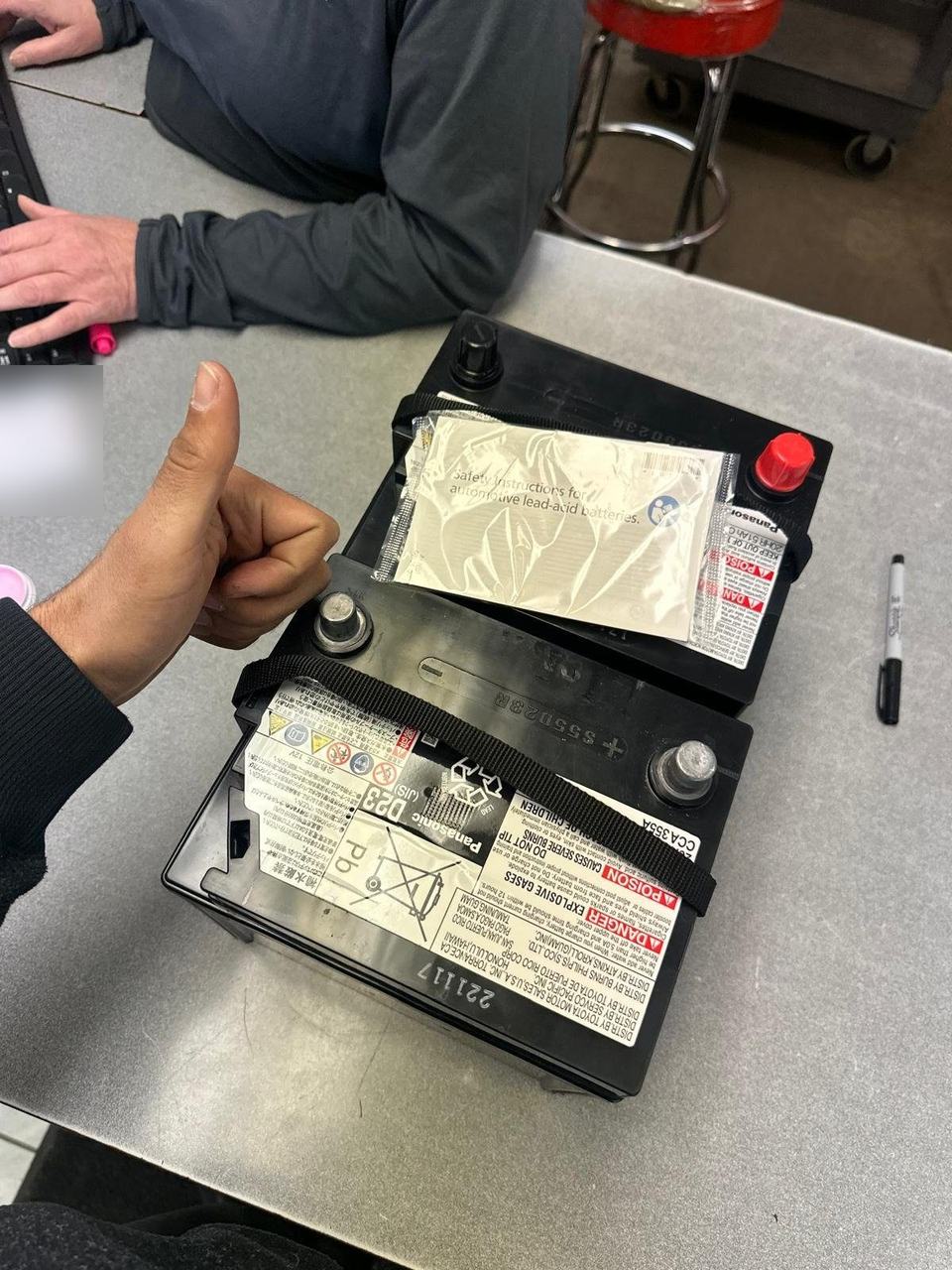
What does CCA mean on a battery?
Look at the battery label for a number followed by “CCA”, such as 600 CCA. That is its cold starting power. In the test, a fully charged battery is chilled to 0°F and made to deliver its rated amps for 30 seconds. If it stays at or above 7.2 volts, it passes (Battery University). Very few of us would pass a test that starts with “first, sit in a freezer for a day”.
Cold cranking amps vs cranking amps
Cranking amps (CA) use the same 30-second test at 32°F instead of 0°F. A battery has an easier time at 32°F, so CA is always the bigger number on the same battery. Compare CCA to CCA.
| Rating | Tested at | What it is for |
|---|---|---|
| CCA (cold cranking amps) | 0°F | The number to compare for cars and trucks |
| CA (cranking amps) | 32°F | Higher than CCA on the same battery |
| MCA (marine cranking amps) | 32°F | Mostly boat batteries |
| HCA (hot cranking amps) | 80°F | Rarely shown on car batteries |
Sources: Marshall Batteries for CCA and CA; Relion for MCA and HCA.
A big CA number on a shelf tag is a summer photo. CCA is the January one.
How many cold cranking amps do I need?
Use the number in your owner’s manual, or the CCA on the battery your car came with. That is the minimum. Most cars need about 250 to 600 CCA, depending on engine size, according to Relion, which also gives a rule of thumb of about one amp per cubic inch of engine displacement. The manual still wins.
Is 550 or 600 CCA enough for winter?
Yes, if it meets or beats your car’s figure. The rating is already measured at 0°F, so it covers a normal Ohio winter. What it does not cover is age: a battery rated 600 when new can deliver well under that after a few winters.
Can a battery have too many CCA?
No. The starter only draws what it needs, so extra CCA does no harm. The limits are price and size: the battery must still fit the tray. Buying far more CCA than you need is like wearing a parka in Phoenix: harmless, just pricey.
What happens if CCA is too low?
The engine turns over slowly or just clicks, usually on the first frosty morning after a season of starting fine. If that sounds like your morning, our guide to why a car won’t start in the cold walks through what to check, and the signs your car battery is dying covers the earlier warnings.
Why cold Ohio mornings expose a weak battery
Cold works against you twice. It slows the chemistry inside the battery, so it delivers less power. At the same time, thick cold oil makes the engine harder to turn, so the starter asks for more.
| Temperature | Battery power available |
|---|---|
| 80°F | 100% |
| 32°F | About 65% |
| 0°F | About 40% |
Source: Marshall Batteries (converted from Celsius). Market figures, not Roadmate measurements.
Add age: batteries lose starting power as they wear, and AAA puts typical battery life at 3 to 5 years. Cold mornings, along with lights left on, are behind most of our jump start calls in Columbus. A battery rated in July meets its examiner in January.
How many amps is a car battery?
There is no single number. A battery label can show three ratings:
- CCA: current for a short burst in the cold. The starting number.
- Amp-hours (Ah): how much energy it stores over time.
- Reserve capacity (RC): how many minutes the battery can run the car’s electrics if the alternator stops charging.
When people ask how many amps a car battery has, they usually mean CCA, which for most cars sits in that 250 to 600 range. CCA is the sprint; amp-hours and reserve capacity are the marathon.
Car battery types and CCA
- Flooded lead-acid: the standard battery in most older cars without start-stop.
- EFB (enhanced flooded): a tougher flooded battery for basic start-stop systems.
- AGM: handles frequent restarts and heavy electrical loads; common in newer and luxury cars.
- Lithium 12-volt: light and long-lived, but uncommon in gas cars. Follow the carmaker’s advice before switching.
Replace a battery with the same type the car came with, at the same or higher CCA. For what each type costs, see our car battery cost guide.
Weak battery in Columbus?
If the car will not start, we come to you with a jump start. The estimated range is $75 to $150.
After the jump, our technician tests the battery, the alternator and the charging system. The tester shows the battery’s CCA, so you can compare it with the rating on the label. Here is the honest part: if the test shows the battery cannot hold its starting power, the jump is a short-term fix, and we will tell you so. We can replace it on site with a DieHard battery from Advance Auto (warranty: Silver 2 years, Gold 3, AGM 4), including trunk and under-seat batteries. Our mobile battery replacement in Columbus is quoted by phone, because the battery depends on your car. Car still starting but you want the number before winter? We test a battery on its own too, quoted by phone.
We work 6 AM to 8 PM daily, and the average arrival is about 32 minutes, depending on traffic, weather and location.
Frequently asked questions
How many cold cranking amps do I need?
At least the number in your owner's manual or on the label of the battery the car came with. Relion puts most cars between about 250 and 600 CCA, depending on engine size.
What happens if CCA is too low?
The engine cranks slowly, clicks or does not start, mostly on cold mornings. A battery test shows whether it can still deliver its rated starting power.
Is 600 cold cranking amps enough?
For most cars, yes, as long as 600 meets or beats the figure in your owner's manual. Large trucks and diesel engines can need more.
Does a battery lose CCA as it ages?
Yes. A worn battery delivers less of its rated starting power, so it often fails on a cold morning first. AAA puts typical battery life at 3 to 5 years.
Is a higher CCA battery better?
Only up to a point. Extra CCA does no harm and adds margin in the cold, but it usually costs more. The right group size and battery type matter just as much.
The bottom line
Cold cranking amps tell you how well a battery starts an engine at 0°F. Your owner’s manual gives the minimum; more is fine, less is not. Compare CCA to CCA, and remember that an older battery no longer delivers what its label promised.
Battery giving up on a cold morning?
Call (380) 288-2822, 6 AM to 8 PM daily, Eastern Time. A dispatcher confirms the price and an arrival estimate before anyone heads your way.
May your battery pass every winter push-up test without breaking a sweat.