Car Battery Voltage: Normal Readings and What They Mean
Published Oct 23, 2026 · 6 min read · By Hassan, Owner of Roadmate Services
Your battery cannot tell you how it feels, but a voltmeter gets it to say one honest number. Car battery voltage on a healthy car is simple: it is a twelve-volt battery that reads about 12.6 volts or a little more at rest when fully charged, and about 13.7 to 14.7 volts with the engine running (Clarios, Kwik Kar). Lower than that, and the chart below tells you what to do next.
Car battery voltage chart
Three readings matter: engine off, while cranking and with the engine running. These are published figures from battery makers and service shops, not Roadmate measurements. A battery chart is the only chart where 12.6 counts as a perfect score.
Engine off (rested at least an hour)
| Resting reading | Roughly means | What to do |
|---|---|---|
| 12.6 V or more | Fully charged | Nothing to do |
| About 12.4 V | About 75% charged | Take a longer drive or put it on a charger |
| About 12.2 V | About 50% charged | Charge it soon, then have it tested |
| 12.0 V or less | Discharged | Charge or jump it, then have it tested |
| 11.8 V or less | Deeply discharged | Charge and test; replacement is likely |
Sources: Kwik Kar for 12.6, 12.4, 12.2 and 12.0 V; AAA for 11.8 V (about 25% charge at 80°F); Clarios for the advice to recharge and test at 12.0 V or less. Clarios lists 12.8 to 13.0 V as 100%.
While cranking
| Reading as the engine turns over | Roughly means | What to do |
|---|---|---|
| Drops 1 to 1.5 V, then recovers | Normal | Nothing to do |
| Stays above 9.6 V | Healthy battery | Nothing to do |
| Falls into the 8s or lower | Battery likely failing | Load test, then replace if it fails |
Sources: AutoZone for the 1 to 1.5 V drop; Kwik Kar for the 9.6 V minimum and readings in the 8s.
Engine running
| Running reading | Roughly means | What to do |
|---|---|---|
| 13.7 to 14.7 V | Charging normally | Nothing to do |
| Under 13 V | Not charging enough | Have the alternator and charging system checked |
| Over 15 V | Overcharging | Have the charging system checked soon |
Source: Clarios. Kwik Kar gives a slightly narrower idle range of 13.8 to 14.4 V.
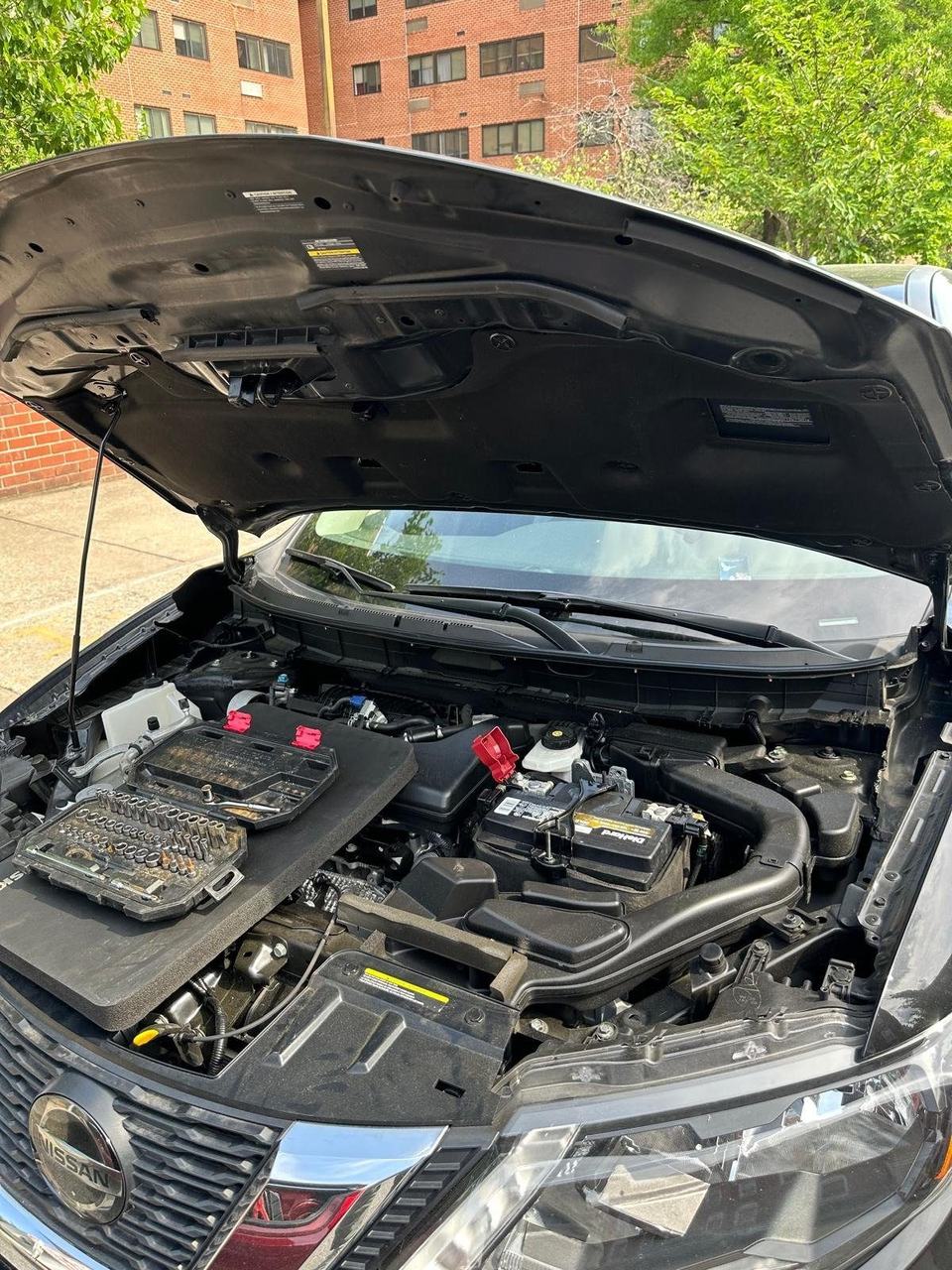
What voltage is a car battery?
A car battery is a twelve-volt battery. Inside are six cells of about 2.1 volts each, which add up to about 12.6 volts when full (How It Works). “12 volts” is the name, not the reading you want to see.
So a twelve-volt battery that reads exactly 12.0 volts is not on target. It is nearly flat. Hybrids and electric cars have a 12-volt battery too, and the same chart applies to it.
What voltage should a car battery be with the engine off?
Normal car battery voltage with the engine off is 12.6 volts or more once the battery has rested. A reading between 12.4 and 12.6 volts is still acceptable. The half-volt between full and half-charged is the most expensive half-volt in your car.
Is 12.4 volts a good battery?
It is fine, not full: about 75%. If it keeps settling at 12.4 or lower after a long drive, have it tested.
Is 12.3 volts enough to start a car?
Often yes, but it is low. On a cold morning it may only give a slow crank. Charge it, then test it.
Is 11.8 volts a dead battery?
Nearly. AAA treats about 11.8 volts at 80°F as roughly 25% charge. Charge it fully and get a load test before you buy a new one. If the battery case is swollen, cracked or leaking, do not charge or jump it. Leave it to a professional.
What should car battery voltage be while cranking?
Starting the engine is the battery’s hardest job, so the reading dips. AutoZone calls a drop of about 1 to 1.5 volts normal, as long as it recovers. Kwik Kar says a healthy battery should stay above about 9.6 volts while cranking, even on a cold morning. If it falls into the 8s, the battery is likely on its way out. A small wobble is fine; a collapse is a hint.
Battery voltage with the car running
With the engine on, you are reading the alternator and charging system, not just the battery. Clarios puts the normal range at 13.7 to 14.7 volts. Under 13 volts means the battery is not getting enough charge. Over 15 volts means it is being overcharged, which shortens its life.
This is where we will be honest: not everything is a roadside job. A running reading outside the normal range is a charging fault, and that needs a shop. A jump gets the car going, but it will not fix the alternator for long. Our guide to the signs of a bad alternator shows what else to look for. Think of the alternator as the battery’s lunch: too little and it runs out of energy, too much and it gets cooked.
Why voltage readings vary
- Temperature. Cold lowers the reading without draining the charge. Kwik Kar says a battery that reads about 12.6 volts at 80°F may read about 12.4 volts at 32°F. It also loses about 35% of its starting power at freezing.
- Surface charge. Right after driving or charging, a battery reads higher than it really is. Let it rest, or turn the headlights on for about two minutes first, as Interstate Batteries suggests.
- Battery type. AGM batteries read slightly higher when full, about 12.7 to 12.85 volts according to Suzuki Battery.
That is also why charts disagree. Most say 12.6 volts is full; Clarios says 12.8 to 13.0. Both can be right for different batteries at different temperatures. Ohio weather changes its mind often, and your voltmeter reports every change. If your car struggles on frosty mornings, read why a cold car won’t start.
How to check your battery voltage
- Let the car sit at least an hour, or turn the headlights on for two minutes, then off.
- Set a multimeter to 20 volts DC.
- Touch red to the positive terminal and black to the negative, and compare the reading with the chart.
For the cranking and charging checks too, see how to test a car battery with a multimeter.
It takes less time than finding the multimeter in the junk drawer. A meter shows charge, not health, so a battery that reads fine can still fail a load test. If the reading is low, our guide on how long it takes to charge a car battery is the next step.
Low battery voltage in Columbus?
If the reading is low and the car will not start, we come to you with a battery jump start in Columbus. The estimated range is $75 to $150.
After the jump, our technician tests the battery, the alternator and the charging system, so you know whether it was a one-off or a battery on its way out. If the battery is done, we can replace it on site; battery replacement is quoted by phone. We work 6 AM to 8 PM daily, and the average arrival is about 32 minutes, depending on traffic, weather and location. A reading of 12.4 volts on a car that starts fine does not need us. It needs a drive.
Frequently asked questions
What voltage is too low for a car battery?
At rest, 12.0 volts or less means the battery is discharged, according to Clarios. Below about 12.4 volts it is worth charging.
Is 11.8 volts a dead battery?
Close to it. AAA puts 11.8 volts at 80°F at about 25% charge, where a battery typically needs replacing. Charge it and load test it first.
Is 12.3 volts enough to start a car?
Often, but it is low, between half and three-quarters charged. On a cold morning it may only manage a slow crank. Charge it and test it.
Is 12.4 volts a good battery?
It is acceptable but not full: about 75% on most charts. A longer drive or a charger should bring it back to 12.6 volts.
How many volts should a car battery have when the car is running?
Clarios puts the normal range at 13.7 to 14.7 volts. Under 13 volts suggests undercharging; over 15 volts, overcharging.
Does an AGM battery read a different voltage?
Yes, slightly. Suzuki Battery lists a full AGM battery at about 12.7 to 12.85 volts at rest. Use a charger with an AGM setting.
The bottom line
A healthy car battery reads about 12.6 volts or more at rest, stays above about 9.6 volts while cranking, and sits around 13.7 to 14.7 volts with the engine running. A low resting reading means charge it and test it. A running reading outside the range means the charging system needs a shop. When in doubt, get a load test, not just a voltage reading.
Battery reading low and the car won’t start?
Call (380) 288-2822, 6 AM to 8 PM daily, Eastern Time. A dispatcher confirms the price and an arrival estimate before anyone heads your way.
May your battery read 12.6 every morning and give you nothing to write about.