Car Won't Start After Running Out of Gas? Why and What to Do
Published Thursday, October 29, 2026 · Updated October 29, 2026, 6 AM ET · 5 min read · By Hassan, Owner of Roadmate Services
If your car won’t start after running out of gas, it is usually one of two things: air in the fuel lines, or a battery worn down while you waited. Prime the fuel pump by turning the key to On and Off a few times. If the engine cranks slowly or only clicks, the battery needs a jump.
If you are on a highway shoulder, get safe, then call. Hazards on, stay buckled in, and do not stand between your car and traffic while you try any of this.
Quick answer: what is stopping the car?
| What you notice | Likely cause | What to do |
|---|---|---|
| Cranks normally, won't fire | Air in the fuel lines, pump not primed yet | Key to On for a few seconds, then Off, 3 or 4 times, then try again |
| Slow crank, clicking, dim dash | Battery drained by cranking, flashers or the radio | A jump start, ideally with a portable jump pack |
| Starts, then dies or runs rough | Not enough fuel added, or sediment reaching the filter | Add more fuel; if it keeps stumbling, see a mechanic |
| Diesel that ran dry | Air in a diesel system | Follow the owner's manual; it may need a mechanic to bleed it |
| Nothing changes after a few tries | Fuel pump, filter or another fault | Stop cranking and call for help or a tow |
What happened with the Camaro on I-70
On Saturday, October 24, a driver ran out of gas in his Camaro on I-70 westbound, just before downtown Columbus. His car takes premium, so on the way I filled our gas can with premium at the BP on East 5th Avenue.
His map pin was a little off, so I looped the highway a couple of times before I found him. It took about 20 minutes to get there. Columbus interchanges are great for sightseeing, less great when you are looking for one specific car.
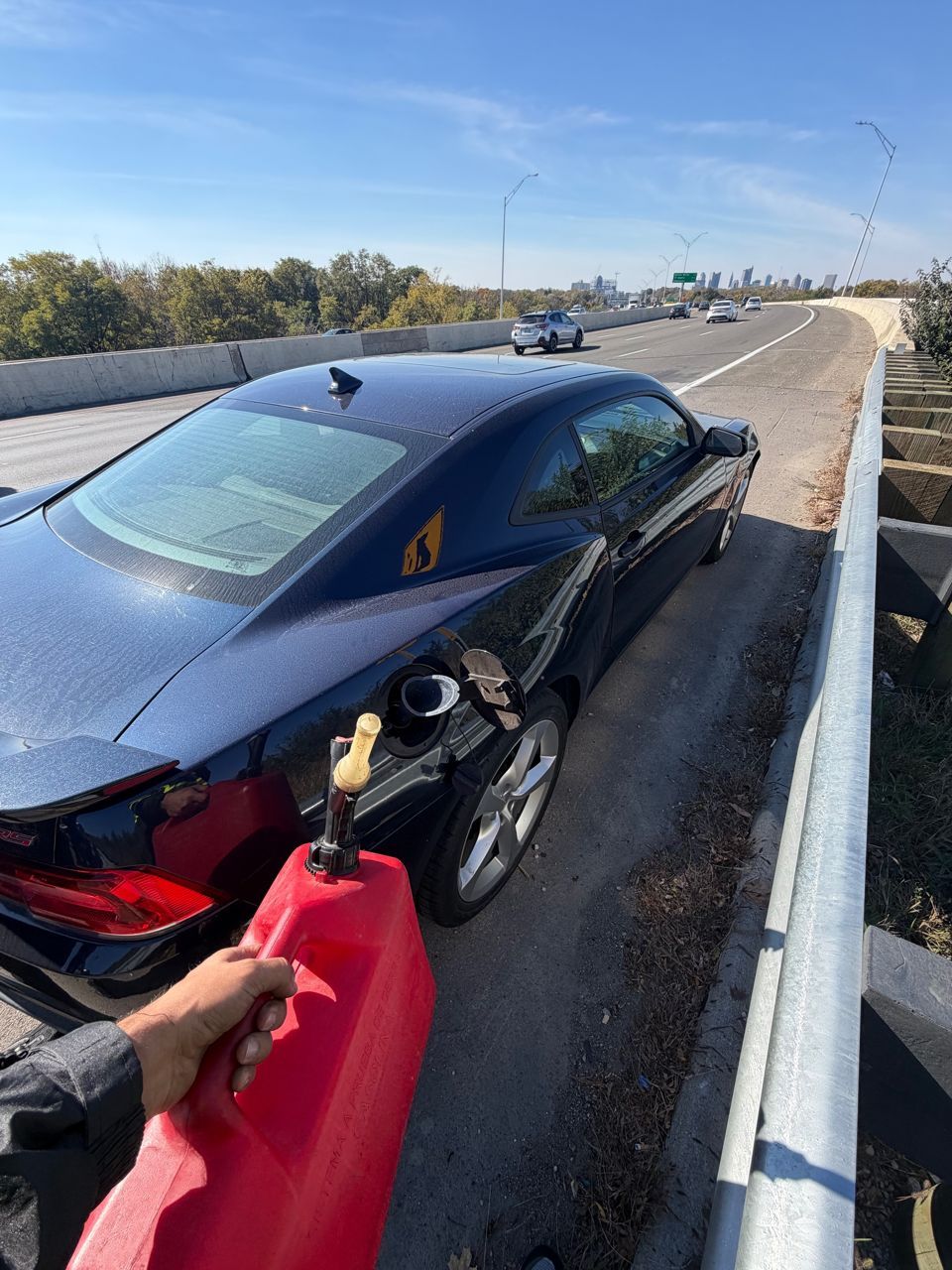
I poured in 2 gallons. The shoulder was very narrow, so I kept it quick. Then, as I was about to leave, the Camaro would not start.
He asked if we had jumper cables. We do, but on a narrow highway shoulder I would rather not park a second car nose to nose in traffic. I used our portable jump pack instead, the car started, and he was on his way. About 10 minutes on site in total.
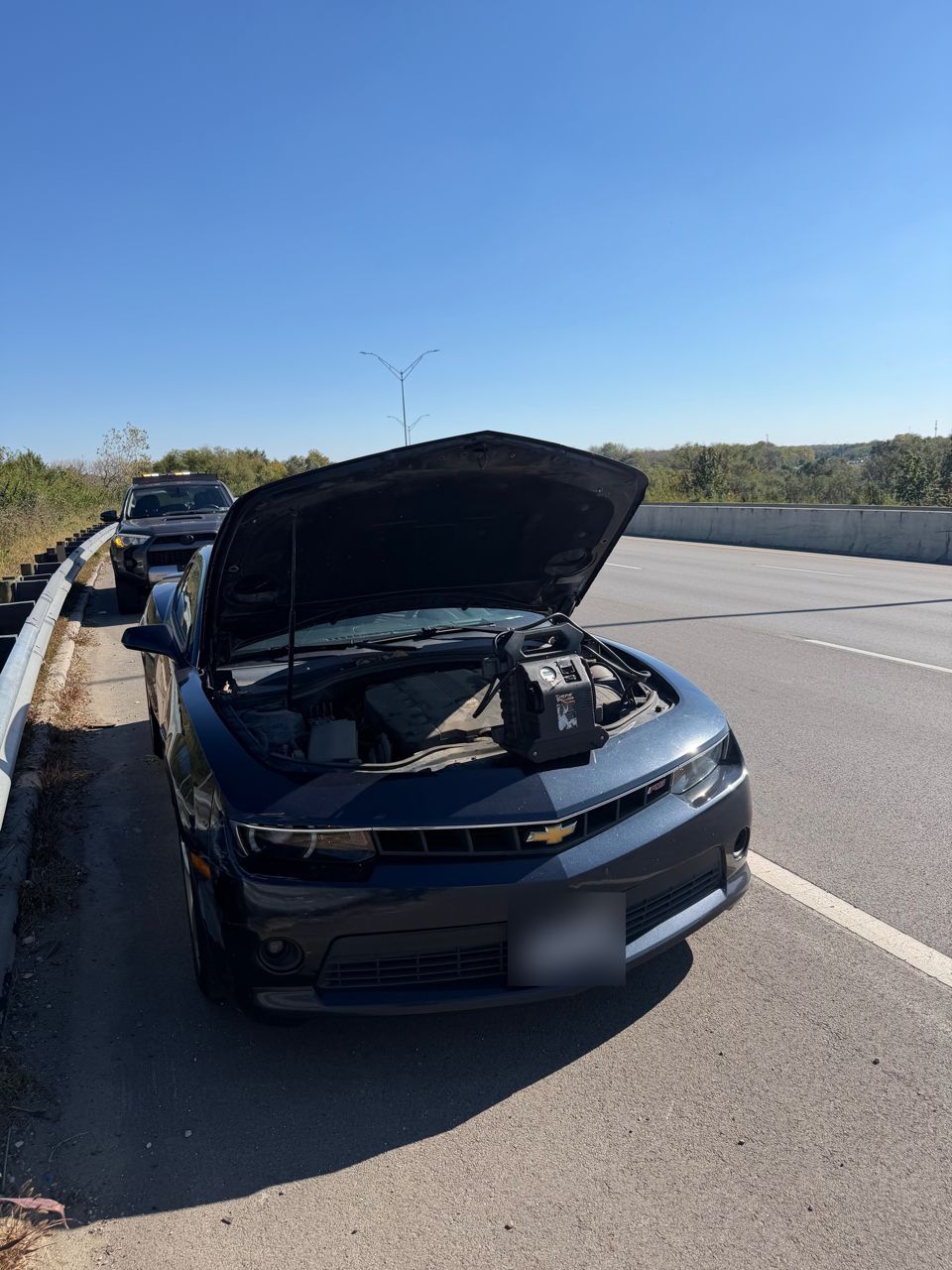
This is common. A car that ran dry often needs a jump as well, and we do both on the same visit. Fuel first, then the battery.
Why won’t the car start after adding gas?
- Air in the fuel lines. When the tank runs dry, air gets into the lines. The pump needs a few seconds to push fuel back up to the engine, a mechanic explains on YourMechanic.
- A tired battery. Cranking, flashers and the radio all draw on the battery while you wait. By the time fuel arrives, there may not be enough left to turn the engine fast.
- Sediment and the fuel filter. AAA says a low tank lets the pump pick up sediment from the bottom, which can clog the filter and keep the engine from starting.
- Not enough fuel. A small splash may not reach the pump, especially on a slope. Add at least a gallon or two.
- A strained fuel pump. AAA notes that the fuel keeps an in-tank pump cool and lubricated. Running dry is hard on it, and sometimes it is the last straw.
How to get the car started, step by step
On a highway, get safe, then call before you do anything at the car.
- Add enough fuel: at least a gallon or two, and the right type for your car.
- Prime the pump. Turn the key to On (dash lights on, engine off) for a few seconds, then Off. Repeat three or four times. On most push-button cars, press the button without your foot on the brake.
- Start the car, but keep each try short. A 2024 Kia owner’s manual says no more than 10 seconds of cranking, then wait 5 to 10 seconds. Mazda’s manual says to wait about 20 seconds.
- Listen. A strong crank that will not fire points to fuel: prime again. A slow crank or clicking points to the battery: get a jump.
- Stop after a few tries. Endless cranking can harm the starter and drain the battery, and it will not help a pump or filter problem.
Driving a diesel? Do not treat it like a gas car. AAA warns that running a diesel dry lets air into the system, and Mazda’s diesel manual asks for at least 10 liters (about 2.6 gallons) before you try to restart. If it still will not start, it needs a mechanic.
When you don’t need us, and when you do
If a friend brings a gas can, you prime the pump and the car starts, you are done. Drive to a station and fill up. If it starts but stumbles, add more fuel before you blame the engine.
Call for help if you are on a highway shoulder, the battery is too weak after the wait, or the car still will not start after fuel and a few short tries. If it cranks strongly and never fires, it may be the pump or filter, and that is a fuel pump question for a mechanic, not something to crank through.
Three things that help us find you faster
- Share a live location, or the nearest exit or mile marker. A dropped pin on a highway can be off by a full interchange, as the Camaro showed me.
- Say if your car takes premium or diesel. We bring regular or premium gasoline, or diesel. It saves a trip back to the pump.
- Tell us how long you cranked it. If the battery sounds weak, we bring the jump pack to the car from the start.
For the full roadside routine, read what to do if you run out of gas, and for what an empty tank does to the car, see what happens when you run out of gas. Our guide on how to use a jump starter covers the pack itself.
Out of gas in Columbus? Here is how we help
Fuel delivery in Columbus has an estimated range of $60 to $110 + fuel cost. We usually bring 2 gallons, or as much as you ask for.
If the car still will not start after the fuel goes in, we jump it on the same visit. A jump start in Columbus on its own has an estimated range of $75 to $150.
We work 6 AM to 8 PM daily, Eastern Time, and arrive in about 32 minutes on average, depending on traffic, weather and location. A dispatcher confirms the price before anyone heads your way.
Frequently asked questions
Why won't my car start after I ran out of gas and added more?
Usually air got into the fuel lines when the tank ran dry, and the pump needs a moment to push fuel back up to the engine. Long cranking can also drain the battery. Less often, sediment from the bottom of the tank clogs the filter or the pump was strained.
How do I prime the fuel pump after running out of gas?
Turn the key to On without starting, wait a few seconds, then turn it Off. Do this three or four times, then start the car. On most push-button cars, press the button without your foot on the brake to get to On.
How much gas should I add after running out?
More than a splash. We usually bring 2 gallons, which gets most cars to a station. Mazda's manual asks for at least 10 liters (about 2.6 gallons) for its diesel, so check your own manual.
Can running out of gas damage the fuel pump?
It can. AAA explains that the fuel in the tank keeps the pump cool and lubricated, so running low makes it run hot. Running out once is rarely the end of a pump, but it is a habit worth breaking.
Why does my car need a jump after running out of gas?
A car that ran dry often gets cranked many times, with the flashers and the radio on while you wait. That drains the battery. By the time fuel arrives, the battery may not have enough left to start the engine.
The bottom line
After running out of gas, add a gallon or two, prime the pump with a few key turns, and keep each start short. A slow crank means the battery needs a jump. If none of that works, stop cranking and call.
Out of gas in Columbus?
Call (380) 288-2822, 6 AM to 8 PM daily, Eastern Time. On a highway, get safe first, then call.
May your fuel light stay a stranger, and your next start be one quick turn of the key.