What Happens When You Run Out of Gas? What Your Car Does, and What to Do
Published Oct 23, 2026 · 5 min read · By Hassan, Owner of Roadmate Services
What happens when you run out of gas? The engine sputters, loses power and stalls. Once it stops, the steering and brakes still work but feel heavy, and running dry again and again can wear out the fuel pump. If it is happening on a highway right now, get safe first, then read on.
The low-fuel light is the most ignored light on the dashboard, and it knows it.
Quick answer: what happens, moment by moment
| Moment | What happens | What you do |
|---|---|---|
| Fuel light on | The car is running on reserve fuel | Head to a gas station now |
| Sputter or surge | The engine is starved of fuel | Hazards on, move right |
| Stall | Engine off, power assist for steering and brakes lost | Coast, steer and brake firmly |
| Stopped | The car will not restart on an empty tank | Stay in, call for fuel |
| After fuel goes in | Air may be in the fuel line | Key on to prime the pump, then start |
What happens if you run out of gas while driving
Sputtering and loss of power
As the last fuel reaches the engine, it stumbles. You feel jerks, surges and a pedal that stops doing much. Think of it as the car’s last polite cough before it stops talking.
The engine stalls
The engine shuts off, but the car keeps rolling. Use that rolling time to reach the shoulder or an exit.
Steering and brakes feel heavier
Power steering and brake assist need the engine running. Both still work, but you have to turn and press much harder, as J.D. Power explains. Power steering takes a break at exactly the moment you need it most, so expect it.
Get safe, then call
- Hazards on as soon as the engine sputters.
- Coast to the right shoulder or take the exit if you can reach it. Steer and brake firmly.
- Stay in the car with your seatbelt on, unless there is a fire or other danger. The Ohio State Highway Patrol says the car is usually the safest place to be.
- Call for fuel with your direction of travel and the nearest exit or mile marker.
The full steps are in what to do when you run out of gas on the highway.
Most of our fuel calls are on highway shoulders. One driver heading to Indianapolis ran completely dry on a Columbus shoulder in the middle of the day. We were there in about 30 minutes and got him back on his way.
What happens when your car runs out of gas: the mechanical side
Fuel pump heat
Most cars have an electric fuel pump inside the tank, and the fuel around it keeps it cool. Run the tank dry and the pump runs hot. Once rarely matters. A habit of it wears the pump sooner, and a fuel pump is not a cheap souvenir.
Sediment, filter and injectors
Dirt settles at the bottom of the tank. On the last drops, the pump can pull it toward the fuel filter and injectors, which shows up later as rough running or poor power.
Air in the fuel line
With the tank empty, air gets into the lines. That is why a car can take a few tries to start after fuel goes in.
Misfires and the catalytic converter
A fuel-starved engine can misfire on the way down, and repeated misfires can overheat the catalytic converter. Another good reason not to make empty tanks a hobby.
Will my car start after I add gas?
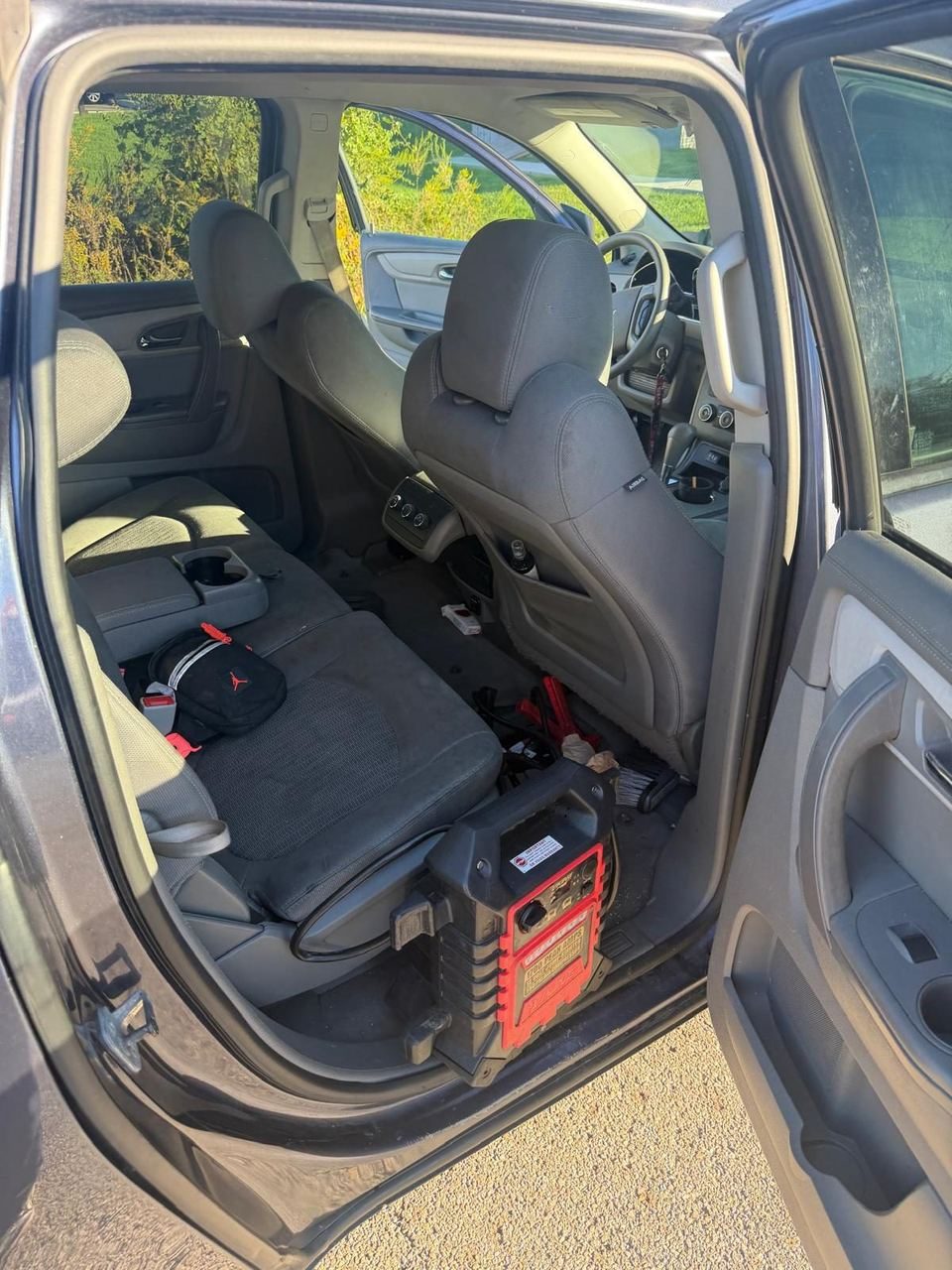
Usually, yes. Turn the key to on for a few seconds without starting so the pump can prime the line, then start; it may take two or three tries. A car run completely dry sometimes needs a jump as well, and we do that on the same visit.
When it is more than an empty tank
Not everything is a roadside job, and we will say so. If fuel goes in, the pump primes and the car still will not start, or it runs rough with warning lights, it needs a mechanic. That is a tow to a shop in Columbus, estimated at $125 to $275 for about 1 to 15 miles.
If it will not even crank, start with why a car won’t start. Sometimes an empty tank is just bad timing for a problem that was already on its way.
How much fuel delivery costs in Columbus
Our fuel delivery in Columbus is estimated at $60 to $110 + fuel cost. We usually bring 2 gallons, or as much as you ask for. You see the price before anyone drives to you, and there is no membership.
Two gallons will not fill the tank, but they will get you to one.
How to avoid running out of gas
- Refill at about a quarter tank, a rule both J.D. Power and Firestone suggest. The fuel pump would like a word about that quarter tank.
- Treat the low-fuel light as “now”, not “soon”. The miles-to-empty number is a guess.
- Look at the gauge. As Hassan puts it, most of these calls happen on the highway when nobody was watching it.
Frequently asked questions
Does running out of gas damage your car?
Once, usually not. Doing it often is the risk: the in-tank fuel pump is cooled by fuel, so running dry makes it run hot and wear sooner. Sediment can also reach the filter and injectors.
Can running out of gas ruin a fuel pump?
It can shorten its life. One empty tank rarely kills a healthy pump, but a pump that often runs with little fuel around it works hotter and wears faster.
Do brakes and steering still work when the engine stalls?
Yes, but they feel much heavier because the power assist stops with the engine. Grip the wheel firmly, press the brake steadily and steer toward the right shoulder.
Why won't my car start after running out of gas?
Usually air in the fuel line. Turn the key to on for a few seconds so the pump can prime, then start; it may take a few tries. If it still will not run with fuel in, something else is wrong.
How much gas should I keep in the tank to protect the fuel pump?
A common rule of thumb is to refill at about a quarter tank. It keeps the pump covered and cool and leaves room for a traffic jam or a closed exit.
The bottom line
When you run out of gas, the engine sputters and stalls, and the steering and brakes turn heavy but keep working. One empty tank rarely does lasting harm; a habit of it wears the fuel pump. Get safe, add fuel, prime the pump, and see a mechanic if it still will not run.
Out of gas in Columbus?
Call (380) 288-2822, 6 AM to 8 PM daily, Eastern Time. A dispatcher confirms the price and an arrival estimate before anyone heads your way.
May your next stop be a gas pump, not a shoulder.