Emergency Car Kit: 5 Things to Keep in Your Car
Updated Oct 22, 2026 · First published Mar 15, 2025 · 6 min read · By Hassan, Owner of Roadmate Services
A trunk with five sensible things in it is the best kind of boring. Five things belong in every car: a real flashlight, reflective warning triangles, a portable jump starter, water with a snack and a warm layer, and a way to keep your phone charged. They will not fix every breakdown, but they keep you safe and reachable until help arrives.
Most trunks already hold a gym bag, three reusable shopping bags and a mystery umbrella. Room for five more things is there, we promise.
Quick answer: your emergency car kit at a glance
| Item | Why it matters | Where to keep it |
|---|---|---|
| LED flashlight with spare batteries | Find lug nuts and dash lights without draining your phone | Glove box |
| Reflective warning triangles | Help traffic see you early, if you can place them safely | Trunk |
| Portable jump starter | Starts a flat battery without a second car | Trunk, kept charged |
| Water, snacks and a warm layer | Turn a long wait into a comfortable one | Trunk bag |
| Phone cable and power bank | Your phone is how dispatch finds you | Within reach of the driver |
1. A real flashlight, with spare batteries
Your phone flashlight drains the battery you need for the call. A small LED flashlight with fresh batteries in the glove box earns its place the first dark evening you need to find a lug nut or read a dashboard light. A phone light is great for finding the TV remote, less great for finding a wheel lock key in the rain.
2. Reflective triangles or flares
On a highway shoulder: get safe, then call. The biggest danger is the traffic behind you, not your car. Only set warning triangles out if you can do it without walking into traffic. If you cannot, stay in the car with your seatbelt on and the hazard lights flashing. If the car is in a live lane or anyone is hurt, call 911 first.
3. A portable jump starter
A compact jump pack works without a second car, which matters in a parking garage or an empty lot. Keep it charged according to the maker’s instructions. Before using it, read AAA’s jump-start safety steps: a battery gives off hydrogen gas, so keep sparks and flames away, and never jump a frozen battery. Our jump start guide walks through the connections.
It is also the one gadget in the trunk that makes you instantly popular in a parking garage.
4. Water, snacks and a warm layer
A couple of water bottles, a granola bar and a blanket or hoodie make a long wait far easier. In winter, add gloves and a hat. Our winter roadside safety tips cover the cold-weather extras. A granola bar has never fixed a car, but it has rescued plenty of moods.
5. A phone charger that reaches
A long cable and a car adapter beat a wireless pad. If the car battery is dead and the engine will not run, a charged power bank in the console keeps you reachable. Your phone is how dispatch finds you, and a nearly dead phone is a very short lifeline.
Worth adding: a tire inflator and a checked spare
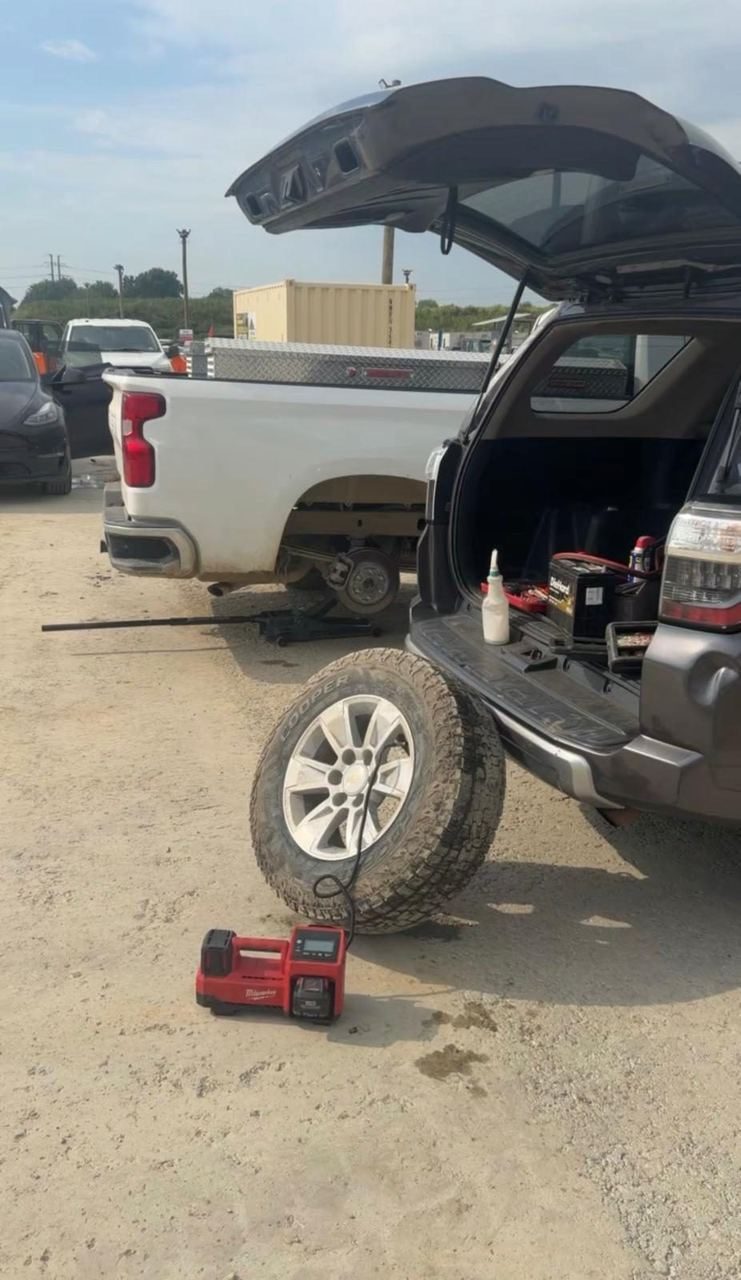
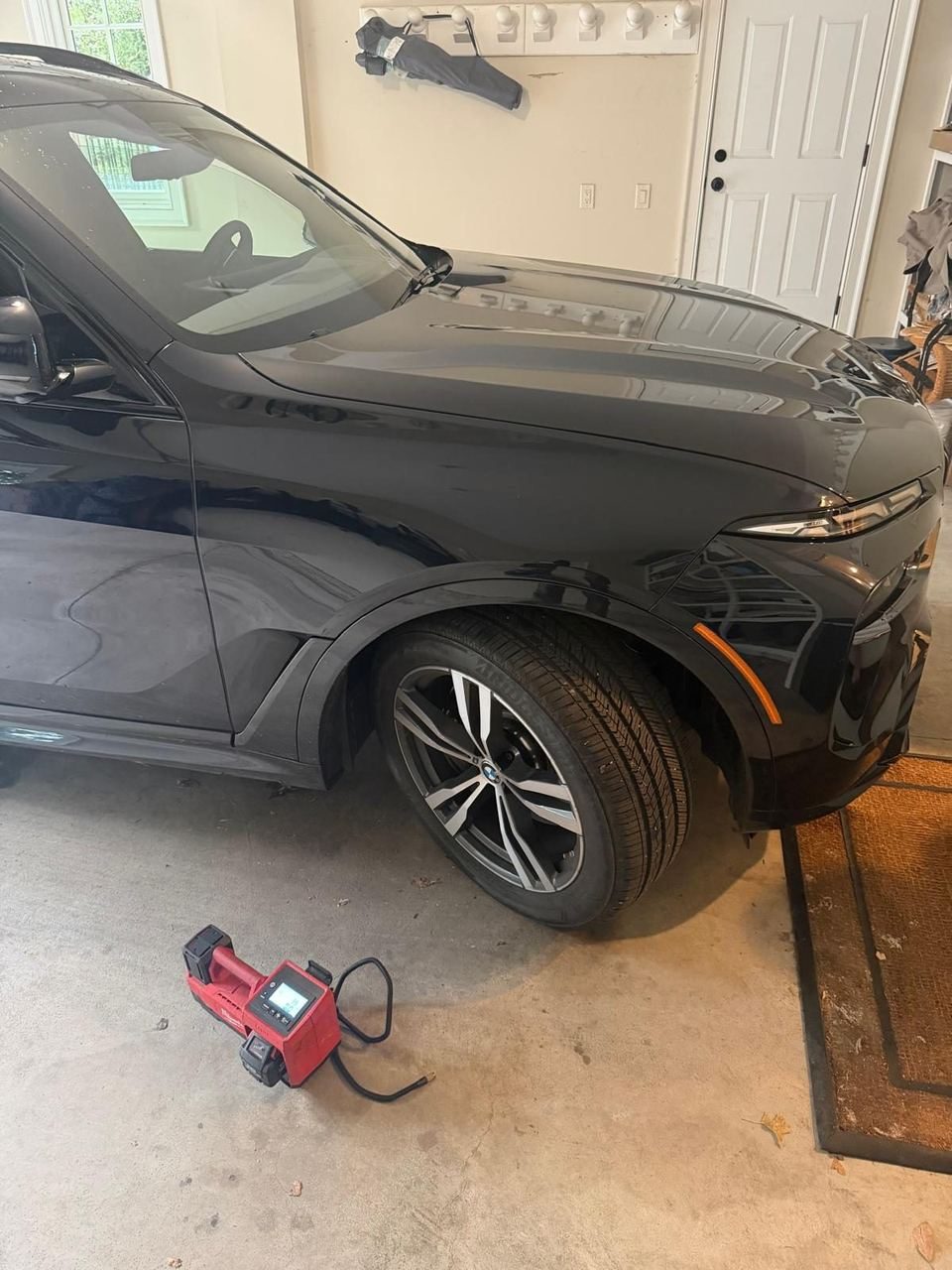
A portable inflator can top up a slow leak enough to reach a tire shop. It cannot fix a sidewall cut or a tire that is coming apart. The NHTSA tire safety booklet advises checking tire pressure at least once a month, including the spare.
6 kit checks to do twice a year
- Charge the jump starter, and check it still holds a charge.
- Test the flashlight and swap in fresh batteries.
- Replace the water and snacks.
- Check tire pressure, including the spare.
- Add hat, gloves and a blanket in the fall; take the extras out in spring if you need the space.
- Save our number in your phone: (380) 288-2822.
A good reminder is when the clocks change. You are already resetting the oven clock, so the trunk can join in.
Build the kit in one shopping trip
You can order all of these in a few minutes. Put them in a bag and keep it in the trunk.
Heads up: the links below go to Amazon and Roadmate earns a small commission if you buy something. Costs you nothing extra and it helps keep the dispatch line running.
All-in-One Emergency Roadside Kit
Reflective triangles, gloves, a small first-aid pouch, a flashlight, and basic tools in one bag.
View on AmazonNOCO Boost GB40 Jump Starter (1000 Amp)
1000-amp lithium jump pack for gas engines up to 6L and diesels up to 3L. Spark-proof clamps, USB power bank, built-in LED flashlight. The one our techs actually carry.
View on Amazon12V Portable Tire Inflator
Plugs into your 12V outlet, reads pressure in PSI, and can reseat a slow-leak tire well enough to reach a shop.
View on AmazonRechargeable LED Flashlight
USB-C rechargeable, magnetic base, 1000+ lumens. Way better than your phone's light when you're under a hood at night.
View on AmazonSeatbelt Cutter & Window Breaker
Lives on the keychain or center console. If you go off the road or into water, this is the tool that gets you out.
View on Amazon
When the kit is not enough
A kit buys you time; it does not replace help. In Columbus, our emergency roadside assistance page explains what to tell dispatch. For specific problems, see the Columbus jump start service or tire change service in Columbus. The gear we like is on our roadside essentials page.
Emergency car kit questions
What should be in a car emergency kit?
A flashlight, reflective warning triangles, a portable jump starter or jumper cables, water, snacks and a warm layer, and a phone charger or power bank. Add a tire inflator if you can, and check that your spare is inflated.
Is a portable jump starter better than jumper cables?
A jump starter works without a second car, which helps in a parking garage or an empty lot. Cables are cheaper but need another vehicle. Either way, follow the safety steps in your handbook and keep sparks away from the battery.
Where should I keep the kit?
Keep the flashlight and phone charger within reach of the driver's seat. The rest can live in a bag in the trunk.
How often should I check my emergency kit?
Twice a year is a good habit, for example when the clocks change. Charge the jump starter, swap out water and snacks, test the flashlight, and add the winter extras in the fall.
Does a kit replace roadside assistance?
No. A kit buys you time and handles small problems. A flat with no usable spare, a battery that will not take a jump, or a breakdown on a busy highway still needs help.
The bottom line
Keep five things in the car: a flashlight, warning triangles, a charged jump starter, water and a warm layer, and a way to charge your phone. Add a tire inflator and keep the spare inflated. Check the kit twice a year, and when a breakdown is beyond the kit, get safe and call.
Already stranded in Columbus?
Call 6 AM to 8 PM daily. A dispatcher confirms availability, your full price and an arrival estimate before anyone heads your way.
May your kit gather dust, in the best possible way.