How Long Can You Drive on a Spare Tire?
Published Oct 23, 2026 · 5 min read · By Hassan, Owner of Roadmate Services
Nobody plans the day they finally meet their spare tire. So how long can you drive on a spare tire? On a donut (compact) spare, Kelley Blue Book and AAA both put the limit at about 50 miles and no faster than 50 mph. A matching full-size spare can be driven like a normal tire until the flat is fixed. The limit on your spare’s sidewall and in your owner’s manual is the one that counts.
Quick answer: spare tire limits at a glance
| Spare type | How far | How fast | Notes |
|---|---|---|---|
| Donut (compact) spare | About 50 miles | Up to 50 mph | Get the flat fixed the same day if you can |
| Full-size spare, matching | Like a normal tire | Normal limits | Check its pressure and age first |
| Full-size spare, not matching | Short term only | Check the owner's manual | Get it matched, especially on AWD cars |
| Run-flat tire after a puncture | About 50 miles | Up to 50 mph | Manufacturer figure; check the manual |
| Your car | The spare’s sidewall label and your owner’s manual win over any general figure | ||
Market guidance, not a Roadmate rule. Sources: Kelley Blue Book, AAA, Bridgestone DriveGuard run-flat specs. Checked October 2026.
How far can you drive on a spare tire?
About 50 miles on a donut: enough to get home or reach a tire shop. AAA warns that driving far on one can damage other parts, including the transmission. So 200 miles, or four days of commuting, is a no; the limit is miles, not days. A donut is a spare, not a lifestyle.
How fast can you go on a spare tire? 50 mph on a donut
Keep a donut at 50 mph or below, or lower if its sidewall says so. On I-270 or I-71 that means the right lane and extra braking room, since your manual may warn that handling feels different on a compact spare. Your car will not feel sporty on a donut, and it is not trying to.
Donut spare tire vs full-size spare tire
Donut spare: about 50 miles at up to 50 mph
Smaller and narrower than your other tires, with less tread. It saves trunk space and gives up grip in return.
Full-size spare: drive normally, if it matches
A matching full-size spare has no special distance or speed limit, per Kelley Blue Book. Check its pressure and age first. One that does not match is short term only; on all-wheel-drive cars, check the manual.
Run-flat tires: about 50 miles at up to 50 mph
Bridgestone rates its DriveGuard run-flats for up to 50 miles at up to 50 mph with no air, and we repair and replace run-flats. Many newer cars have no spare at all, only a sealant kit. Lift the trunk floor now, so the surprise happens in your driveway instead of on Hamilton Road.
5 things to check on your spare before you need it
The spare under your trunk floor has probably been there since the car was new. It has never been checked, and it knows.
- Pressure. NHTSA says to check all tires, including the spare, monthly, using the pressure on the door-edge label or in the manual. Keep a gauge in your emergency car kit.
- Age. The last four digits of the DOT code show the week and year it was made. NHTSA notes some makers recommend replacing tires at 6 to 10 years old.
- Cracks and bulges. A cracked or bulging spare is not a spare.
- Tools. Jack, wrench and wheel lock key.
- The limit. Read the speed and distance printed on a compact spare.
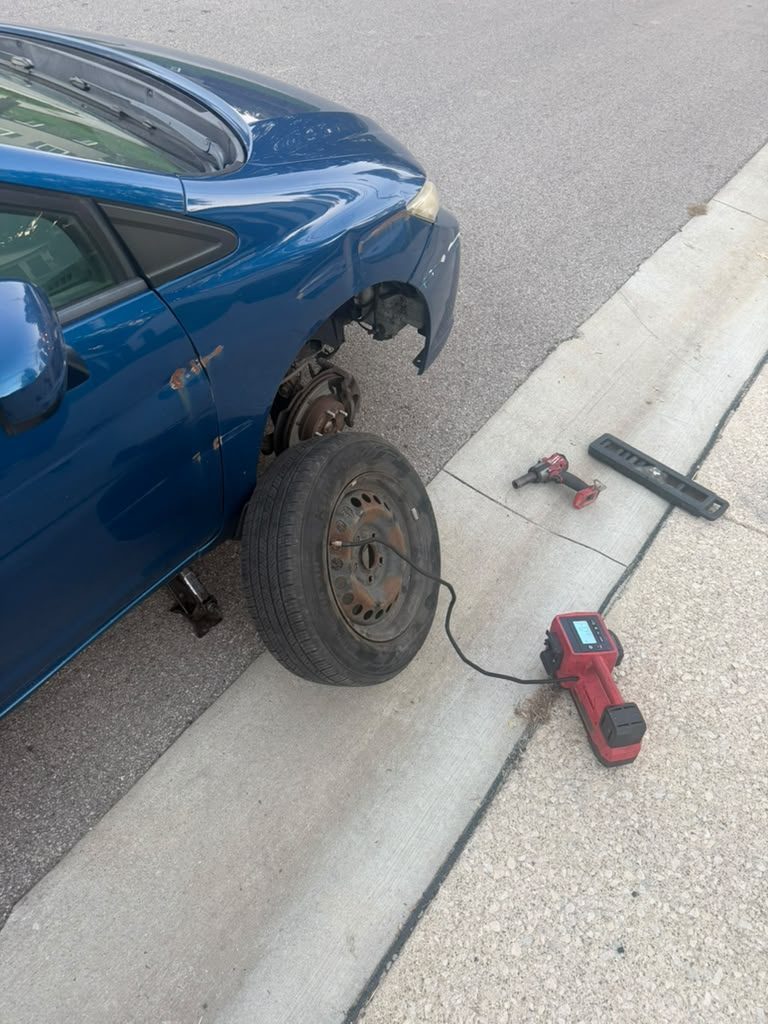
Flat on a highway? Get safe, then call
- Turn on your hazard lights.
- If you can, roll slowly to the next exit or a parking lot.
- If you cannot, pull as far onto the shoulder as you safely can.
- If it is not safe to get out, stay buckled in and call for help. Give the highway, direction and nearest exit or mile marker.
- Never change a tire on the traffic side of a highway shoulder.
In a driveway or a quiet lot with a good spare, you can usually do it yourself with our guide to changing a flat tire safely.
Get off the spare: fix or replace the flat
Most punctures in the tread can be plugged, and a plug is what we do on site. For a permanent repair, the industry standard is a plug-patch fitted from inside the tire, which a tire shop does. Our guide on how to fix a punctured tire explains which holes can be repaired.
Sometimes you skip the spare. One school morning in a Columbus driveway, a grandmother found a flat on her Lexus just as she had to drive her grandson to school. We arrived in about 30 minutes to fit the spare, found a nail in the tread and repaired it on the spot in about 15 minutes. Then they left for school.
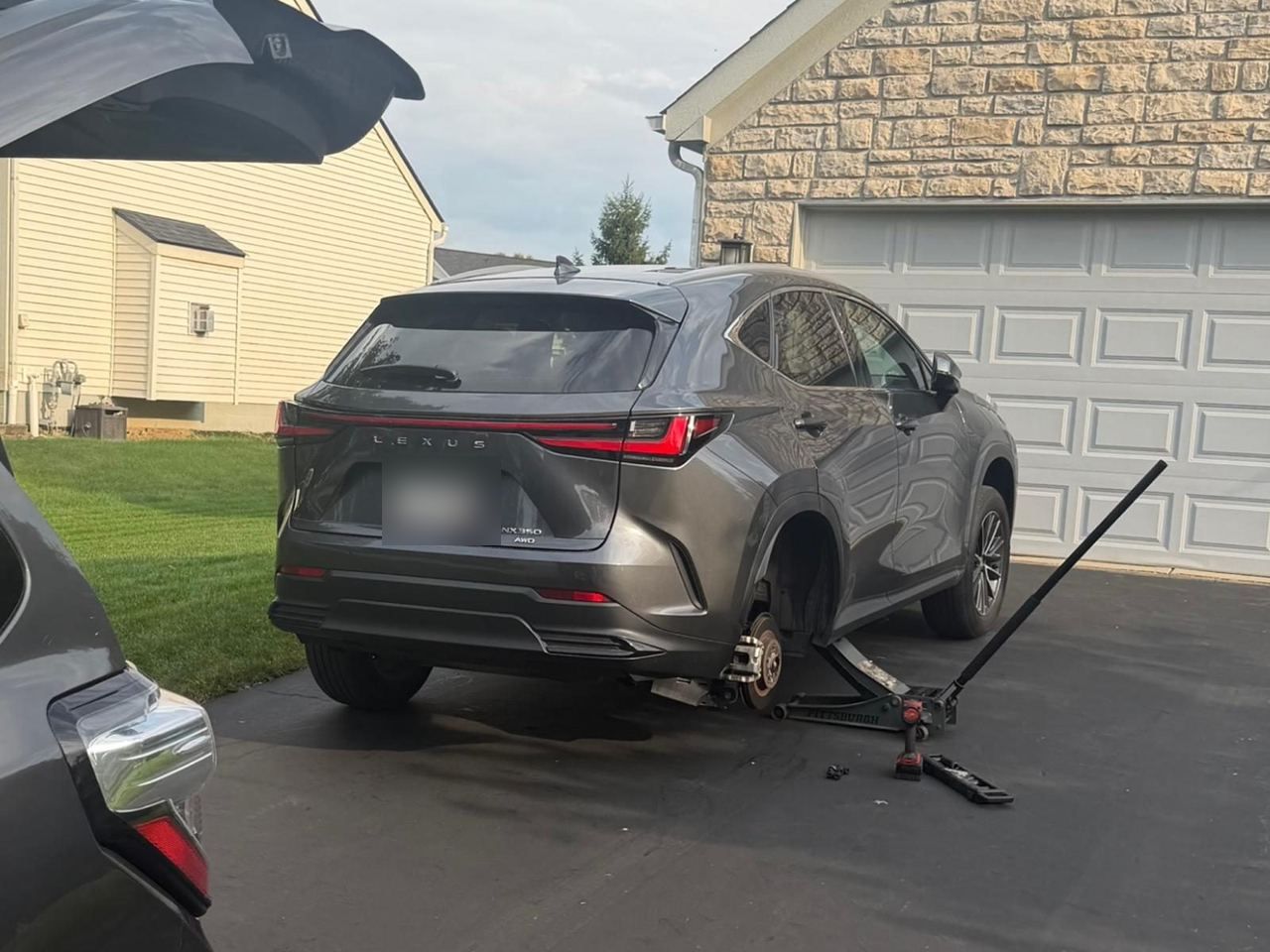
The spare went back under the floor, unused and a little offended.
Tire help in Columbus
A Roadmate tire change with your own spare is typically $85 to $175. An on-site tire repair is typically $75 to $150. The final price depends on your location, the vehicle and the conditions, and you see it before you confirm.
- Hours: 6 AM to 8 PM daily, Eastern Time.
- Average arrival in Columbus: about 32 minutes, depending on traffic, weather and location.
- An air compressor for flat spares, and a tool to remove locking lug nuts when the key is missing.
- No usable spare and a tire that cannot be repaired: we take it to a shop, get it replaced and bring it back.
See mobile tire service in Columbus for details. As for the wheel lock key, it is in the glove box, the junk drawer at home or a parallel universe.
Frequently asked questions
How far can I realistically drive on a spare tire?
On a donut spare, about 50 miles, or less if its sidewall says so. On a matching full-size spare in good condition, you can drive normally until the flat is fixed.
Can I drive 200 miles on a spare tire?
Not on a donut: that is four times the usual limit. On a matching full-size spare with the right pressure, usually yes, but get the flat fixed soon so you have a spare again.
Can I drive on a spare tire for 4 days?
The limit on a donut is miles and speed, not days, and four days of normal driving will almost always pass 50 miles. Get the flat fixed the same day if you can.
Is it safe to drive 2 hours on a spare tire?
Not on a donut: at 50 mph, two hours is about 100 miles, double the usual limit. On a matching full-size spare, it is usually fine if the pressure is right.
How fast can you drive on a donut spare?
No faster than 50 mph, or lower if the spare's sidewall shows a lower limit. Stay in the right lane on highways and leave extra room for braking.
What if my car has no spare tire?
Many newer cars have a sealant kit and an inflator instead of a spare. If the kit cannot fix the hole, call for help: in Columbus we can often plug the tire on site, and if it cannot be repaired, we get it replaced at a shop and bring it back to fit it.
The bottom line
On a donut spare, plan on about 50 miles at no more than 50 mph, and less if the sidewall says so. A matching full-size spare can be driven normally. Check the spare monthly and get the flat fixed soon. As Hassan puts it, you cannot plan a flat tire; good tires help, but it always comes at the wrong time.
Driving on a spare in Columbus?
Call 6 AM to 8 PM daily. A dispatcher confirms availability, your full price and an arrival estimate before anyone heads your way.
Let the donut do its short shift, then send it back to its nap under the trunk floor.