How Long Does a Tire Plug Last? What a Plug Can and Cannot Do
Published Oct 23, 2026 · 6 min read · By Hassan, Owner of Roadmate Services
Somewhere on your commute, a nail found the one spot on the road it had been waiting for. So how long does a tire plug last? A plug put in correctly, in the tread, often lasts for the rest of the tire’s life. The permanent repair the tire industry recommends is a plug-patch fitted from inside the tire.
How long yours lasts depends on three things: how big the hole is, where it is, and how well the plug went in. This guide covers each one, plus what to do about a nail in your tire right now.
Quick answer: plug, plug-patch or new tire?
| Damage | Usually | Notes |
|---|---|---|
| Nail or screw in the tread, 1/4 inch or smaller | Repairable | A plug works in most cases; a plug-patch is the industry standard |
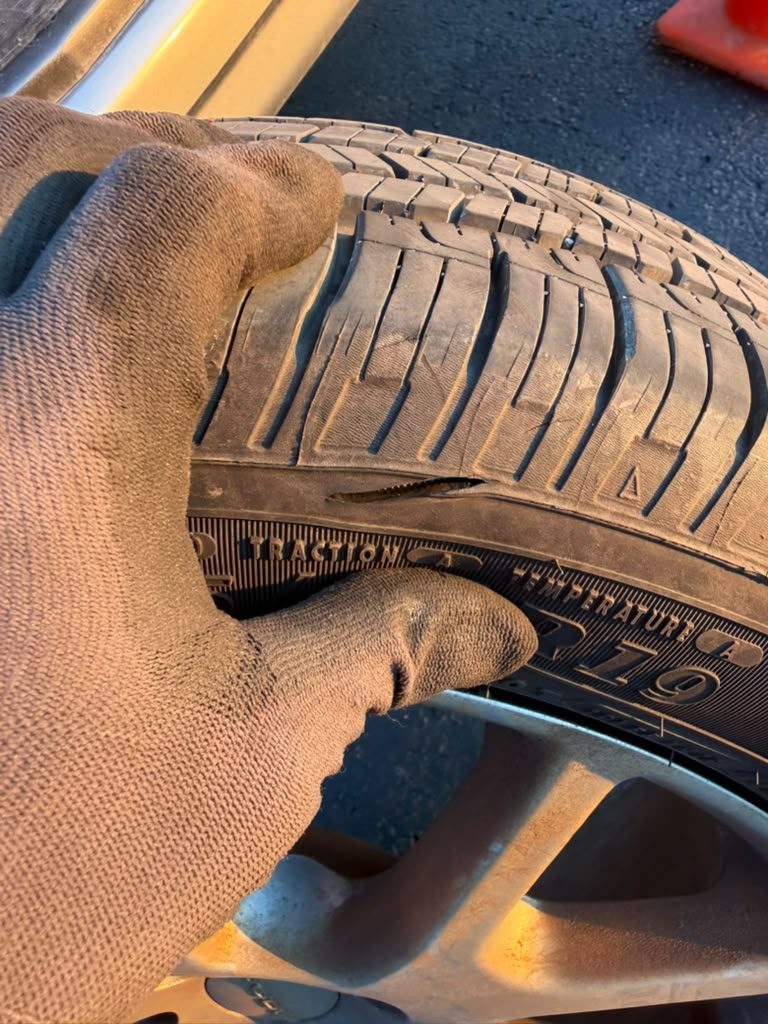
| Hole near the shoulder or in the sidewall | Replace | Not repairable under USTMA rules |
| Hole bigger than 1/4 inch, or a cut | Replace | Too big for a plug or a patch |
| Tire driven flat for a distance | Inspect first | Damage inside may mean a new tire |
| New hole overlapping an old repair | Replace | USTMA: repairs cannot overlap |
Repair limits from USTMA Tire Repair Basics. Checked October 2026.
How long does a tire plug last?
A good plug has no expiry date. If the hole is small, in the tread and the plug sealed well, it can ride along until the tread wears out. Published figures vary: CarParts.com puts a plug or patch done right at up to 10 years or 25,000 miles. That is a market figure, not a promise from us or anyone else.
What makes a plug fail early:
- A hole bigger than 1/4 inch, or a cut rather than a round hole.
- A hole close to the shoulder, where the tire flexes most.
- A nail that went in at a steep angle, making a longer, ragged channel.
- A tire that was driven flat and is damaged inside.
- An old tire with cracked rubber, or a tire kept underinflated.
In other words, a plug in the right place is a repair. A plug in the wrong place is a cork, not a cure.
How long does a patched tire last?
A plug-patch is a one-piece repair: a rubber stem fills the hole and a patch seals the inner liner. The shop takes the tire off the wheel to fit it from inside. Done right, it is meant to last as long as the rest of the tire. The tire still wears out on its normal schedule; a patch does not reset the calendar.
Tire plug vs patch: is a plug just as good?
For most small nail holes in the tread, a plug works. That is what we do on site, and in most cases it holds. We would rather tell you the full picture, though, so here is the industry standard next to it.
The industry standard. The U.S. Tire Manufacturers Association says “a plug alone is an unacceptable repair” for a permanent fix. Its procedure: take the tire off the wheel, inspect it inside, then fill the hole and seal the liner, usually with a plug-patch. Source: USTMA Tire Repair Basics.
The reason is the inspection. From outside, nobody can see whether the inner liner was damaged by driving on low air. If you want the permanent repair after our plug, any tire shop can fit a plug-patch later. Think of the plug as getting you through the week, and possibly through the life of the tire.
Nail in tire: what to do right now
If you are on a highway shoulder, get safe first: pull as far right as you can, hazards on, and stay buckled in or wait well away from traffic. Then call. Do not change or inspect a tire on the traffic side.
- Leave the nail in. It is often plugging the hole it made.
- Check the pressure against the sticker in the driver’s door frame.
- If the pressure is holding, drive gently, straight to a repair. If it is dropping, stop and call.
- Do not drive on it flat. That turns a repairable hole into a new tire.
A nail in the tread will not pay rent, so do not let it move in for the season. For how to check pressure, see NHTSA’s tire safety page, and if you are already driving on a soft tire, read whether you can drive on a flat tire.
Nail in tire repair: when it can be fixed
Under the USTMA rules, a puncture can be repaired only if it is 1/4 inch (6 mm) or smaller and in the tread area. Anything reaching the shoulder or belt edge means a new tire. Some makers also limit repairs on run-flat tires, so check yours. For the full repair-or-replace decision, see how to fix a punctured tire.
Can a tire plug cause a blowout?
A correct plug in the tread rarely does. The risk comes from plugs that should never have gone in: near the shoulder, in an oversized hole, or in a tire already damaged by driving flat. If a plugged tire keeps losing air, bulges or vibrates, stop using it and have it inspected.
Can a tire be plugged twice?
Sometimes. USTMA says repairs cannot overlap, and a tire with an earlier repair done wrong must be scrapped. How far apart two repairs must be varies by tire maker, so ask the person doing the job instead of trusting a number from the internet. Two nails in one tire is bad luck; three is a pattern worth a look at your route to work.
A recent Columbus repair: the school-run nail
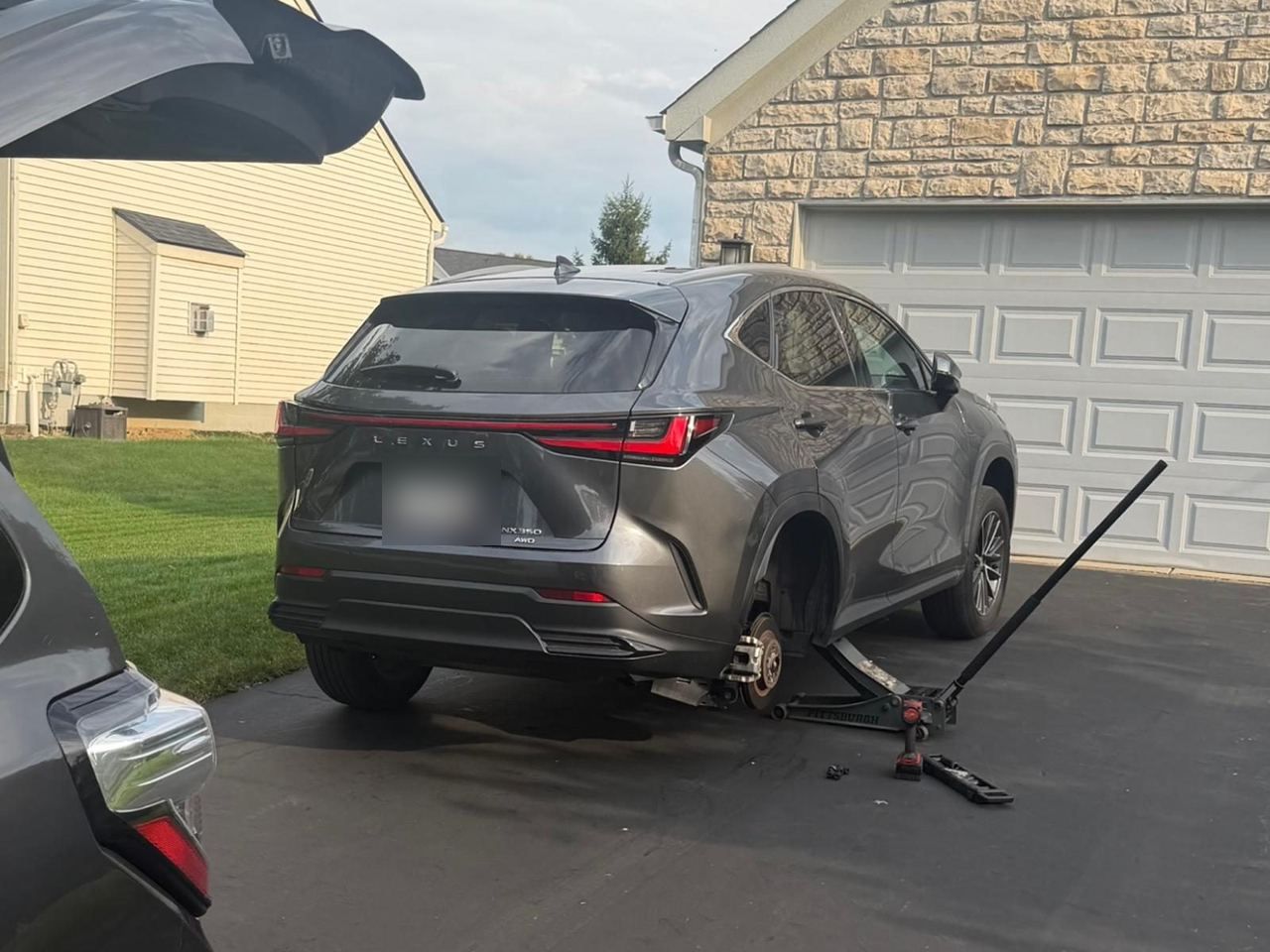
Around school start time, a grandmother in Columbus had to drive her grandson to school and found a flat tire on her Lexus. We came out to fit the spare, about 30 minutes after the call. After inspecting the tire, Hassan told the grandfather the nail was in the tread and it could be repaired right there. The repair took about 15 minutes, she skipped the tire shop, and they left for school.
Nail in your tire in Columbus?
We repair tires on site with a plug, and in most cases that is all it takes. Our estimated range for tire repair on site in Columbus is $75 to $150.
We also repair and replace run-flat tires. When a tire cannot be repaired and there is no usable spare, we take the tire to a shop, get it replaced, and bring it back to fit it. Not everything is a roadside job: a cut in the shoulder or sidewall like the one above means a new tire, and we will say so. We work 6 AM to 8 PM daily, and arrive in about 32 minutes on average, depending on traffic, weather and location. See our mobile tire service in Columbus, or if you would rather do it yourself, our guide to changing a flat tire safely.
Tire plug questions
How long can you drive with your tire plugged?
A plug put in correctly, in the tread, in a tire that was not driven flat, often lasts for the rest of the tire's life. Keep an eye on the pressure for the first week. If it keeps losing air, have it looked at again.
Is a plug just as good as a patch?
A plug works in most cases for a small hole in the tread. The industry standard for a permanent repair is a plug-patch fitted from inside after the tire is taken off the wheel, because it fills the hole and seals the inner liner. A plug fills the hole only.
Can a tire plug cause a blowout?
A correct plug in the tread rarely causes trouble. Plugs in the shoulder, in holes that are too big, or in tires that were driven flat are the ones that fail. A slow leak after a repair is a warning sign, not something to live with.
Can a tire be plugged twice?
Sometimes, if the two holes are far enough apart. USTMA says repairs cannot overlap, and spacing limits vary by tire maker, so ask the person doing the repair. A tire with an earlier repair done wrong should be replaced.
Should I pull a nail out of my tire?
No. The nail is often sealing the hole it made. Pull it and a slow leak can become a flat in minutes. Leave it in, check the pressure, and get the tire repaired.
How long does a patched tire last?
A plug-patch done from inside the tire is the most durable repair for a puncture. Done right, it is meant to last as long as the rest of the tire. The tire still wears out on its normal schedule.
The bottom line
A tire plug put in correctly, in the tread, in a hole 1/4 inch or smaller, often lasts as long as the tire. The permanent repair the industry recommends is a plug-patch fitted from inside. Shoulder and sidewall damage, bigger holes and tires driven flat need replacing. As Hassan puts it, you cannot plan a flat, but good tires that are not bald avoid some of them.
Nail in your tire in Columbus?
Call 6 AM to 8 PM daily. A dispatcher confirms availability, your full price and an arrival estimate before anyone heads your way.
Here is to tires that collect miles, not hardware.