How to Siphon Gas Safely, and Why Modern Cars Make It Hard
Published Oct 28, 2026 · 5 min read · By Hassan, Owner of Roadmate Services
Siphoning gas looks easy in old movies. Real cars did not read the script. To siphon gas, use a hand siphon pump and an approved gas can, outdoors, with the engine off. Never start it by mouth. On most cars built in the last couple of decades, the hose will not get past a screen and a valve in the filler neck, so siphoning is mostly for gas cans, mowers, generators, boats and older vehicles.
Quick answer: siphoning gas at a glance
| Question | Short answer |
|---|---|
| Best way to siphon gas | A hand or squeeze-bulb siphon pump into an approved gas can |
| From a modern car's filler | Usually blocked by a screen and an anti-siphon (rollover) valve |
| Starting it by mouth | Never. Gas in the lungs can cause pneumonia |
| Where to do it | Outdoors, engine off and cool, no smoking or sparks |
| What it works on | Gas cans, mowers, generators, boats and many older vehicles |
| Ran out of gas on the road? | Do not siphon a friend's car. Get safe, then call for fuel delivery |
Short version: a pump does the work, and your mouth stays out of it.
Safety first: 5 rules before you siphon fuel
- Work outdoors, away from traffic, with the engine off and cool.
- No smoking, flames or sparks nearby. Gas vapors catch fire easily.
- Wear gloves and eye protection, and keep rags handy for spills.
- Put the can on bare ground, not in a truck bed or on a plastic liner. A University of Florida safety guide explains that gasoline carries a static charge, and plastic stops it draining away.
- Use only an approved gas can, and siphon only from a vehicle or container you own.
Gas vapors are not harmless either. The CDC’s ToxFAQs on gasoline say breathing high levels can cause dizziness and headaches, and that swallowing or inhaling large amounts can kill.
Why you usually cannot siphon gas from a modern car
Newer cars guard the tank on purpose. As Jalopnik explains, there is a mesh screen a little way inside the filler neck, and a ball valve that closes when something pushes against it. Fuel from the pump nozzle moves the ball aside. A hose does not.
The same valve keeps fuel in the tank if the car rolls over, so it is there for your safety, not to annoy you. Your filler neck is the most polite security guard in the car: it lets gas in all day and lets nothing back out.
Forcing a hose past it can damage the filler neck. If a modern car’s tank has to be emptied, a shop does it from underneath or through the fuel system.
How to siphon gas with a hand pump: 6 steps
This works for a gas can, a mower, a generator, a boat tank or an older car that allows it.
- Set the empty, approved gas can on the ground, lower than the tank you are emptying.
- Put the pump’s intake hose into the tank, down into the fuel.
- Put the outlet hose into the gas can.
- Squeeze the bulb or work the hand pump until gas starts to flow.
- Let gravity do the rest. Watch the can so it does not overfill.
- To stop, lift the hose above the tank so the fuel runs back. Cap the can, then rinse and fully dry the pump before you store it.
If the hose hits something firm a short way down a car’s filler, that is the valve. Stop there. It is a tank, not a game of tug-of-war.
Why you should never siphon gas by mouth
Starting a siphon by mouth puts gasoline in your mouth, and from there it does not take much to reach your lungs. If you cough or choke, gas can go into them. America’s Poison Centers say only a tiny amount can cause serious damage, including pneumonia.
If someone swallows gas, call Poison Control at 1-800-222-1222 right away, even if they feel fine. Watch for coughing, chest pain or fever over the next day or two. If they struggle to breathe or pass out, call 911.
Ran out of gas? Do not siphon a friend’s car, call fuel delivery
Most people search how to siphon gas because a car is empty and another one is not. On the roadside, that plan has three problems: the full car probably will not give up its gas, you would be handling fuel next to traffic, and nobody wants to be the friend with gas breath.
Get safe, then call. Hazards on, as far off the road as you can. On I-70, I-71 or I-270, if you cannot get clear of the lanes, stay buckled in. Do not pour fuel on a highway shoulder.
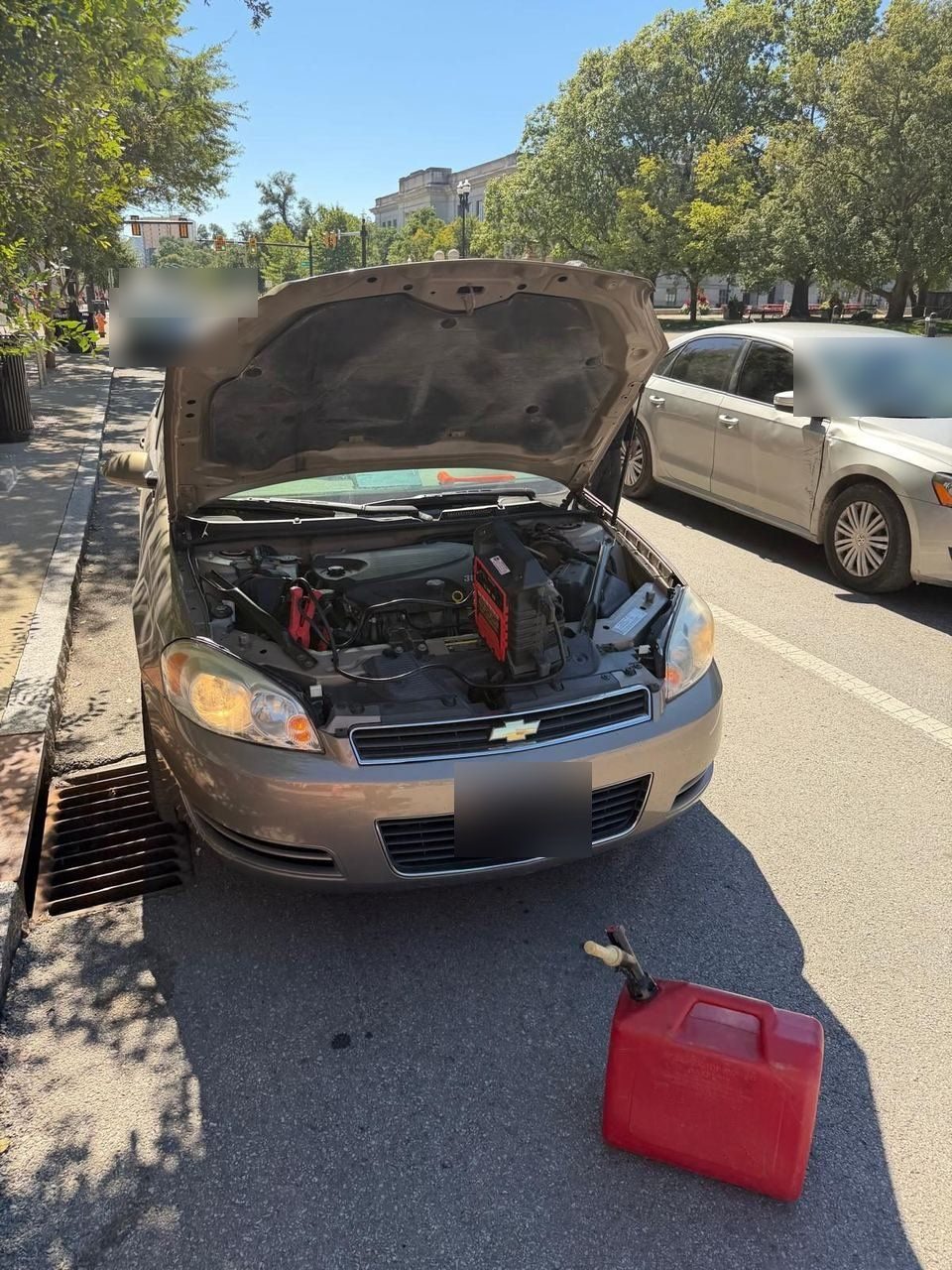
We had a driver heading to Indianapolis through Columbus who ran completely out on a highway shoulder in the middle of the day. We got to him in about 30 minutes with fuel and got him back on the road. No hose, no pump, no taste of gasoline.
Fuel delivery in Columbus is an estimated $60 to $110 + fuel cost. We bring regular, premium or diesel, usually 2 gallons or as much as you ask for. A car that ran dry sometimes needs a jump as well, and we do that on the same visit. We arrive in about 32 minutes on average, depending on traffic, weather and location, 6 AM to 8 PM daily. More on staying safe in what to do when you run out of gas on the highway.
Wrong fuel or old gas? Do not siphon it
- Wrong fuel in the tank. Do not start the car and do not try to siphon it. The tank needs draining at a shop. Roadmate does not tow misfuelled cars, so call a tow company or your mechanic. Details in diesel in a gas car.
- Old gas in a mower or a can. Siphon it with a pump and take it to a household hazardous waste drop-off. We do not take old gas away. How to tell if it has gone off: does gas go bad and how long gas lasts in a gas can.
- Fuel leaking from a car. Keep away and call 911 or the fire department if there is a fire risk.
Old gas is a bit like week-old coffee: technically still liquid, not something an engine wants.
Frequently asked questions
How do you siphon gas out of a car?
Use a hand siphon pump: intake hose in the tank, outlet hose in an approved can on the ground below it, then pump until the gas flows on its own. On most modern cars the hose will not get past the screen and valve in the filler neck, so the tank has to be drained at a shop.
Why can't I siphon gas from my car?
Newer cars have a screen inside the filler neck and a ball valve that closes when something pushes against it. The same valve stops fuel spilling out if the car rolls over. Forcing a hose past it can damage the filler neck.
Is it dangerous to siphon gas by mouth?
Yes. If you cough or choke, gas can go into your lungs. America's Poison Centers say even a small amount can cause pneumonia. Always use a pump.
Can you siphon gas with a garden hose?
Only where the hose can reach the fuel and the can sits lower than the tank, and only if you start it with a pump or squeeze bulb. Do not start it by mouth. A clear fuel-rated hose is better, because a garden hose is not made for gasoline.
What should I do if I swallow gasoline?
Call Poison Control at 1-800-222-1222 straight away, even if you feel fine. Watch for coughing, chest pain or fever over the next day or two. If someone is struggling to breathe or is passing out, call 911.
Is it illegal to siphon gas?
Taking gas from a car or container that is not yours, without permission, is theft. Siphon only from your own vehicle, equipment or can.
The bottom line
Siphon gas only with a hand pump, outdoors, into an approved can on the ground, from something you own. Never start a siphon by mouth. Most modern cars block siphoning at the filler on purpose, so leave the tank alone. If you are simply out of gas, calling for fuel is faster and safer than a hose. (Some people search this as “how to syphon gas”; the answer is the same in any spelling.)
Out of gas in Columbus?
Call (380) 288-2822, 6 AM to 8 PM daily, Eastern Time. A dispatcher confirms the price and an arrival estimate before anyone heads your way.
Keep the hose for the garden and the gas in the tank, where it belongs.