Tow Strap: How to Use One Safely (and When to Call Instead)
Published Oct 23, 2026 · 6 min read · By Hassan, Owner of Roadmate Services
Every trunk seems to have one: a tow strap, still in its bag, waiting for its big day. A tow strap pulls a car that rolls. It is not made to yank a car out of snow or mud. Hook it only to rated tow points, take up the slack, pull slowly and keep everyone clear of the line.
If the car is in a ditch, on a slope or anywhere near traffic, put the strap away and call for a winch-out. Below: which strap you have, where it hooks, the steps, Ohio’s rules and when to stop.
Quick answer: tow strap basics at a glance
| Question | Short answer |
|---|---|
| Tow strap or recovery strap? | Tow strap for a car that rolls. Recovery strap or a winch for a car that is stuck. |
| Where do I hook it? | A rated tow hook or recovery point only. The owner's manual shows where. |
| How fast? | Walking pace to pull a car free. Low speed and a short distance to tow one. |
| Who stands where? | Nobody near the strap while it is under load. |
| Ohio rules? | Connection no longer than 15 feet, with a white flag on it. |
| When do I call? | Ditch, slope, near traffic, or it did not move on one gentle pull. |
Safety first: get safe, then decide
- On a road or shoulder: hazards on. If traffic passes close, stay in the car with your seatbelt on. Get safe, then call. A strap pull on a live road is not a DIY job.
- If anyone is hurt, call 911 first.
- Keep people out of the danger zone. RealTruck advises bystanders stand at least 1.5 to 2 times the strap’s length away, to the side, never between the vehicles or behind them.
- Never jerk a tow strap or take a running start. A strap or hook that breaks under load can fly back hard.
Tow strap vs recovery strap: which one do you have?
A tow strap is usually polyester with hooks on each end. It barely stretches, so it pulls a rolling car smoothly. A recovery strap is usually nylon with loops on each end. It stretches under load, which softens the pull on a stuck car.
Hooks mean tow strap. Loops mean recovery strap. Check the label for the rated strength before either one gets a job. A strap that has lived in the trunk since 2019 deserves a careful look first: cuts, frayed edges or a rusty hook mean it retires.
Where to attach a tow strap
Use a rated tow hook, a frame-mounted recovery point, or the screw-in tow eye that comes in many spare-tire kits. The owner’s manual shows where each one goes. On many cars the screw-in eye fits behind a small cover in the bumper.
Never hook to a bumper, a trailer hitch ball, an axle, a tie rod or any suspension part. They bend, or they break and let go. A bumper is a styling choice, not a tow point.
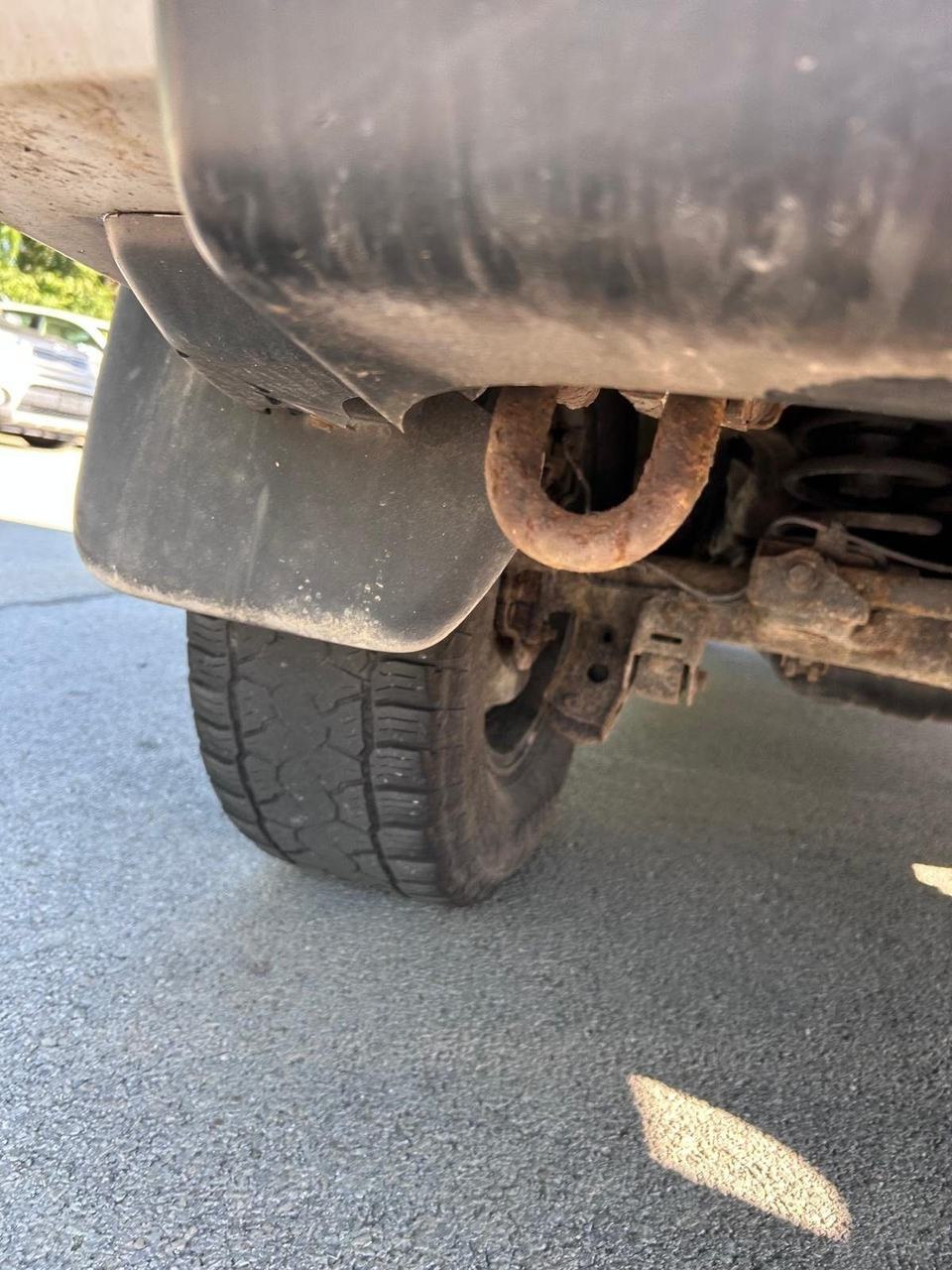
How to use a tow strap: 7 steps
- Use a rated strap. Check the label. A strap with no rating stays in the bag.
- Inspect it. No cuts, tears, burns, knots or bent hooks.
- Hook to rated points on both vehicles. Hooks facing up, so they cannot slip off.
- Take up the slack slowly. Creep forward until the strap is just tight.
- Put a driver in the towed car. Ignition on so the steering wheel turns freely, transmission in neutral, ready to brake.
- Pull slowly and steadily. No jerks. Keep the strap tight so it does not snap taut.
- Agree on signals first. Horn, hazards or a phone call for “stop”. The front driver brakes gently and early.
Five minutes of planning before the pull beats any amount of shouting through a closed window during it.
Towing with a tow rope or strap on Ohio roads
Keep it short and slow. With the engine off, the towed car loses its power brakes and power steering, so the pedal and the wheel get very heavy. RealTruck advises low speeds on surface roads only, and never highway speeds.
Ohio law, Ohio Revised Code 4513.32, says a towing connection between vehicles may not be longer than 15 feet. If the connection is only a chain, rope or cable, it must carry a white flag or cloth at least 12 inches square. Many tow straps are longer than that, so check yours before it goes on a public road.
Read the towing section of your manual too. Many automatic, AWD and 4x4 cars must not be towed with their wheels on the ground, and electric vehicles always go on a flatbed with us. When in doubt, ask for a flatbed; our guide to types of tow trucks explains why. Your transmission has a long memory and no sense of humour.
When a tow strap is the wrong tool: call for a winch-out
Put the strap away and call if:
- The car is in a ditch or on a slope.
- It is high-centred on snow, a curb or a median.
- It is on a road or shoulder with traffic going by.
- There is no rated tow point on one of the vehicles.
- It did not move on one gentle pull.
A winch pulls slowly with a cable from a vehicle set on firm ground, which is safer for a really stuck car. Our guide to what a winch-out is covers how it works. In Hilliard, a van driver stopped on the side of the road and could not get back out of the mud. We pulled it out.
Our technicians carry straps too, and use one when a short, gentle pull is the safer choice. The difference is a trained driver picking the tool, the tow points and the angle, with nobody standing where a line could snap back.
If the car is only lightly stuck in a driveway or a quiet lot, you may not need us at all. Our car stuck in snow guide has the steps to try first. Shovels are cheaper than winches and make excellent conversation starters with neighbours.
Winch-outs and tows in Columbus
Our estimated winch-out range in Columbus is $150 to $300 per hour. A tow of about 1 to 15 miles is $125 to $275.
We work 6 AM to 8 PM daily, Eastern Time, and we pull cars out of snow and mud with a strap or a winch, whichever fits the job. Average arrival in Columbus is about 32 minutes, depending on traffic, weather and location. A dispatcher confirms the price before anyone heads your way. Details are on our tow and winch-out service in Columbus page, and NHTSA’s winter driving tips are worth a read before the first snow. The strap will still be in the trunk if you need it.
Frequently asked questions
What is the difference between a tow strap and a recovery strap?
A tow strap barely stretches and usually has hooks. It is made to pull a car that rolls freely. A recovery strap stretches and has loops, so it can pull a stuck car out with less shock. Do not swap one for the other.
Can you pull a car out of snow with a tow strap?
Only if the car is barely stuck and on flat ground. A tow strap does not stretch, so jerking it shock-loads both cars and the hooks. For a car that is really stuck, use a recovery strap or call for a winch-out.
Where do you hook a tow strap on a car?
To a rated tow hook, a frame-mounted recovery point, or the screw-in tow eye from the spare-tire kit. The owner's manual shows where it goes. Never hook to a bumper, a trailer hitch ball, an axle or a suspension part.
Is it legal to tow a car with a strap in Ohio?
Ohio law (ORC 4513.32) allows a towing connection between vehicles of up to 15 feet. If the connection is only a chain, rope or cable, it must carry a white flag or cloth at least 12 inches square. Treat a strap the same way, and keep it short.
How far can you tow a car with a tow strap?
Keep it to a short distance at low speed on quiet roads, never on a highway. Check the towing section of the manual first: many automatic, AWD and electric cars must not be towed with their wheels on the ground. For those, use a flatbed.
What weight tow strap do I need?
One market rule of thumb, from truck accessory retailer RealTruck, is a strap rated at least three times the vehicle's gross vehicle weight. The rating is printed on the strap's label. No label, no tow.
Sources: Ohio Revised Code 4513.32, RealTruck, recovery straps vs tow straps. Checked October 2026.
The bottom line
A tow strap pulls a car that rolls, hooked to rated tow points, slowly, with everyone clear of the line. In Ohio, keep the connection to 15 feet or less and put a white flag on it. A car in a ditch, on a slope or near traffic needs a winch-out, not a strap. On a road or shoulder, get safe first, then call.
Stuck in snow or mud in Columbus?
Call (380) 288-2822, 6 AM to 8 PM daily, Eastern Time. A dispatcher confirms the price and an arrival estimate before anyone heads your way.
May your strap stay in its bag and your tires stay on the pavement.