Tire Pressure Monitoring System Light Flashing: What It Means
Published Oct 23, 2026 · 5 min read · By Hassan, Owner of Roadmate Services
Some dashboard lights flash for a minute to get your attention, then settle in and sulk. A tire pressure monitoring system light flashing for about 60 to 90 seconds at start-up, then staying on, means the system has a fault, not necessarily low air. A solid light from the start means at least one tire is low. Either way, check all four tires with a gauge before you drive.
Quick answer: flashing vs solid tire pressure light
| What you see | What it means | What to do |
|---|---|---|
| Flashes for about 60 to 90 seconds at start-up, then stays on | The TPMS has a fault (sensor, battery or relearn) | Check all four tires with a gauge; have the system checked |
| Solid from start-up | At least one tire is low | Check and inflate to the door-jamb placard |
| Solid, and a tire looks low or flat | Puncture or leak | Do not drive far on it; get safe, then call |
| Comes and goes on cold mornings | Pressure sits right at the warning level | Top up to the placard while the tires are cold |
| Any of the above | The light cannot tell you which tire | Check all four tires before you drive |
Timing and the low-pressure threshold: NHTSA, FMVSS No. 138 and REDI-Sensor.
The flash-then-solid pattern is the malfunction signal set by the federal TPMS rule, so it means the same thing on almost every make. One little symbol, two very different messages.
What does TPMS mean on a car?
TPMS is the tire pressure monitoring system. On most cars, a small sensor inside each wheel reads the pressure and sends it to the car. If any tire drops 25% or more below the pressure on the door-jamb placard, the yellow horseshoe-shaped light comes on.
Each sensor runs on a small sealed battery. It outlasts most phone batteries, and it is just as hard to swap.
Why is my tire pressure light blinking? 5 common causes
- A sensor battery has run down.
- A sensor was damaged during tire work.
- The car missed a relearn after a rotation or new tires.
- A spare without a sensor is fitted.
- Cold weather. Cold air lowers tire pressure, so a tire near the threshold trips the light on cold mornings.
In Columbus, the first properly cold week of the year lights up a lot of dashboards at once. If yours clears by lunchtime, your tires were not broken, just chilly.
Can I drive with a blinking tire pressure light?
Usually yes, with care. Check all four tires with a gauge first and inflate them to the placard pressure. The catch: you have lost the warning, so if a tire starts leaking, the dashboard will not tell you. It is a smoke alarm with a flat battery: the house is fine, but nobody is listening.
How to reset the tire pressure light
- Let the tires cool. Pressure reads high right after a drive.
- Inflate all four to the pressure on the driver’s door jamb sticker, not the tire sidewall.
- Use the TPMS reset button or the vehicle settings menu, if your car has one.
- Drive a short distance at a steady speed so the sensors report in.
Your owner’s manual has the exact steps. Resetting without adding air is hitting snooze: the low tire is still there in the morning. If the light still flashes, a sensor needs a tire shop.
Light came on with a low or flat tire?
If a tire is visibly low or flat on I-70, I-71 or I-270, get safe, then call. Pull off at the next exit if you can. If you cannot, stop well onto the shoulder, put the hazards on, and stay buckled in, away from traffic. Do not change a tire on the traffic side of a highway shoulder.
Once you are safe, the fix is air, a plug or a spare. Our guides cover which punctures can be repaired and how to change a flat tire safely. NHTSA’s tire safety page explains why the placard pressure matters.
Tire help in Columbus: what we do and what we do not
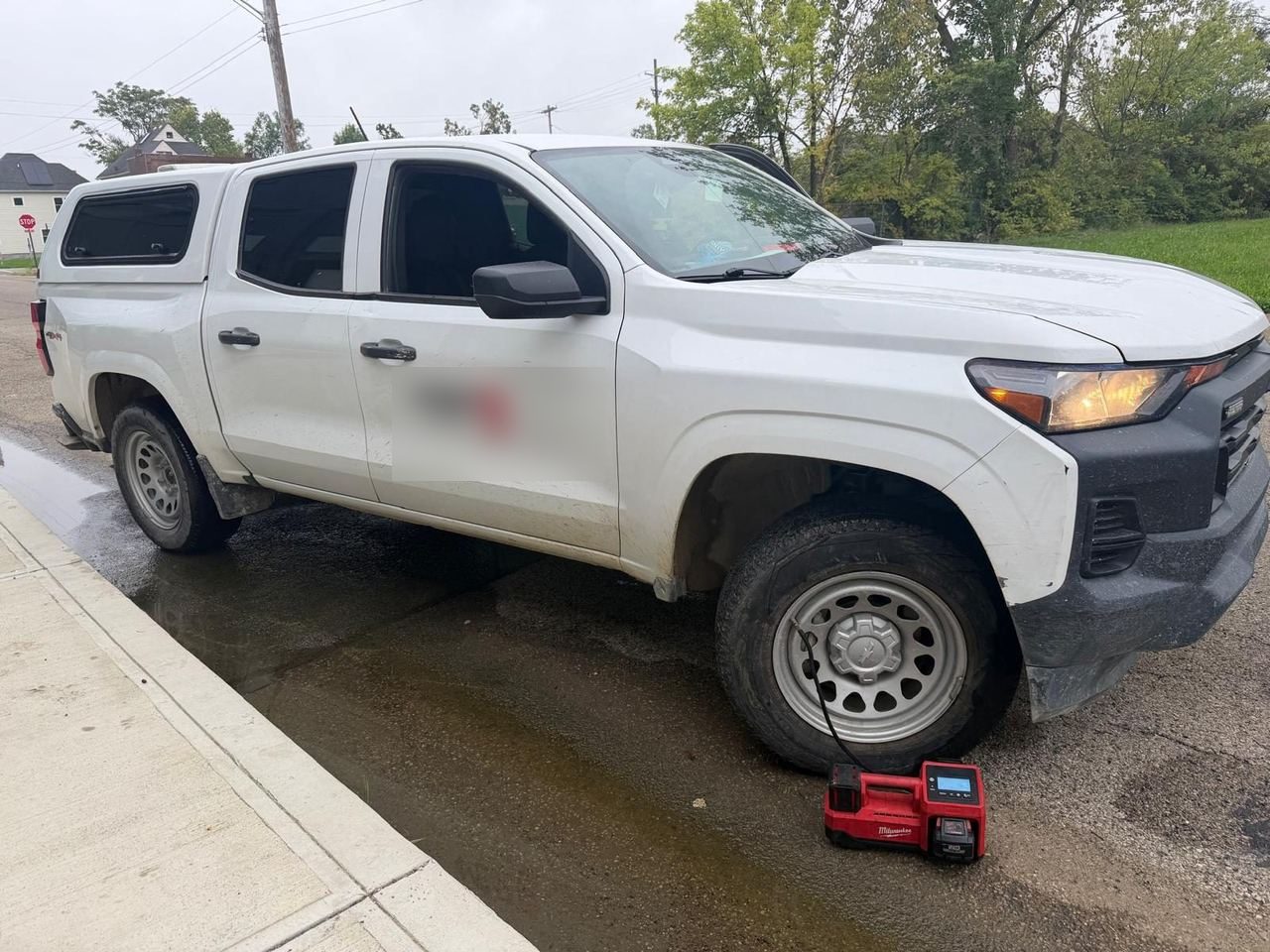
Our technicians inflate low tires and reset the TPMS light on site, plug a repairable puncture or fit your spare.
- Inflate low tires and reset the light: quote by phone
- On-site tire repair: estimated $75 to $150
- Tire change: estimated $85 to $175
We arrive in about 32 minutes on average, depending on traffic, weather and location, 6 AM to 8 PM daily. Our compressor does not mind a cold morning, which makes one of us.
Not everything is a roadside job, and we will say so. A failed sensor is a tire shop job, because the tire comes off the wheel. We can make sure your tires are safe to drive there. See our mobile tire service in Columbus, and keep an inflator in the trunk with our emergency car kit list.
Frequently asked questions
Can I drive with my tire pressure light blinking?
Usually yes, once a gauge shows all four tires at the pressure on the driver's door jamb. The warning system is not working, though, so check pressures by hand until it is fixed.
Why is my tire pressure light blinking and then it goes away?
A light that comes and goes, often on cold mornings, usually means a tire sits right at the warning level and recovers as it warms up. Top the tires up to the placard pressure.
Can I fix my tire pressure sensor myself?
You can check pressures and reset the light yourself on most cars. Replacing a sensor means taking the tire off the wheel and often a relearn tool, so it is a tire shop job.
How much does it usually cost to fix a tire pressure sensor?
It varies by vehicle and sensor. Ask a tire shop for one price that includes the sensor, mounting and the relearn.
What does TPMS stand for?
Tire pressure monitoring system. Federal rules have required it on new US passenger cars, SUVs and light trucks since the 2008 model year.
How do I reset the tire pressure light?
Inflate all four tires, cold, to the door-jamb pressure. Then use the reset button or settings menu if your car has one and drive a short distance; the owner's manual has the exact steps.
The bottom line
A light that flashes for about a minute and then stays on means a system fault; a solid light means a tire is low. Either way, check all four tires and inflate them to the door-jamb placard before you drive. Sensor faults go to a tire shop; low tires can be sorted where you are parked.
Low tire in Columbus and no gauge handy?
Call (380) 288-2822, 6 AM to 8 PM daily, Eastern Time. A dispatcher confirms the price and an arrival estimate before anyone heads your way.
May your dashboard stay dark for all the right reasons.