What “Tow Truck Near Me” Should Really Mean
Aug 10, 2026 · 9 min read
Breaking down on the shoulder, getting a flat in the rain, or finding a dead battery right before work all end the same way: you pull out your phone and type "tow truck near me." The hard part is not finding a truck. It is finding one that shows up when it says it will, charges what it quoted, and does not damage your car on the way to the shop. Here is how to pick well when you are stressed and short on time.
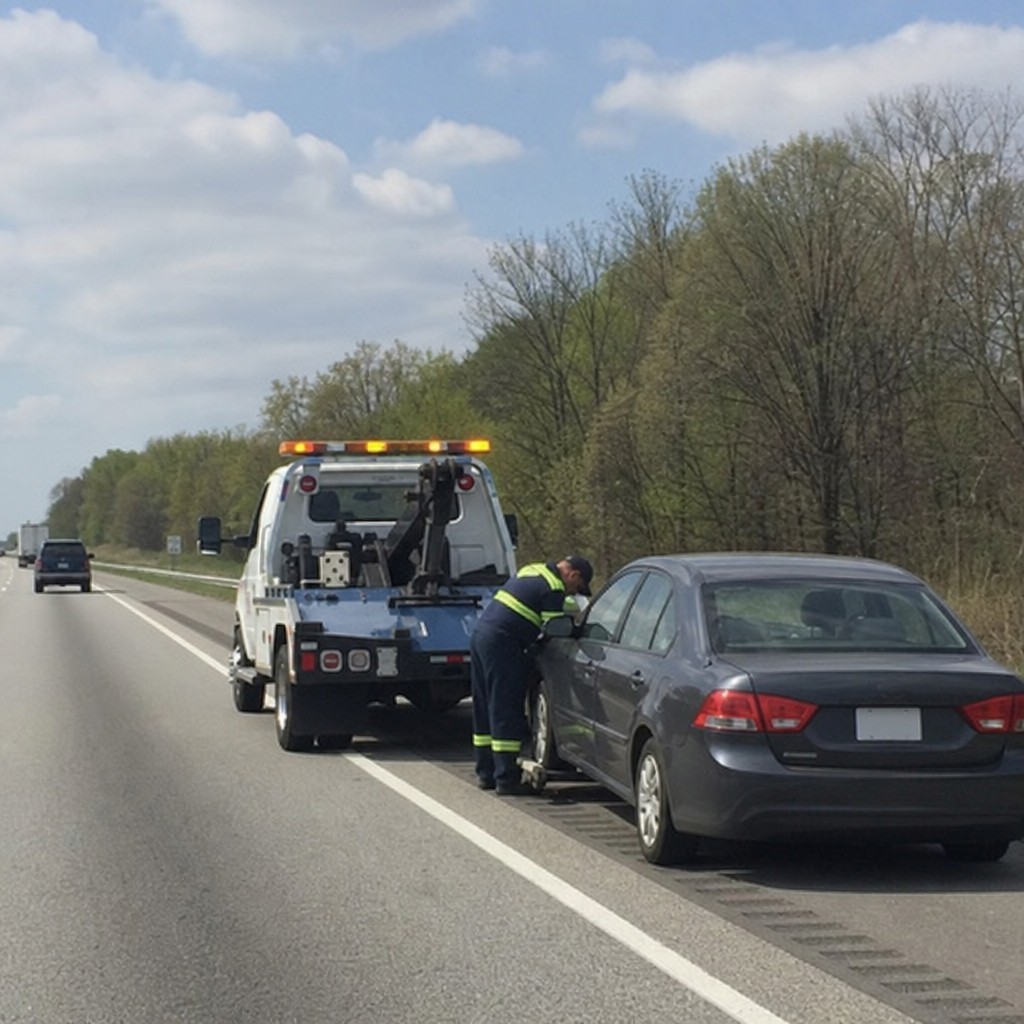
What a good local tow actually looks like
When you search towing near me, you are really looking for a provider that does three things well:
- Responds quickly with a real ETA and real dispatch, not a guess.
- Handles your exact situation with the right equipment and training.
- Quotes transparent pricing with no surprise add-ons at drop off.
Not every towing company is equipped for every job. A shop that is great with sedans may be the wrong call for a motorcycle or a box truck. Asking one or two specific questions up front saves an hour of waiting for the wrong truck.
Roadside assistance or a tow? They are not the same
Plenty of drivers ask for a tow when what they need is fifteen minutes of on-site help, and plenty of others wait around for a jump when the car was never going to start.
On-site roadside jobs
- Flat tire service: spare swap, plug repair, or a tow if the tire is destroyed
- Lockout help
- Fuel delivery
- Minor mechanical checks
- Dead battery support: jump start first, tow only if it will not hold
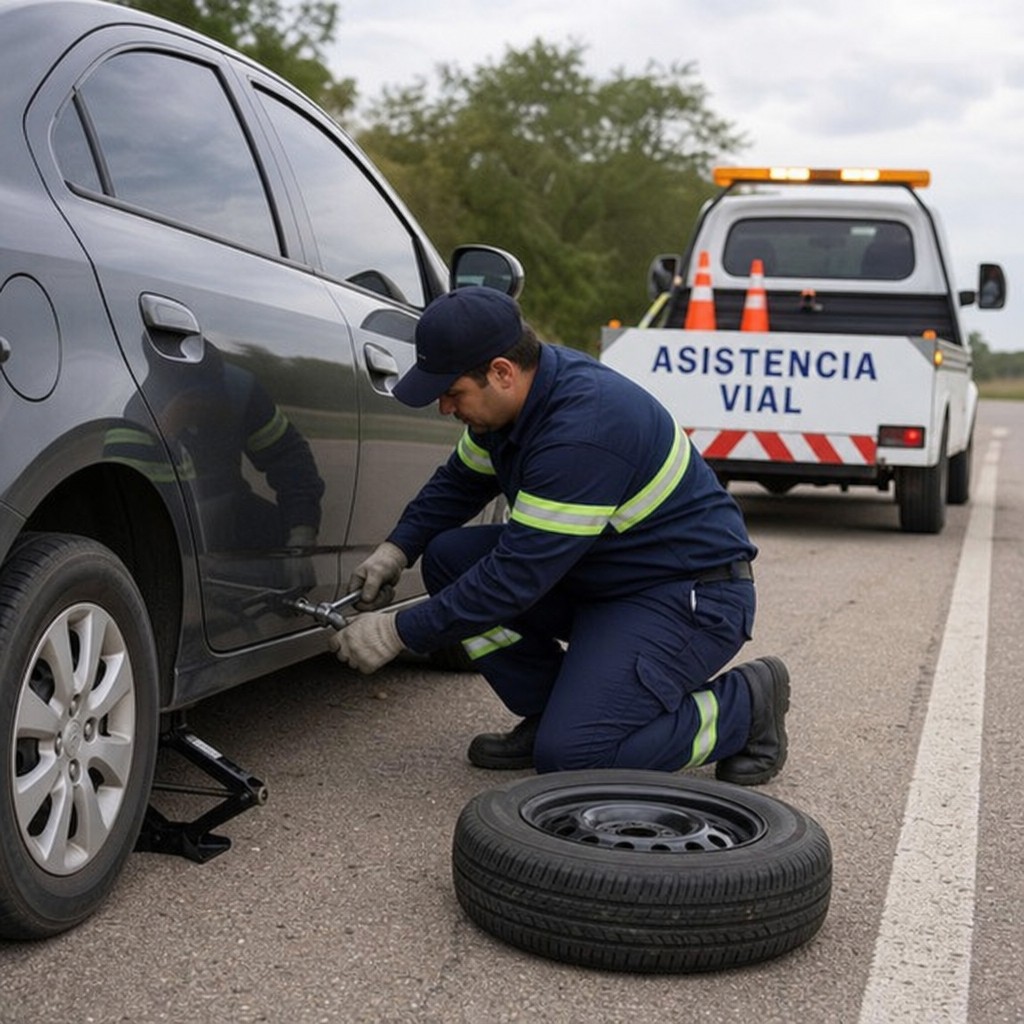
When it has to be a tow
- The car will not shift into gear, or will not restart after a successful jump
- You were in a collision, even a light one. Ask for accident recovery towing.
- The vehicle is stuck in mud, snow, sand or a ditch. Ask for winch out service.
- The tire is shredded and unsafe to drive on even after inflating
How to call a tow truck and get the right one
Use a short script so dispatch can send the correct equipment the first time. Read this off your screen if you have to:
- Your exact location: mile marker, cross street, landmark, direction of travel
- Vehicle year, make, model, and drive type. AWD and 4WD matter.
- The situation: dead battery, accident, flat, stuck, overheating
- Whether the wheels roll and steer, and whether the car is in a garage or a tight spot
- Destination: home, your mechanic, the dealership
- Special needs: low clearance, EV, motorcycle, dually, box truck
Whoever answers those questions clearly and follows up with a texted estimate is usually the company you want.
How to spot the better towing company
- Itemized quote. Hook up, mileage, after hours, all listed separately.
- Licensed and insured. Ask directly. Do not assume.
- A real ETA plus updates or a dispatcher call back.
- Card payment accepted. Cash-only pressure is a warning sign.
- Local reviews that specifically mention punctuality and pricing.
Flatbed or wheel lift?
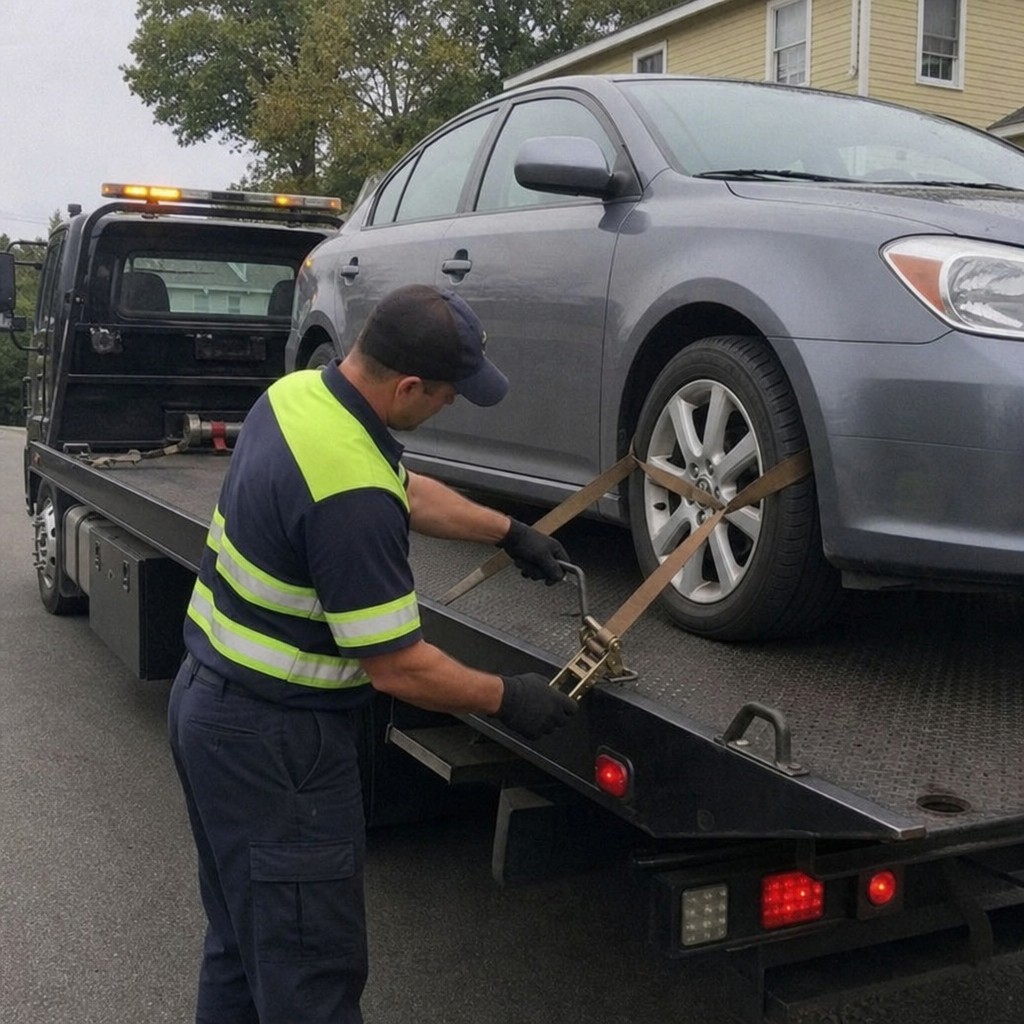
Knowing the difference prevents damage and awkward arguments at pickup.
Flatbed, usually the safest
- AWD and 4WD vehicles, many of which require all four wheels off the ground
- Low clearance cars, performance cars, and most EVs
- Accident damage with wheel or suspension problems
- Long distance tows
Wheel lift, common and efficient
- Many front or rear wheel drive cars, when hooked correctly
- Shorter tows in normal conditions
- Tight streets and garages where a flatbed cannot load
If you are not sure, ask dispatch what they recommend and why. A good operator answers with manufacturer guidance, not with whatever truck happens to be closest.
Towing prices: what the bill is made of
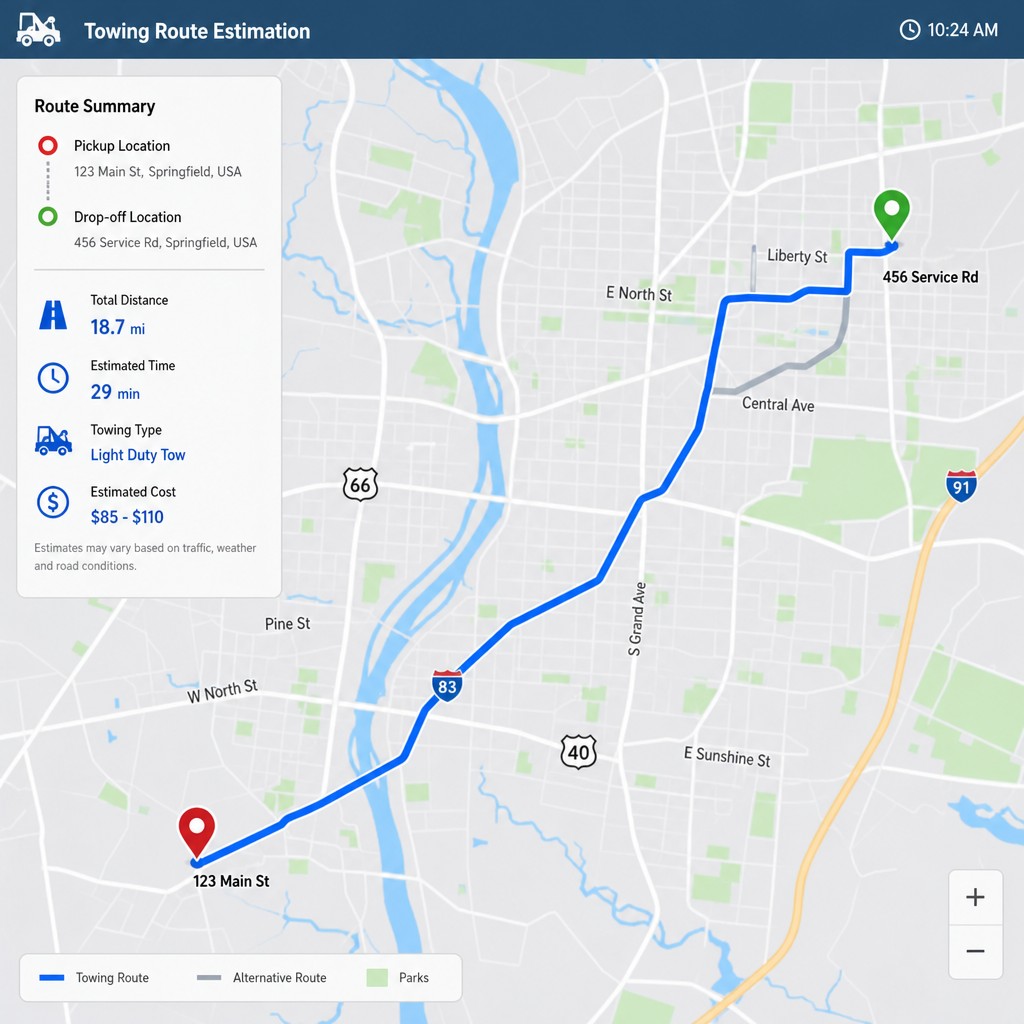
Prices swing by region, time of day, and how hard the job is, but the structure is almost always the same:
- Hook up or base fee for the service call
- Mileage charge, your cost per mile
- After hours or weekend surcharges
- Recovery charges for ditches, mud, embankments, parking structures
- Storage, if the car goes to an impound or storage lot
To get a fair quote fast, ask for the all-in estimate, a range if the driver cannot see the scene yet, confirmation of the destination and total miles billed, and whether the recovery needs a winch. If a dispatcher will not discuss price at all, call the next company on the list.
Specialty tows worth naming out loud
- Accident recovery: collisions, debris, disabled steering or suspension
- Motorcycle towing: needs proper straps, chocks and loading technique
- Heavy duty towing: large pickups, commercial vehicles, box trucks, buses
- Dead battery tows: a jump start assessment first, especially in extreme heat or cold
Save a number before you need it
A frantic midnight search is the worst way to pick a tow company. Save two numbers in your phone right now, one primary and one backup, so you can compare ETAs when dispatch is slammed. Ours is (380) 288-2822.
How to avoid a towing scam
- Refuse unsolicited help. If a truck just shows up after a crash, confirm who dispatched it.
- Get pricing in writing. A text estimate counts. "We will figure it out later" does not.
- Verify the destination. Make the driver repeat the shop name and address.
- Ask about fees before hook up. Winch, recovery and storage are where the shock lives.
- Take photos of your car, the mileage, and the truck and company markings.
- Pay by card whenever you can.
- Read what you sign, especially at an accident scene. Never sign a blank authorization.
If anything feels off, call your insurer, the highway patrol, or a shop you trust and ask who they work with.
The 60-second decision checklist
- Do they offer the exact service you need: tow, recovery, motorcycle, heavy duty?
- Did they quote base plus mileage?
- Did they explain flatbed versus wheel lift and pick the right one?
- Did they give an ETA and a way to call back?
- Are you clear on payment and paperwork?
The takeaway
Searching for a tow truck near you is easy. Choosing a dependable one under pressure is the hard part. Focus on clear communication, the right equipment, honest pricing, and a little scam awareness, and a bad afternoon stays just a bad afternoon.
Recommended gear for this
Gear that keeps a small breakdown from turning into a tow bill.
Heads up: the links below go to Amazon and Roadmate earns a small commission if you buy something. Costs you nothing extra and it helps keep the dispatch line running.
NOCO Boost GB40 Jump Starter (1000 Amp)
1000-amp lithium jump pack for gas engines up to 6L and diesels up to 3L. Spark-proof clamps, USB power bank, built-in LED flashlight. The one our techs actually carry.
View on Amazon12V Portable Tire Inflator
Plugs into your 12V outlet, reads pressure in PSI, and can reseat a slow-leak tire well enough to reach a shop.
View on AmazonReflective Warning Triangles (3-Pack)
Set them 100–200 feet behind your car if you're stuck on the shoulder. Cheap, tiny, could save your life.
View on AmazonAll-in-One Emergency Roadside Kit
Reflective triangles, gloves, a small first-aid pouch, a flashlight, and basic tools in one bag.
View on Amazon
Frequently asked questions
What should I tell dispatch when I call a tow truck?
Give your exact location, the vehicle year, make, model and drive type, what is wrong, whether the wheels roll and steer, your destination, and any special needs like low clearance, EV or motorcycle.
Should I ask for a flatbed or a wheel lift?
Flatbed is safest for AWD and 4WD vehicles, low clearance and performance cars, most EVs, accident damage and long distance tows. Wheel lift is fine for many front or rear wheel drive cars on shorter tows and in tight streets.
How is a tow priced?
Almost every tow is a hook up or base fee plus a per mile charge. After hours surcharges, winch or recovery work, and storage at an impound lot are the extras that surprise people.
How do I avoid a towing scam?
Never accept an unsolicited truck that just shows up, get the estimate in writing or by text, confirm the destination address out loud, ask about winch and storage fees before hook up, photograph your car, and pay by card.
In the Charlotte area? See our Charlotte roadside assistance and towing page for local coverage and arrival times.
Need a tow or a jump right now?
Talk to a real dispatcher and get a clear quote before anyone hooks up.