Where to Put a Car Jack: Finding the Jack Points on Your Car
Published Oct 23, 2026 · 5 min read · By Hassan, Owner of Roadmate Services
Where to put a car jack: on the pinch weld, the metal seam under the doors, just behind the front wheel or just ahead of the rear wheel, whichever is nearest the flat. Most cars mark the spot with a small notch or arrow. Your owner’s manual shows the exact points for your model.
On a highway shoulder, get safe first, then decide whether to lift anything at all.
Quick answer: where the jack goes
| Jack | Where it goes | Use it for |
|---|---|---|
| Scissor jack (came with the car) | Pinch weld notch nearest the flat tire | Roadside tire change only |
| Floor jack | Pinch weld, or the crossmember or rear differential if the manual allows it | Driveway or garage |
| Jack stands | Pinch weld or frame point next to the jack | Any time any part of you goes under the car |
The jack in your trunk has likely waited years for this moment. Give it the right spot and it will do its job.
Where do you put a jack on a car? The 4 side jack points
Most cars have four side jack points, one near each wheel, on the reinforced pinch weld seam under the doors.
Find the notch or arrow on the pinch weld
Look under the door, about a hand’s width from the wheel, for two small notches, an arrow or a flat pad. The scissor jack’s head has a slot that fits over the seam. That jack is built for one job and a lot of patience.
Check the owner’s manual
The manual’s flat tire section has a diagram of the jacking points. Kia’s jacking instructions, for example, say to use the correct jacking positions and never the bumpers. Some electric cars need a lifting pad or a “jack mode” setting first, so read before you lift.
Jack points on a car for a floor jack
A floor jack can also lift at a front crossmember, the rear differential on many rear-wheel-drive cars, or a subframe point. Use these only where the manual allows it. The pinch weld is still the safe default.
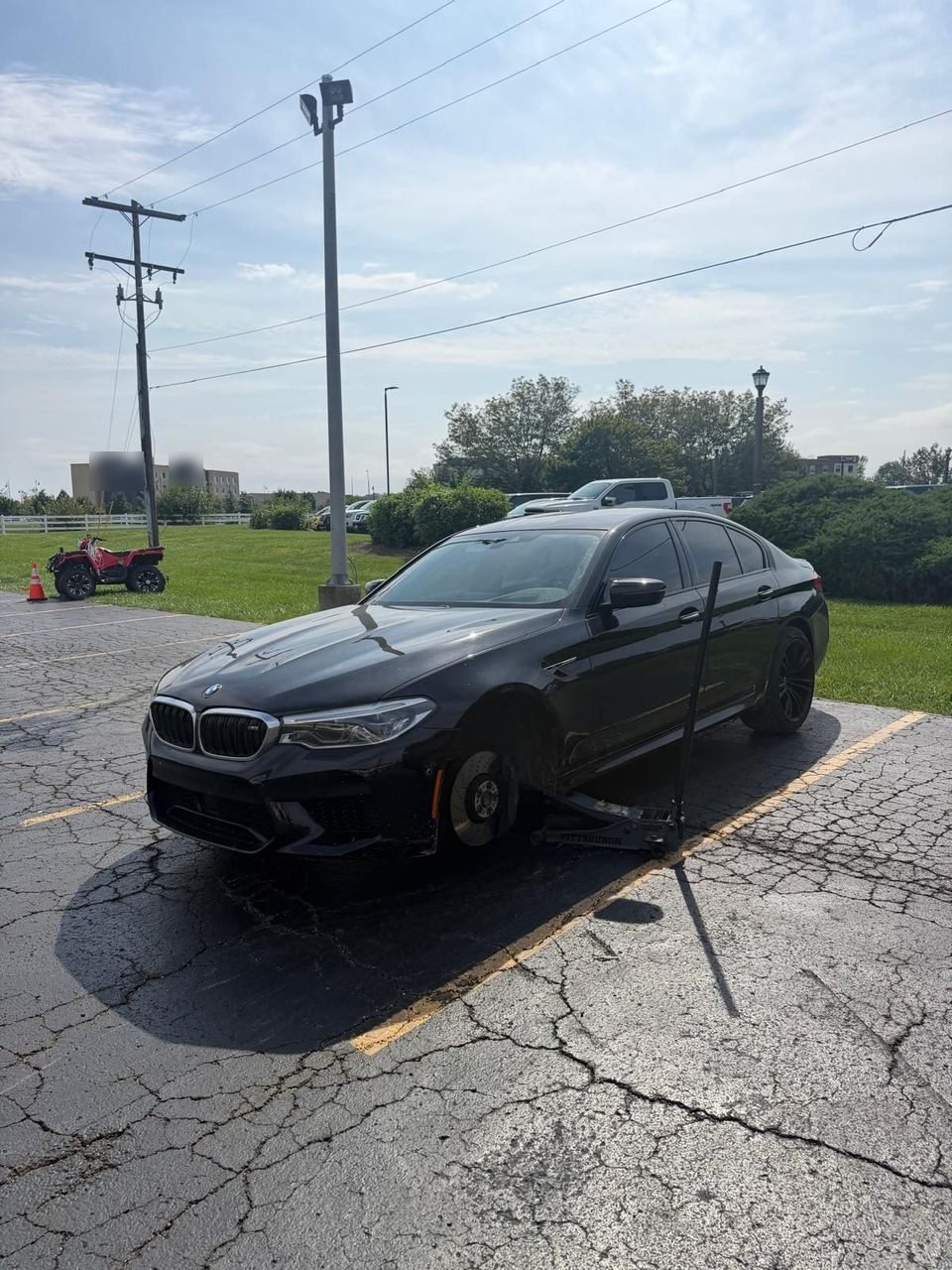
Where never to put a jack
- The oil pan, no matter how flat and inviting it looks.
- The transmission or exhaust.
- The fuel tank.
- Plastic splash panels, side skirts or bumpers. They crumple like a soda can, only more expensively.
- Suspension arms, unless the manual names them as a lifting point.
How to jack up a car safely
Get safe first
On a road shoulder, pull as far off the road as you can and turn on your hazards. Do not change a tire on the traffic side of a highway shoulder. On I-70, I-71 or I-270, stay buckled in with hazards on and call. See NHTSA’s roadside safety tips.
Set up the car
- Park on level, hard ground.
- Put the car in Park (or in gear for a manual) and set the parking brake.
- Chock the wheel diagonally opposite the flat.
- Loosen the lug nuts half a turn while the tire is still on the ground.
Lift slowly and only as high as needed
Place the jack at the jack point, check it sits square, and raise the car until the tire is just off the ground. Never put any part of your body under a car held only by a jack. If you need to go under it, set jack stands at the frame points first.
Lower slowly
Lower the car gently, then tighten the lug nuts in a star pattern. Our guide on how to change a flat tire covers the full steps.
When to skip the jack and call
- You are on the traffic side of a highway shoulder.
- The ground is soft, sloped or gravel.
- There is no spare (many new cars have none), or the spare is flat.
- The wheel lock key is missing.
We bring an air compressor for flat spares, a tool for missing lock keys, and used or new replacement tires. And sometimes the jack never leaves the trunk. A grandmother in Columbus called us around school start time with a nail in her Lexus tire. We came to fit the spare, but Hassan saw on site that the tire could be repaired, and they left for school after about 15 minutes. See which punctures can be repaired and what belongs in an emergency car kit.
Tire change cost in Columbus
A Roadmate tire change with your own spare is typically $85 to $175, depending on your location, the vehicle and the conditions. You see the price before you confirm. Details are on our mobile tire service in Columbus page.
Frequently asked questions
Where are the jack points on my car?
Most cars have four, on the pinch weld seam under the doors: just behind each front wheel and just ahead of each rear wheel. Look for a notch or arrow, and check the owner's manual.
Where should you never put a jack under a car?
Never under the oil pan, transmission, exhaust, fuel tank, plastic panels or bumpers. These parts are not built to hold the car's weight.
Can I jack up a car by the rear differential?
On many rear-wheel-drive cars and trucks, yes, if the owner's manual lists it as a lifting point. Use a floor jack, then jack stands before you work on the car.
Is it safe to jack up a car on grass or gravel?
Not really. A jack can sink or slide on soft or loose ground. Move slowly to firm, level pavement if you can, or call for help.
How high should I raise the car to change a tire?
Just high enough for the inflated spare to fit, usually an inch or two of clearance. Higher makes the car less stable.
The bottom line
Put the jack on the pinch weld notch nearest the flat, behind the front wheel or ahead of the rear one, and check the manual for your model. Never lift on the oil pan, exhaust or plastic, and never get under a car held only by a jack. On a busy shoulder, skip the jack and call. For more on tires, see NHTSA’s tire safety page.
Flat tire in Columbus?
Call 6 AM to 8 PM daily, Eastern Time. A dispatcher confirms availability, your full price and an arrival estimate before anyone heads your way.
Find the notch, lift with care, and let the oil pan keep its quiet life.