Battery Terminals: Types, Cables and Signs of a Bad Connection
Published Oct 26, 2026 · 7 min read · By Hassan, Owner of Roadmate Services
A good battery behind a bad connection is still a car that will not start. Battery terminals are the 2 posts on your battery, positive (+) and negative (-), and the clamps on the cable ends that grip them. Most cars use top posts, and many GM cars use side posts. A loose or corroded terminal is one of the most common reasons a car with a healthy battery only clicks.
Below: the types, how to tell positive from negative, the 6 signs of a bad connection, and when a clamp or cable needs replacing instead of a battery.
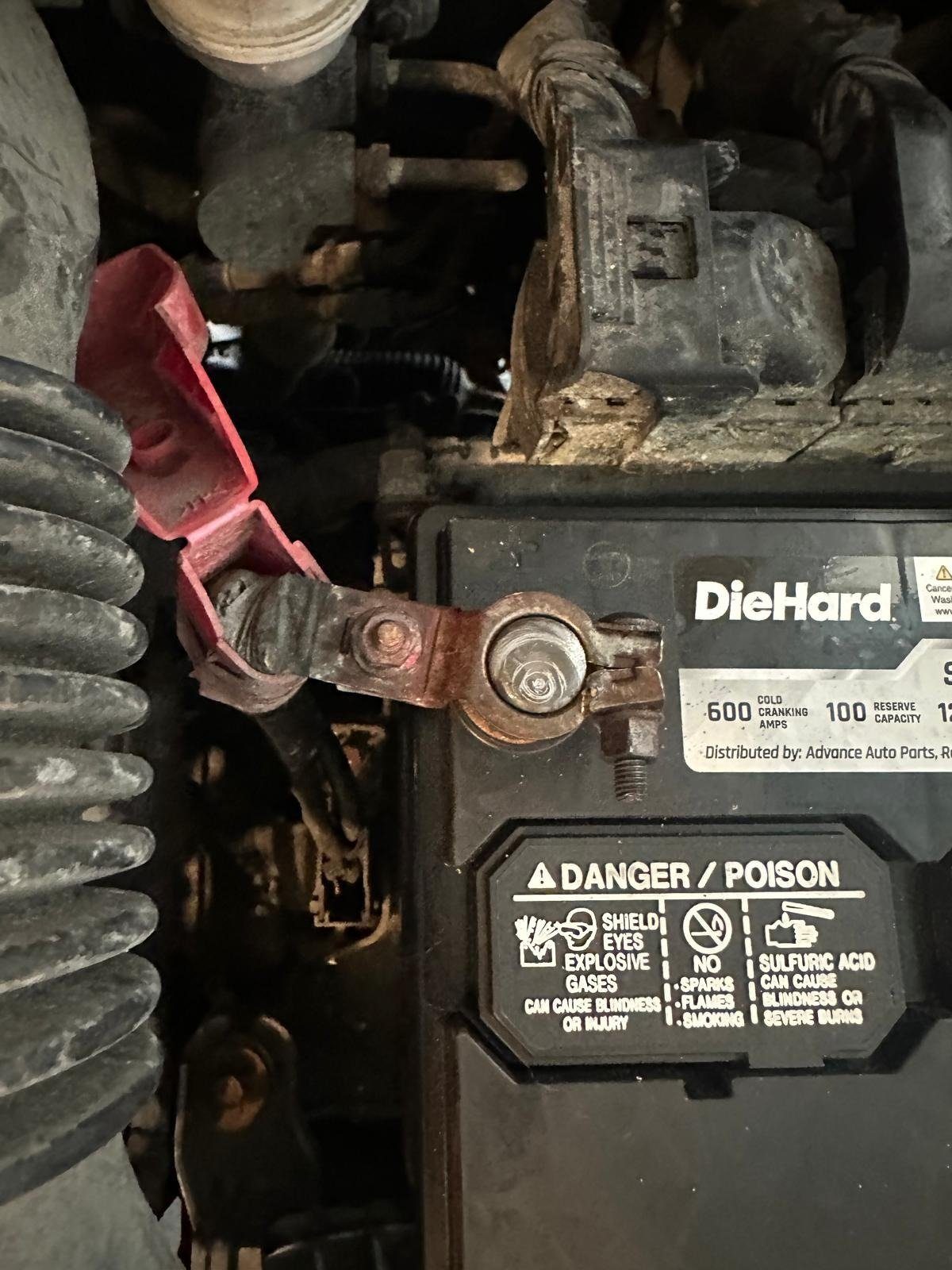
Quick answer: battery terminals at a glance
| Question | Short answer |
|---|---|
| What are battery terminals? | The + and - posts on the battery and the cable clamps that grip them |
| Which type is my car? | Top post on most cars; side post on many GM cars; small posts on some older Japanese cars |
| Which one is positive? | Marked +, usually a red cover; the larger post on a top-post battery |
| Loose terminal symptoms? | Clicking, no start, dim lights, starts after a wiggle |
| The fix? | Tighten a loose clamp, clean corrosion, replace a cracked clamp or a bad cable |
| Bottom line | Clean and tight terminals first; a new battery only if it tests bad |
3 main types of automotive battery terminals
Pop the hood and look at where the cables meet the battery. According to Wikipedia’s battery terminal entry, almost every car uses one of these three.
1. Top post battery (SAE posts)
Two tapered lead posts stick up from the lid. The cable clamps slide over them and tighten with a bolt. The positive post is slightly larger than the negative, so the clamps only fit the right way. This is the battery post terminal most drivers picture.
2. Side post battery (GM and others)
Two threaded holes sit in the side of the case, and the cables bolt straight in. Both terminals use the same SAE 3/8-16 thread, so the size does not stop you mixing them up. Check the + and - marks every time.
3. Smaller posts: JIS and L terminals
JIS posts look like top posts, only smaller, and most older Japanese cars used them. L terminals, an L-shaped post with a bolt hole, show up on some European cars and on motorcycles and lawn mowers.
Terminal layout is part of a battery’s group size, which is why the wrong battery can leave a cable too short to reach. Our car battery size chart explains it. The cable is not being stubborn; it just has a fixed length.
How to tell the positive from the negative terminal
Look for the + and - stamped next to each post. The positive side usually has a red cover or red cable, and on a top-post battery its post is the larger one. The negative cable is usually black.
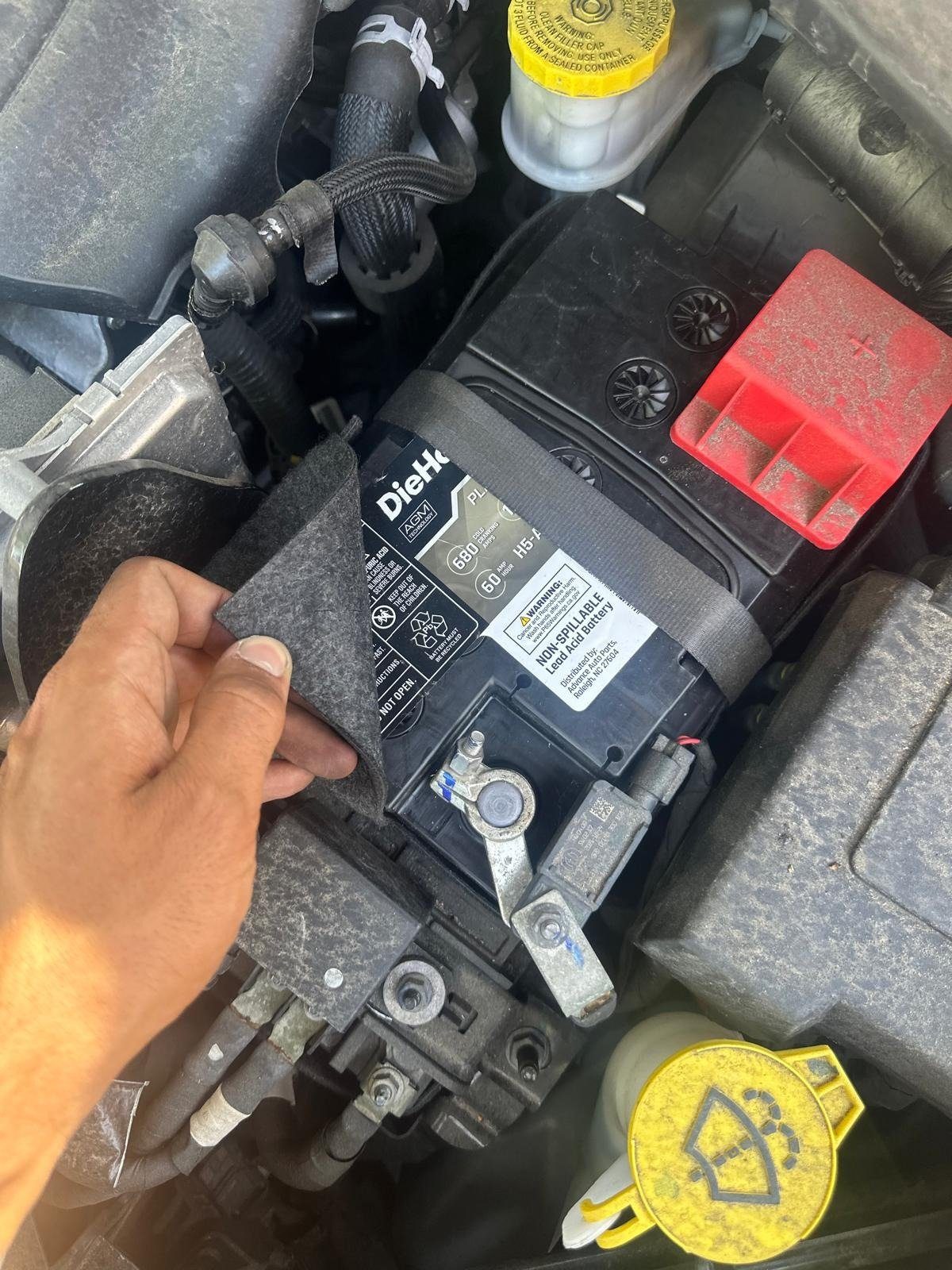
Some newer cars, like the one above, have a small sensor built into the negative clamp. Leave its plug connected. Which cable comes off first is covered step by step in how to disconnect a car battery. The short version: negative off first, negative on last.
Battery cables and battery cable ends
A car has two main battery cables. The positive cable runs to the starter and the fuse box. The negative battery cable bolts to the engine or the car body, which carries current back to the battery as the ground.
The battery cable ends, or battery clamps, are the part that grips the post. Factory clamps are often crimped on and come as part of the cable. Bolt-on replacement ends clamp onto bare wire. Think of the clamp as the handshake between the battery and everything else: a limp one ruins the whole meeting.
Signs of a loose or bad battery terminal: 6 to watch for
A bad connection can look like a dead battery, a bad starter or a gremlin in the dash. These are the usual clues, several of them also listed by NAPA’s guide to failing terminal ends:
- Clicking or nothing when you turn the key or press start. See why a car clicks but won’t start.
- It starts after you wiggle a clamp. That is the terminal telling on itself.
- Dim headlights or a flickering dash, worse when you crank.
- Radio, screen or navigation slow to wake or resetting.
- White, blue or green crust on the post or clamp.
- It runs after a jump, then dies again. The battery may be fine, but the charge cannot get in or out. If it quits on the road, read what to do when the battery dies while driving.
A loose clamp is the car version of a phone charger that only works at one exact angle. Except you cannot prop the car against a pillow.
How to check your battery terminals safely: 5 steps
Batteries make hydrogen gas that can ignite, and the acid burns. The battery precautions in Mazda’s owner’s manual are a good baseline for any car: eye protection, no sparks or flames, and no metal tools touching the terminals.
- Park, turn the engine off and take the key out or keep the fob away from the car.
- Put on safety glasses and gloves.
- Look: crust on the posts, a cracked or split clamp, a frayed or swollen cable, a melted cover. If the battery case is cracked or leaking, stop there.
- Try to twist each clamp by hand. It should not turn or lift. Never lay a wrench where it can touch both posts, or the positive post and metal on the car.
- If a clamp moves, tighten it only if you know the order and have the right size wrench. For crust, follow our guide on how to clean battery corrosion.
Jump terminals under the hood when the battery is in the trunk
Not every battery lives under the hood. Many cars keep it in the trunk or under a seat, with a pair of remote jump terminals in the engine bay so you never have to dig for the real posts.
We met one in a downtown Columbus apartment garage: a 2016 Hyundai Genesis with its battery in the trunk. With the battery dead, the electric trunk release would not open. So Hassan jumped the car through the under-hood terminals first, opened the trunk, then fitted a new DieHard Platinum H9 AGM battery. Lesson: if you cannot find the battery, check your manual for jump terminals before you start pulling up carpet.
Tighten, clean or replace: what each problem needs
| What you see | What it needs |
|---|---|
| Clamp turns by hand, no damage | Tighten |
| Crust on the post or clamp | Clean, then protect |
| Clamp cracked, stretched or eaten away | Replace the cable end or cable |
| Insulation split, melted, or green wire under it | Replace the cable |
| Case cracked, swollen or leaking | Replace the battery |
Shims and universal clamps can get a stretched clamp gripping again, but treat them as a temporary fix. NAPA notes that if cutting off a bad end leaves the cable too short, the whole cable should go.
Not everything needs a new battery, and we will say so. A clean, tight terminal can save you a battery you did not need to buy. Corrosion that keeps coming back, though, is often the battery itself on the way out. Have it tested before you spend money either way.
Battery and terminal help in Columbus
If the car will not start, we can come to you in Columbus. A jump start is an estimated $75 to $150, and after the jump we test the battery, the alternator and the charging system.
If the battery is bad, we offer mobile battery replacement in Columbus, quoted by phone because the battery depends on your car.
- DieHard batteries, standard, EFB and AGM, with common group sizes on the truck.
- Every battery location, including trunk and under-seat batteries.
- Registration on site for cars that need it.
- The old battery is taken away, and the core charge is included.
- Most replacements take 15 to 45 minutes on site, depending on the vehicle.
- Average arrival about 32 minutes, depending on traffic, weather and location. Hours 6 AM to 8 PM daily.
Hassan’s view: people lose time driving to a shop or parts store, and sometimes leave with the wrong battery. We bring the right one to you.
Frequently asked questions
What are the battery terminals on a car?
They are the two metal posts on the battery, positive (+) and negative (-), plus the clamps on the ends of the battery cables that grip them. Together they carry all the power from the battery to the starter and the rest of the car.
Can a loose battery terminal stop a car from starting?
Yes. A loose clamp touches the post on only a small spot, so the starter cannot get enough current. You may hear clicking or nothing at all, even with a good battery. If a wiggle of the clamp brings the car back to life, the terminal is the problem.
Which battery cable is negative?
The negative cable is usually black and connects to the post marked - (minus). Its other end bolts to the engine or the car body as the ground. On many newer cars the negative clamp also carries a small battery sensor with a plug.
What is the difference between a top post and a side post battery?
A top post battery has two tapered posts on its lid, and the cable clamps slide over them. A side post battery has two threaded holes in its side, and the cables bolt in. Side posts are common on GM cars, and both of their terminals are the same size.
How tight should battery terminals be?
Snug enough that you cannot twist or lift the clamp by hand. Do not keep cranking past that: a clamp pulled too hard can crack, and a side-post bolt threads into the battery case. Your owner's manual or a service manual gives the exact torque.
When should battery cables be replaced?
Replace a cable when the clamp is cracked or eaten away, the insulation is split or melted, or corrosion has crept up under the insulation so the wire looks green. NAPA also suggests a new cable when cutting off a bad end would leave it too short to reach the post.
The bottom line
Battery terminals are the + and - posts and the clamps that grip them: top post on most cars, side post on many GM cars, smaller posts on some others. A loose or crusted terminal causes clicking, dim lights and no-starts that look like a dead battery. Tighten and clean first, replace cracked clamps and damaged cables, and replace the battery only when it tests bad.
Car still will not start?
Call Roadmate at (380) 288-2822, 6 AM to 8 PM daily, Eastern Time. A dispatcher confirms the price and an arrival estimate before anyone heads your way.
May your clamps stay tight and your only morning drama be running out of coffee.