How Often Should You Rotate Your Tires?
Published Oct 23, 2026 · 4 min read · By Hassan, Owner of Roadmate Services
Most cars should have their tires rotated every 5,000 to 8,000 miles, or sooner if you see uneven wear (NHTSA). Your owner’s manual has the final word, because a few cars should not be rotated at all.
Rotation is a tire shop job, not a roadside one, and we will say so. Tires do not read the manual, but you can.
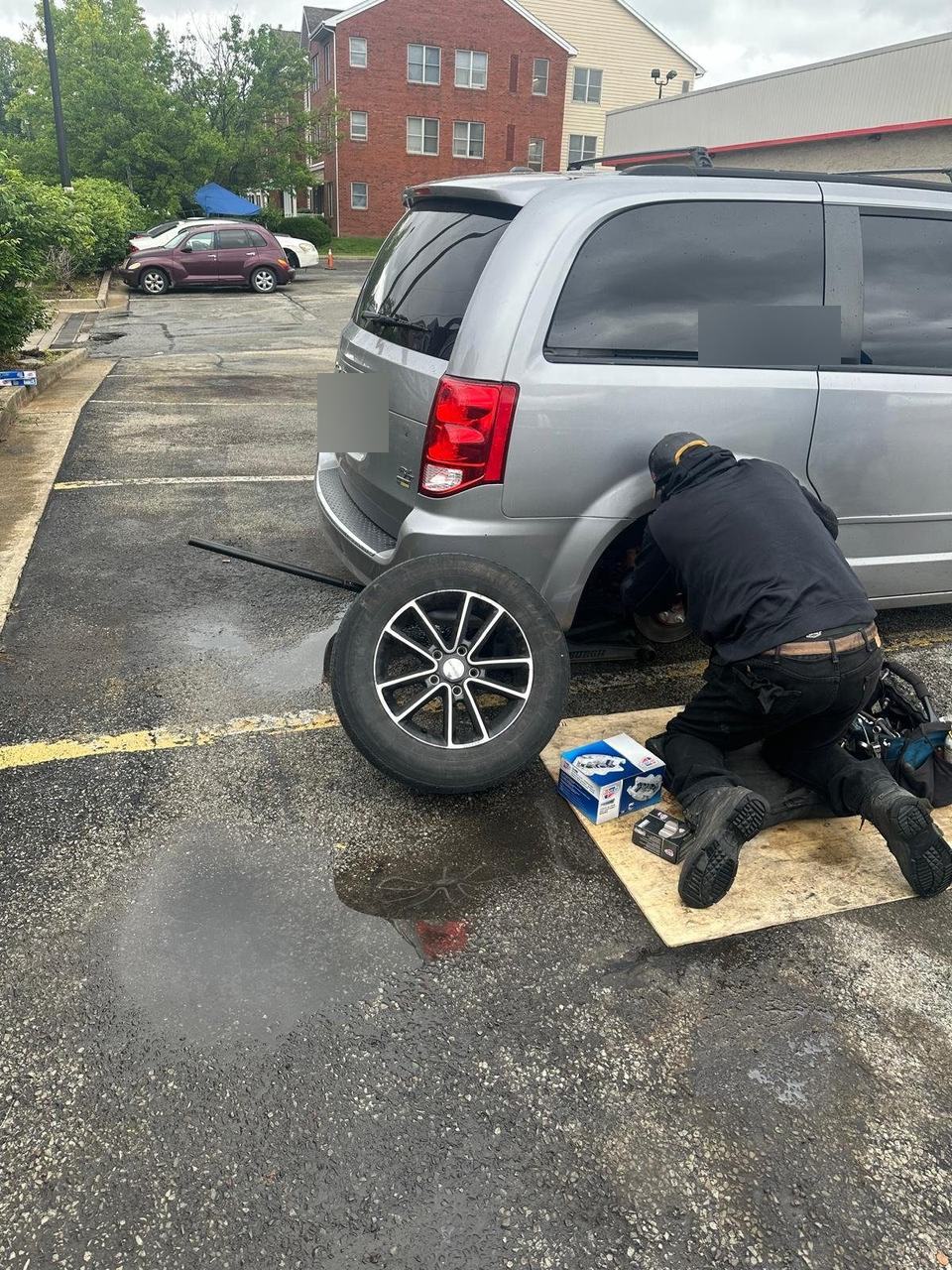
How often should tires be rotated?
Published intervals sit close together:
- NHTSA: every 5,000 to 8,000 miles, if the carmaker recommends rotation (NHTSA tire safety).
- Michelin: every 5,000 to 7,000 miles, or every other oil change (Michelin on tire rotation).
- US Tire Manufacturers Association: as recommended, or every 5,000 miles (USTMA tire tip).
If you tow, drive lots of short trips or run performance tires, check sooner. Front tires steer, carry the engine and do most of the braking. Rotation is how you share the chores.
Tire rotation pattern by drivetrain
| Car or tire | Common pattern | Note |
|---|---|---|
| Front-wheel drive | Fronts straight to the back, rears cross to the front | Front tires wear fastest |
| Rear-wheel drive | Rears straight to the front, fronts cross to the back | The mirror of FWD |
| AWD and 4x4 | Crisscross, unless the manual says otherwise | Rotate on time, often sooner |
| Directional tires | Front to back on the same side only | Arrow on the sidewall |
| Staggered sizes | Side to side on the same axle only | Fronts and rears differ in size |
| Staggered and directional | Cannot be rotated | Each tire stays where it is |
Patterns from Michelin and Tire Rack. Your owner’s manual overrides any of them.
Front-wheel drive and rear-wheel drive
On a front-wheel drive car the fronts wear fastest, so they go straight back. Rear-wheel drive is the mirror image.
AWD tire rotation
Michelin says AWD and 4WD vehicles usually need more frequent rotation, typically in a crisscross pattern unless the carmaker says otherwise. Even tread depth on all four protects the driveline, so do not skip one.
Directional and staggered tires
A directional tire must keep rolling the way its arrow points, so it never switches sides. Staggered fronts and rears are different sizes, so they never switch axles. Both at once means no rotation.
Signs your tires are overdue
- The front tires have clearly less tread than the rears
- One edge of a tire is worn more than the other
- A new vibration at highway speed
Edge wear can also mean alignment. If the tread is already low, read when to replace tires. For how long a full set should last, see how long tires last.
What to ask the shop to check while the wheels are off
Three small things from a rotation turn into roadside calls later:
- The wheel lock key. The shop needs it, and it often does not make it back to the glovebox. It has one job a year and still goes missing. If yours has, see lost wheel lock key.
- Lug nuts torqued to spec. Over-tightened or damaged nuts make the next flat much harder. More in how to remove a stripped lug nut.
- Spare tire pressure. NHTSA says to check every tire, spare included, at least once a month. A flat spare turns a quick tire change into a longer call.
On some cars the tire pressure light needs a reset after a rotation. See the service tire monitor system message.
Rotation is a shop job. Flats are ours.
We do not rotate tires. Book that with a tire shop. As Hassan puts it, you cannot plan for a flat, but good tires instead of bald ones avoid some of them, and rotation keeps one tire from going bald first.
When a flat does happen in Columbus, we fit your spare (estimated $85 to $175) or plug the tire on site when it can be repaired (estimated $75 to $150). On a highway shoulder, get safe first, then call.
We work 6 AM to 8 PM daily, and arrival averages about 32 minutes, depending on traffic, weather and location.
Frequently asked questions
Is it okay to rotate tires every 10,000 miles?
Only if your owner's manual says so. It is past the intervals NHTSA and Michelin give, and the risk is uneven wear that shortens the life of the set.
Should you rotate tires at every oil change?
It is handy timing if you change oil around every 5,000 miles. With long oil intervals, every oil change may be too late; Michelin suggests every other oil change.
Do I really need to rotate my tires every 5,000 miles?
Not always. The manual comes first; 5,000 miles is the general fallback from the US Tire Manufacturers Association.
How often should you rotate AWD tires?
On the manual's schedule, without skipping. Michelin notes AWD and 4WD vehicles usually need more frequent rotation, because the system works best when all four tires wear evenly.
More tire guides: tire numbers explained; how to tell the age of a tire.
The bottom line
Rotate every 5,000 to 8,000 miles or on your manual’s schedule, and sooner for AWD. Use the pattern for your drivetrain and tires. Ask the shop to return the lock key, torque the lug nuts and check the spare.
Flat tire in Columbus?
Call (380) 288-2822, 6 AM to 8 PM daily, Eastern Time. A dispatcher confirms the price and an arrival estimate before anyone heads your way.
Here is to four tires that wear out together, like a well-run relay team.