Tire Numbers Explained: How to Read Your Tire Size
Published Oct 23, 2026 · 5 min read · By Hassan, Owner of Roadmate Services
Here are tire numbers explained in one line: P215/65R16 98H is a passenger tire, 215 mm wide, with a sidewall 65% as tall as it is wide, radial construction, for a 16-inch wheel, load index 98 and speed rating H. You will find your size on the tire's sidewall, on the label on the driver's door edge, and in the owner's manual.
The sidewall is the only part of your car that tells you its measurements without being asked.
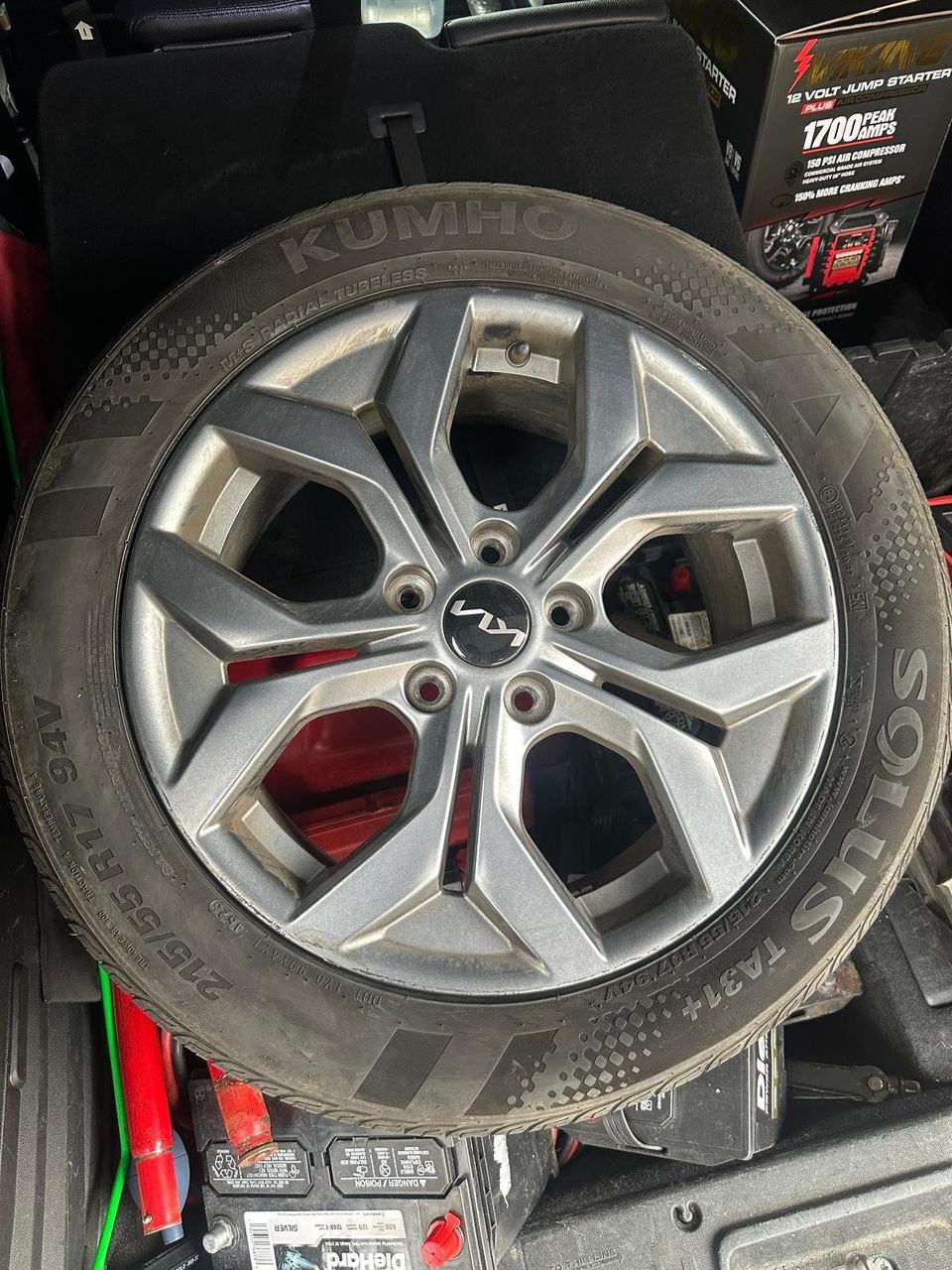
Quick answer: tire numbers at a glance
| Part | Example | What it means |
|---|---|---|
| Tire type | P | Passenger car (LT light truck, ST trailer, T temporary spare) |
| Width | 215 | 215 millimetres wide, sidewall to sidewall |
| Aspect ratio | 65 | Sidewall height is 65% of the width |
| Construction | R | Radial |
| Rim diameter | 16 | Fits a 16-inch wheel |
| Load index | 98 | 1,653 lb per tire at full pressure (market chart, Les Schwab) |
| Speed rating | H | 130 mph maximum sustained speed (market chart, Les Schwab) |
| Full size | P215/65R16 98H | Replace like for like, never lower on load or speed |
What do the numbers on tires mean?
Tire type: P, LT, ST or T
P is a passenger tire. LT is a light truck tire, built for heavier loads and towing. ST is for trailers only. T is a temporary spare, often with a code like T125/80D16, where D means diagonal (bias-ply) construction. See how long you can drive on a spare tire before you trust one on the highway. No letter at all means a metric tire.
Width: the first number, in millimetres
215 means 215 mm wide. The width is in millimetres and the rim in inches, so one short code speaks two measuring systems at once.
Aspect ratio: how tall the sidewall is
The number after the slash is the sidewall height as a percentage of the width. A 215/65 sidewall is about 5.5 inches tall, per Les Schwab. Higher means a taller, softer sidewall; lower means a shorter, sportier one.
R for radial
R means radial construction, which almost every car tire sold today uses. ZR marks a high-speed tire.
Rim diameter in inches
16 means a 16-inch wheel. It must match exactly; there is no close enough.
Tire load index: how much weight each tire carries
The number after the size is the load index: the most weight one tire can carry at maximum pressure. Market figures from the Les Schwab load index chart:
| Load index | Max load per tire |
|---|---|
| 85 | 1,135 lb |
| 90 | 1,323 lb |
| 95 | 1,521 lb |
| 98 | 1,653 lb |
| 100 | 1,764 lb |
| 105 | 2,039 lb |
Never fit a lower load index than the door-jamb label or owner's manual lists. An overloaded tire runs hot and can fail.
Tire speed ratings: what the letter means
The final letter is the speed rating: the top speed the tire can sustain under ideal conditions. Market figures from the same Les Schwab speed rating chart:
| Speed rating | Max sustained speed |
|---|---|
| S | 112 mph |
| T | 118 mph |
| H | 130 mph |
| V | 149 mph |
| W | 168 mph |
| Y | 186 mph |
Replace a tire with the same rating or higher. A speed rating is a ceiling, not a target, and every letter here sits well above any speed limit on I-71.
Other markings worth knowing
- Max inflation pressure: the tire's limit, not its comfort zone. NHTSA says the correct pressure is the one the vehicle maker lists, not the one on the tire (NHTSA tire safety). For cold mornings, see tire pressure in cold weather.
- Run-flat marks: letters such as RFT, ROF, SSR or ZP mean the tire can be driven a short distance after losing air. More in run-flat tires.
- DOT code: the last four digits are the week and year the tire was made. See how to tell tire age.
Damage on the sidewall usually means replace, not repair. See tire damage on the sidewall.
Why your tire size matters when you call for help
If you are on a highway shoulder, get safe first, then call. Pull as far off the road as you can, hazards on, and stay away from the traffic side of the car.
When there is no usable spare, we will ask for your tire size when you call, so have it ready. We bring used or new replacement tires, or take an unrepairable tire to a shop and bring it back fitted with a new one.
Take a photo of one sidewall today. 215/65R16 98H looks like a Wi-Fi password and is about as easy to remember.
Estimated Columbus ranges:
- Tire change with your spare: estimated $85 to $175
- Tire repair on site (plug): estimated $75 to $150
- Tire taken to a shop and brought back: quote by phone
We work 6 AM to 8 PM daily, and arrival averages about 32 minutes, depending on traffic, weather and location. Choosing a new size or upgrading wheels is a tire shop's job, not a roadside one, and we will say so.
Frequently asked questions
Which tire is taller, 60 or 70?
With the same width and rim, the 70. On a 225 tire, a 60 sidewall is about 135 mm tall and a 70 sidewall about 158 mm.
Can I use 235 tires instead of 225?
Sometimes, but it changes the overall size, which can affect clearance and the speedometer. Check the door-jamb label and owner's manual, ask a tire shop, and never mix sizes on one axle.
Should tires be at 32 or 35 PSI?
Neither by default. Use the pressure on the label on the driver's door edge, checked cold. The sidewall number is the maximum, not your target.
Does the speed rating matter if I never speed?
Yes. It also reflects how the tire handles heat and holds its shape. Match or beat the original rating.
What does the T on a spare tire mean?
Temporary. A compact spare has its own speed and distance limits, printed on the spare or in the owner's manual. It gets you to a tire shop, nothing more.
More tire guides: how often to rotate tires; how long tires last.
The bottom line
Read a tire size left to right: type, width, aspect ratio, construction, rim, load index, speed rating. Replace like for like, never with a lower load index or speed rating. Take pressure from the door-jamb label, and keep a sidewall photo in your phone.
Flat tire in Columbus?
Call (380) 288-2822, 6 AM to 8 PM daily, Eastern Time. A dispatcher confirms the price and an arrival estimate before anyone heads your way.
Your tires now have no secrets left, which is more than most of us can say about the glovebox.