Tire Pressure in Cold Weather: How Much It Drops and What to Set
Published Oct 23, 2026 · 5 min read · By Hassan, Owner of Roadmate Services
Ohio can go from jacket weather to scraper weather overnight, and your tires notice before you do. Tire pressure in cold weather drops by about 1 to 2 PSI for every 10°F the temperature falls. The fix is simple: fill your tires to the number on the driver’s door placard, measured cold, before you drive.
Quick answer: tire pressure in cold weather at a glance
| Question | Short answer |
|---|---|
| How much does pressure drop in the cold? | About 1 to 2 PSI for every 10°F (market figure, Jiffy Lube) |
| What should I set it to? | The number on the driver's door jamb placard, checked cold |
| When should I check? | In the morning before driving, at least once a month (NHTSA) |
| TPMS light on a cold morning? | Common. Add air to the placard number |
| One tire keeps going low? | Likely a leak, not the weather |
| In short | Placard pressure, checked cold, every month |
Sources: Jiffy Lube and NHTSA, Tire Safety: Everything Rides On It. Checked October 2026.
Why tire pressure drops in cold weather
Air shrinks as it cools. The same air inside a cold tire pushes out with less force, so the gauge reads lower. No air has gone anywhere; it is just huddled up.
A fall day in Columbus can swing 30 degrees between afternoon and the next morning. At 1 to 2 PSI per 10°F, that is roughly 3 to 6 PSI gone by breakfast, often on a tire that was already a bit low.
Tyre pressure, if you learned to drive somewhere with roundabouts, follows exactly the same rules.
What tire pressure should you run in winter?
Use the pressure on the placard on the driver’s door jamb. It can also be in the glove box or the owner’s manual. Set it with the tires cold, and do not add extra for winter unless your vehicle maker says so.
The number on the tire sidewall is the maximum the tire can hold. It is a ceiling, not a goal.
Is 27 or 29 PSI too low?
Most passenger cars call for 30 to 35 PSI (market figure, Jiffy Lube), so compare with your placard. On a 35 PSI car, 27 is 8 PSI short: fill it before any real drive. 29 on a 32 PSI car is a little low: drive gently to air.
Is 40 PSI too much?
For most cars, yes. An overfilled tire rides harder and puts less rubber on the road, which is the last thing you want on slush. Let air out to the placard number.
How to check tire pressure in cold weather: 5 steps
- Check in the morning, before driving. NHTSA counts a tire as cold after it has been parked for at least three hours.
- Find the placard pressure on the driver’s door jamb. Front and rear can differ.
- Press a tire gauge firmly onto each valve and note all four readings.
- Add air to the placard number. If you overshoot, press the valve pin to let a little out and check again.
- Check the spare too, if you have one. A flat spare is a surprise nobody wants twice.
NHTSA says to check at least once a month. Under-inflated tires also cost about 0.2% in gas mileage per 1 PSI, says fueleconomy.gov. A tire gauge in the glove box earns its spot by about November.
Winter tire pressure for snow tires
Snow tires go to the same placard pressure as your regular tires, unless the tire maker says otherwise. Continental notes that poor upkeep can make studded tires lose studs early. Snow tires grip better in the cold. They do not check themselves.
Why the tire pressure light comes on on cold mornings
The tire pressure monitoring system (TPMS) warns you when a tire falls well below the placard pressure. A tire that was slightly low slips past that line overnight, so the light comes on at 7 AM and goes off by lunch, once driving has warmed the tires.
The car is not being dramatic; the tire was close to the line all along. Add air and the light should stay off. A light that flashes first means something else; see what a flashing tire pressure light means.
When low pressure is not the cold: signs of a leak
Signs below; causes and fixes are in slow leak in tire.
- One tire is much lower than the other three.
- The same tire is low again a day or two after you filled it.
- You can see a nail or screw in the tread, or a bulge or cut on the sidewall.
- The tire looks flat, or the car pulls to one side.
A leak needs a repair, not more air every morning. See which punctured tires can be repaired. If a tire goes flat on I-70, I-71 or I-270, get safe, then call. Pull off at the next exit if you can. If you cannot, stop well onto the shoulder, put the hazards on and stay buckled in. Our winter roadside safety tips cover waiting safely in the cold.
Do you need roadside help for low tire pressure?
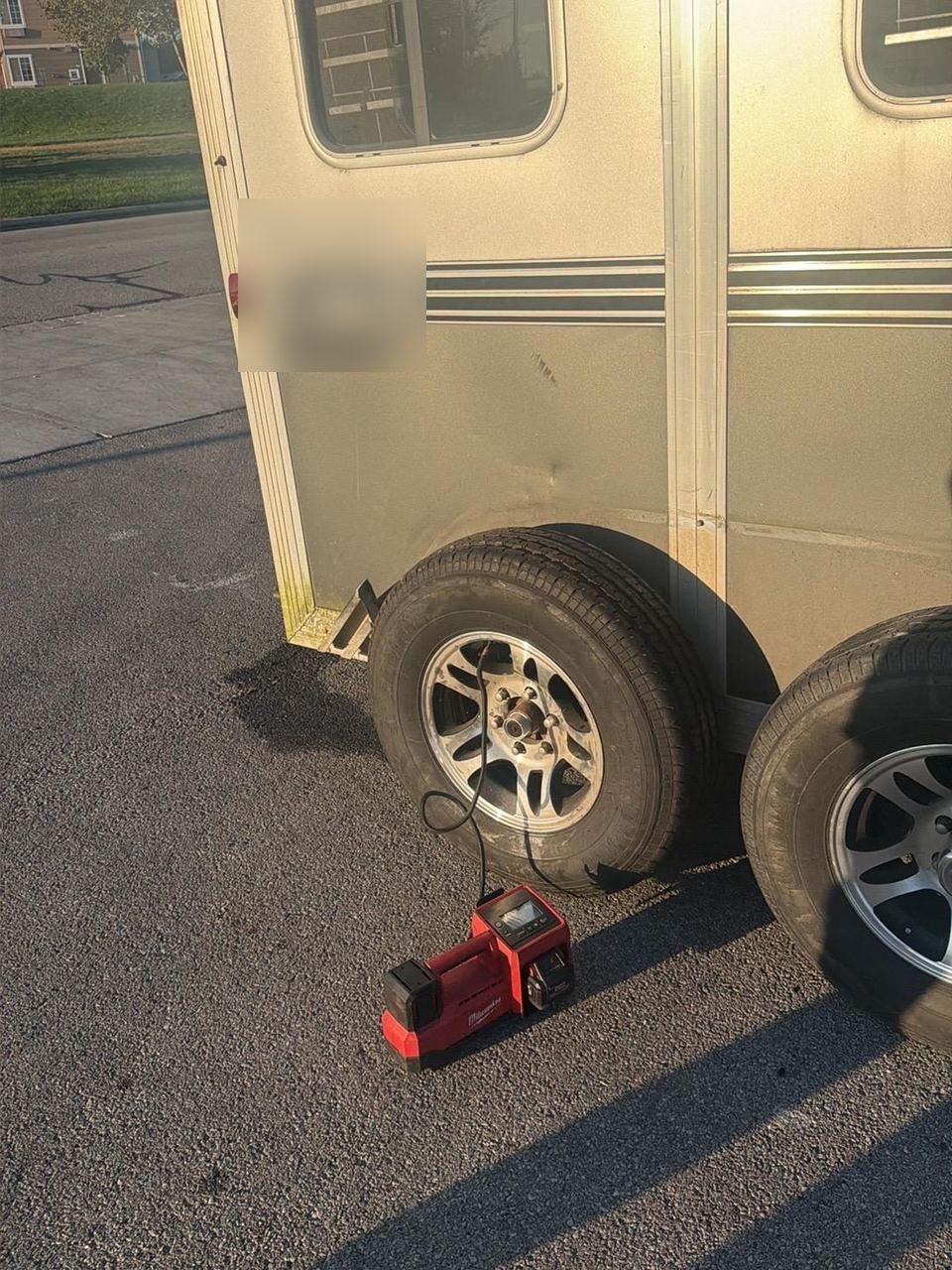
Usually not, and we will say so. Cold-weather low pressure is a quick stop at an air pump, or a few minutes with the inflator in your emergency car kit.
If you cannot get to air, or a tire keeps losing it, we come to you in Columbus to inflate, reset the TPMS light, plug a repairable puncture or fit your spare.
- Inflate low tires and reset the light: quote by phone
- On-site tire repair: estimated $75 to $150
- Tire change: estimated $85 to $175
We arrive in about 32 minutes on average, depending on traffic, weather and location, 6 AM to 8 PM daily. See our mobile tire service in Columbus.
Frequently asked questions
Is 27 PSI too low in winter?
For most cars, yes. Most passenger cars call for 30 to 35 PSI, so check the door-jamb placard and top up before you drive any distance.
Is 29 PSI too low to drive on?
A little under the placard: drive gently to the nearest air pump. Well under, or dropping again after you fill it: do not drive far on it.
Should I add air to my tires when it's cold?
Yes, up to the placard pressure, measured cold. Do not add extra for winter unless your vehicle maker says to.
Is 40 PSI too much for winter tires?
For most cars, yes. The sidewall number is the tire's maximum, not a target. Winter tires go to the vehicle placard unless the tire maker says otherwise.
Why does my tire pressure light come on when it's cold and go off later?
Overnight cold drops the pressure just below the warning level, and driving warms it back up. Add air to the placard number so the light stays off.
The bottom line
Cold weather lowers tire pressure by about 1 to 2 PSI for every 10°F. Check cold, at least monthly, and fill to the door-jamb placard, not the sidewall number. One tire that keeps going low is a leak, not the weather.
Low tire in Columbus and no air pump nearby?
Call (380) 288-2822, 6 AM to 8 PM daily, Eastern Time. A dispatcher confirms the price and an arrival estimate before anyone heads your way.
Here is to tires that stay firm, even when the forecast does not.