Sidewall Damage on a Tire: Cut, Slice or Scuff, and What Each One Means
Updated Oct 23, 2026 · First published Oct 23, 2026 · 7 min read · By Hassan, Owner of Roadmate Services
Most tire damage on the sidewall cannot be repaired. A scuff in the outer rubber is usually cosmetic. A cut that shows cords, a puncture or a bulge means the tire has to come off: do not drive at speed on it, and fit the spare or have the tire replaced where you are.
The sidewall is the one part of a tire nobody looks at until it has a gash in it.
Quick answer: sidewall damage by type
| What you see | Safe to drive? | Repairable? | What to do |
|---|---|---|---|
| Light scuff, rubber intact | Usually | Not needed | Check the pressure and keep an eye on it |
| Cut or slice, no cords showing | Have it checked first | No | Tire shop inspection; replace if it is deep |
| Cut showing cords or fabric | No | No | Fit the spare or replace the tire |
| Nail or puncture in the sidewall or shoulder | No | No | Fit the spare or replace the tire |
| Bulge or bubble | No | No | Fit the spare or replace the tire |
| Tread bulge, wobble at speed (broken belt) | No | No | Slow down, get safe, replace the tire |
What the sidewall of a tire does
Tire sidewalls are the smooth sides between the tread and the wheel rim. They flex with every turn of the wheel, carry the weight of the car and hold the air in.
Under the tread, a tire has steel belts that stiffen it and protect it from nails. The sidewall of a tire has no steel belts, only rubber over layers of fabric cords. That is why it bends so well, and why it cuts so easily.
It is also why a plug cannot hold there. The sidewall flexes thousands of times a mile, and a repair in a part that never stops bending works itself loose. The sidewall does a lot of quiet work and gets no credit, until it gets cut.
Types of tire damage on the sidewall
Scuffs and curb rash
A scuff is a scrape in the outer rubber from rubbing a curb. If the rubber is only scraped, with no cut, no missing chunk and no bulge, the tire is usually fine. Check the pressure, look again in a few days, and treat it as a reminder to park a little wider.
Think of scuffs as the tire’s parallel-parking scars: mostly cosmetic, slightly embarrassing.
A cut or slice in the tire sidewall
A slice in the tire sidewall comes from sharp debris, a broken curb edge or a pothole with a hard lip. How serious a tire cut in the sidewall is depends on how deep it goes.
- Shallow cut, no cords showing: have a tire shop look at it before your next long drive. If it is deep enough to open up when you press on it, replace the tire.
- Cords, fabric or wire showing: the sidewall of the tire is cut through its strength layer. Replace it. Do not drive on it beyond a safe place to stop.
- Losing air: the cut has gone all the way through. Same answer: spare on, tire replaced.
A torn sidewall with cords showing is not a “wait and see” job. The tire has already decided.
Punctures in the sidewall or shoulder
A nail or screw in the sidewall, or in the shoulder where the tread curves into the sidewall, means a new tire. The U.S. Tire Manufacturers Association limits repairs to the tread area, for punctures up to 1/4 inch, and says nothing in the shoulder or sidewall should be repaired. Our guide to how long a tire plug lasts shows what can and cannot be plugged.
A nail an inch to the left would have been a quick plug. Tires are fussy about where they get hurt.
Bulges
A bulge on the sidewall means the cords inside have broken and air is pushing on the outer rubber. It cannot be repaired and it can fail without warning. We cover it in full in bubble in tire: what it means and what to do.
Cracks
Cracking from age has its own guide: dry rot tires.
Fine cracks in the sidewall come from age, sun and ozone, not from a hit. Small surface cracks on an older tire are a sign it is getting near the end. Cracks you can fit a fingernail into, or cracks with a bulge, mean it is time for new tires. See when to replace tires for the other signs.
Broken belt in a tire: signs, and why it is not sidewall damage
A broken belt in a tire happens under the tread, not in the sidewall. One of the steel belts snaps or separates from the rubber around it, usually after a hard pothole hit, long driving on low pressure or plain age.
The signs:
- A lump or wave across the tread, or a section that looks higher than the rest.
- The steering wheel wobbles or shakes at low speed.
- A vibration that grows as you go faster.
- A thump once per turn of the wheel, or uneven wear in one patch.
A broken belt cannot be repaired and gets worse with speed. If you feel a new wobble or vibration, slow down and stop somewhere safe to look. The tire is past its useful life even if it still holds air. It is like a coffee mug with a crack: it still holds coffee, just not for long.
Can sidewall damage be repaired?
No. Plugs and patches are made for punctures in the tread, where steel belts back them up. In a sidewall, the repair sits on rubber that bends with every turn and heats up at speed. It can let go on the highway, which is the worst place for it to happen.
Not everything is a roadside repair, and we will say so. If we arrive and the damage is in the sidewall or shoulder, we tell you it is a new-tire job instead of selling you a plug that will not last. Be wary of anyone who offers to patch a sidewall. A repair that looks fine in a parking lot is a different story at 65 mph.
A cut sidewall from one of our calls
A driver parked her 2015 Dodge Journey at a library on the south side of Columbus. About an hour later she came out to a flat tire. She did not remember hitting a curb or anything else. When I got there, the reason was easy to see: a clean cut in the sidewall, the kind a blade leaves.
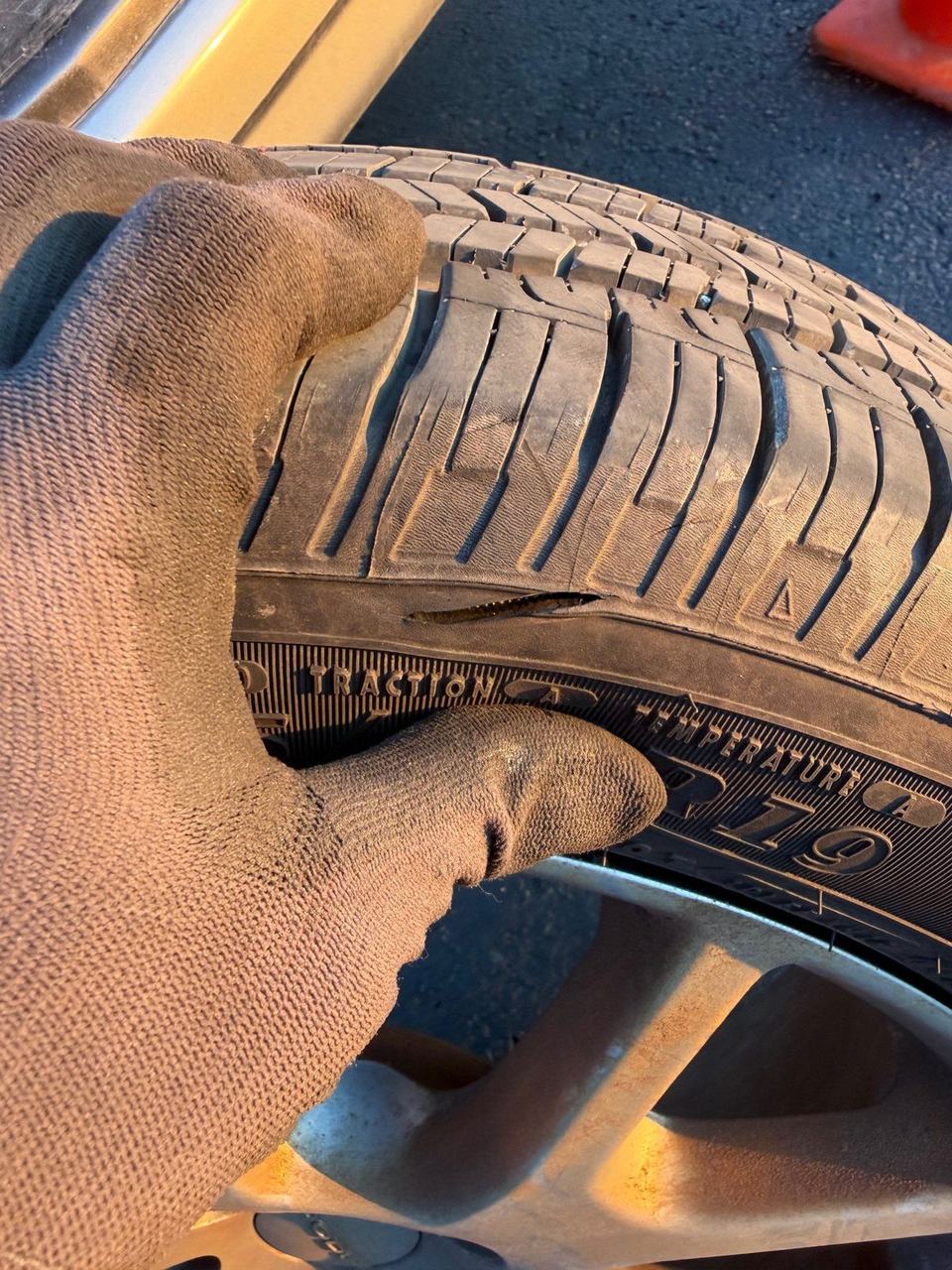
There was nothing to plug. I put her spare on, checked it held air, and she was on her way in about 30 minutes; the call was $120. The new tire was a job for a tire shop. If your spare has been sitting in the trunk for years, check its pressure now, because that is the day you will need it.
Can you drive on a damaged sidewall?
- Light scuff, rubber intact: yes. Check the pressure and look at it again soon.
- Cut with no cords showing: carefully, at normal speed, straight to a tire shop for an inspection. Not on a road trip.
- Cut to the cords, puncture, bulge or broken belt: only slowly, and only as far as a safe place to fit the spare.
If it happens on the highway, get safe, then call. Take the next exit if you can. If you have to stop on the shoulder of I-70, I-71 or I-270, pull as far right as you can, turn on your hazards and stay buckled in. Do not change a tire on the traffic side of a highway shoulder. If the tire goes flat on the way, read can you drive on a flat tire before you go any further.
What causes sidewall damage?
- Potholes: a sharp edge pinches the sidewall against the rim. Columbus streets after a freeze-thaw winter give plenty of chances.
- Curbs: rubbing while parking causes scuffs; hitting one at an angle causes cuts.
- Debris: metal, glass and broken parts on the road or shoulder.
- Low pressure and overloading: a soft or overloaded tire flexes too far, heats up and wears from the inside.
- Age: rubber dries out and cracks, even on a tire with good tread.
Most curbs that “jump out” of a tight Short North parking spot were there the whole time.
4 things to check on your tire sidewalls
It takes about two minutes, with the car parked on level ground.
- Both sides of every tire. Turn the steering wheel all the way to see the inner sidewall of the front tires. A phone flashlight helps.
- Run a hand over the rubber. Feel for bumps, cuts and anything stuck in it. A bulge sticks out; a shallow dip is usually a normal indent.
- Check the pressure. Use the number on the sticker in the driver door jamb, not the one on the tire. NHTSA recommends checking once a month.
- Look again after any hard hit. Damage from a pothole can take a day or two to show as a bulge.
If you find a cut, take a photo of it. It helps the dispatcher, and it helps the tire shop.
Sidewall damage in Columbus?
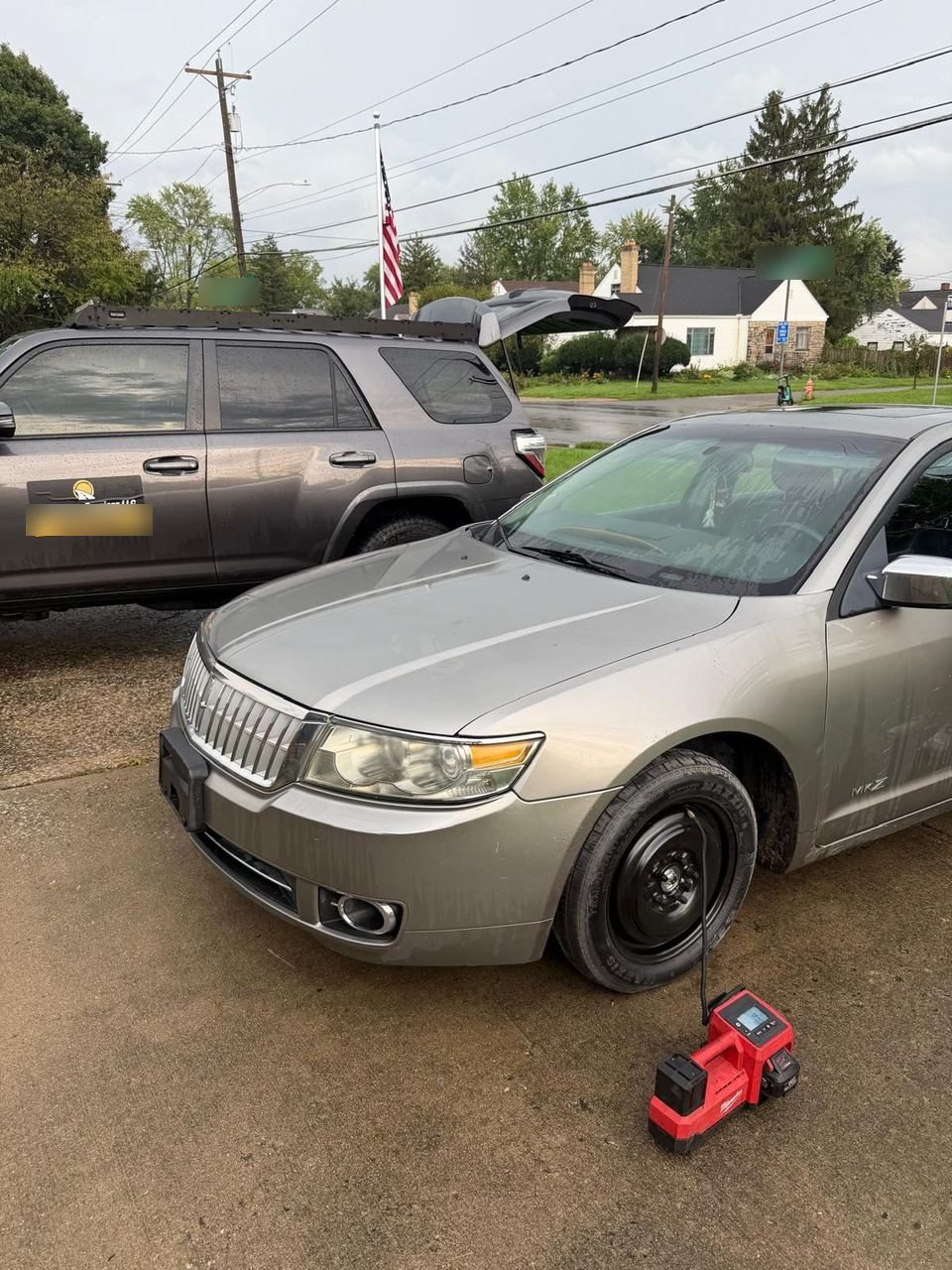
A sidewall cut cannot be plugged, so if you have a usable spare, we come to you and fit it. Our estimated Columbus range for a tire change is $85 to $175. If the spare is low, our air compressor fills it.
No usable spare? Many new cars do not have one. We take the damaged tire to a shop, get it replaced, bring it back and fit it, quoted by phone.
We work 6 AM to 8 PM daily and arrive in about 32 minutes on average, depending on traffic, weather and location. Doing it yourself? Here is how to change a flat tire safely, or see our mobile tire change service in Columbus.
Frequently asked questions
How serious is tire sidewall damage?
It depends on depth. A scuff in the outer rubber is usually cosmetic. A cut that shows cords, a puncture or a bulge is serious: the tire can lose air fast or fail at speed, and it has to be replaced.
Can a tire with sidewall damage be repaired?
No. Industry guidance from the U.S. Tire Manufacturers Association limits repairs to the tread area, so damage in the sidewall or shoulder takes the tire out of service. Be wary of anyone who offers to plug or patch it.
Can I drive with a damaged sidewall?
With a light scuff, yes, but check the pressure and look again in a few days. With a cut down to the cords, a puncture or a bulge, drive only as far as a safe place to fit the spare, slowly, and stay off the highway.
Why would a tire rip on the side?
Usually a hard hit: a pothole, a curb or sharp debris on the road. Driving on a tire with low pressure also lets the sidewall flex and pinch against the rim until it tears.
Do I need to replace both tires on the axle?
Not always. If the other tire on that axle is fairly new, one tire is often fine. If it is well worn, a shop may suggest a pair so both sides grip the same. Ask the shop to check both.
The bottom line
Tire damage on the sidewall is rarely a repair. A light scuff can stay; a cut to the cords, a puncture, a bulge or a broken belt means a new tire. Drive only as far as a safe place, then fit the spare or have the tire replaced. Check your sidewalls after any hard hit.
Cut sidewall and nowhere to go?
Call (380) 288-2822, 6 AM to 8 PM daily, Eastern Time. A dispatcher confirms the price and an arrival estimate before anyone heads your way.
Here is to sidewalls that stay smooth, boring and completely forgettable.