Tire Blowout While Driving? What to Do in the First 10 Seconds and After
Published Oct 23, 2026 · 6 min read · By Hassan, Owner of Roadmate Services
A tire blowout starts with a bang that sounds like a firework went off under the car. If you have a tire blowout, hold the wheel firmly with both hands, keep the car straight and do not brake hard. Ease off the gas gradually, let the car slow down, then steer gently to the shoulder. Get safe, then call for help.
Quick answer: what to do during a tire blowout
| Moment | Do | Do not |
|---|---|---|
| The bang and the pull | Grip the wheel with both hands and keep the car straight | Slam the brakes or jerk the wheel |
| The next few seconds | Hold the speed briefly, then ease off the gas gradually; hazards on | Accelerate hard or swerve across lanes |
| Slow enough to steer | Move gently to the shoulder or an exit | Stop in a travel lane if you can avoid it |
| Stopped | Get safe, then call | Change the tire on the traffic side |
If you have a tire blowout: what to do while the car is moving
These steps follow the driving advice on Michelin’s tire blowout page.
1. Hold the wheel and keep straight
The car will pull hard toward the blown tire. Grip the wheel with both hands and keep the car in its lane.
2. Do not slam the brakes
Hard braking makes the pull worse and can spin the car. Keep your foot off the brake for now.
3. Ease off and slow down gradually
Hold your speed for a moment, then lift off the gas slowly and let the car coast down. Hazards on. Brake gently only once the car is slow and straight.
4. Steer to the shoulder once you are slow
If you experience a tire blowout on the highway, aim for the right shoulder or a close exit. Stop as far from traffic as you can.
Once you are stopped: get safe, then call
On a highway shoulder (I-70, I-71, I-270)
- Hazards on. If traffic is close and the shoulder is narrow, stay in the car with your seat belt on.
- If you get out, use the door away from traffic, only when it is safe, and stand well off the road.
- Never change a tire on the traffic side of a highway shoulder. Call for help instead.
Highway safety comes before speed. The full routine is in what to do when your car breaks down on the highway.
In a parking lot or side street
On flat ground with a good spare, you may not need us at all. Our guide on how to change a flat tire walks through it.
Can you drive on a blown tire?
No, only as far as a safe place to stop. The car rides on the rim, which bends the wheel and makes steering harder. More in can you drive on a flat tire.
A rim makes a poor tire: loud, slow and expensive by the mile.
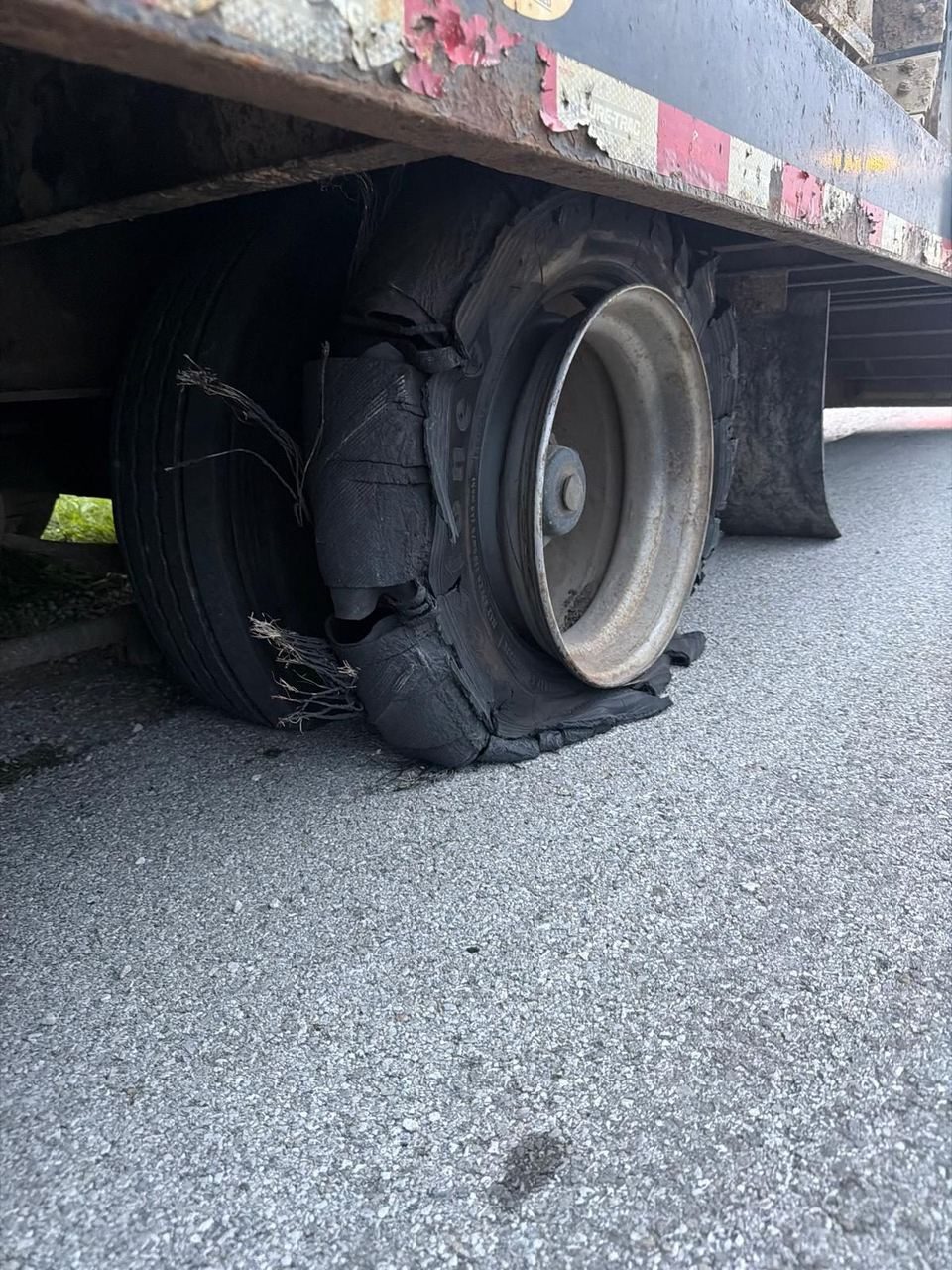
Blown tire vs popped tire vs flat tire
Blown tire: the tire fails suddenly at speed, usually with a bang, and tears open.
Popped tire: “my tire popped” usually means the same thing as a blowout.
Flat tire: air leaks out slowly, usually from a nail, and can often be plugged. A blown tire never can.
Simple rule: if it left with a bang, it was a blowout. If it left with a sigh, it was a flat.
What causes a tire blowout?
- Underinflation and heat. A soft tire flexes, heats up and weakens, most often on long, hot highway drives.
- Overloading. Too much weight does the same thing to the tire.
- Potholes and curbs. A hard hit can break the cords inside the tire.
- Old or already damaged tires. Cracked rubber or a bubble in the tire is often the warning before a blowout.
Columbus roads in March grow potholes that could hold a small pond. If you hit one hard, look at the tire.
How to prevent a tire blow out
- Check the pressure at least once a month, including the spare, with the tires cold, as NHTSA recommends. Use the number on the driver’s door jamb, not the one on the tire.
- Check tread depth and look for cracks, cuts and bulges.
- Do not load the car past the limit on the door jamb label.
- Inspect the tire after any hard pothole or curb hit.
As Hassan puts it, tire trouble always picks the wrong moment, but good tires that are not bald avoid a lot of it. A pressure check takes less time than finding a gas station air machine that takes cards.
Tire blowout in Columbus? What we do next
- Fit your spare: estimated $85 to $175 in Columbus. We bring a compressor for a flat spare and a tool for locking lug nuts.
- No usable spare: we bring a used or new replacement tire, or take the tire to a shop and bring it back replaced. Quote by phone.
- Wheel damaged: not always a tow. We can take the wheel and tire to a shop, have it replaced and bring it back. Quote by phone. Suspension damage may need a tow to a shop.
We will not plug a blown tire. Not everything is a roadside repair, and we will say so.
We work 6 AM to 8 PM daily, and arrival in Columbus averages about 32 minutes, depending on traffic, weather and location. See our mobile tire service in Columbus. Your spare has probably waited years for this moment.
Frequently asked questions
What should I do first if I have a tire blowout?
Grip the wheel with both hands, keep the car straight and do not brake hard. Ease off the gas, turn on your hazards and steer to the shoulder once the car has slowed.
Can you drive with a blown-out tire?
Only as far as the nearest safe place to stop, at low speed. A blown tire leaves you riding on the rim, which damages the wheel and makes steering harder.
How common is a tire blowout?
Blowouts are rare, but serious. NHTSA reports that 511 people died in tire-related crashes in the US in 2024.
What causes a tire to blow out while driving?
Usually heat from an underinflated or overloaded tire, often at highway speed on a hot day. Pothole damage, old rubber and a sidewall bubble are the other common causes.
Is a popped tire the same as a blowout?
Yes, people use both words for a tire that loses all its air at once. A flat loses air slowly and is often repairable; a blown tire is not.
The bottom line
If you have a tire blowout, hold the wheel straight, do not brake hard and let the car slow before you steer to the shoulder. Then get safe and call. A blown tire cannot be repaired, so the fix is a spare or a new tire.
Blown tire in Columbus?
Call (380) 288-2822, 6 AM to 8 PM daily, Eastern Time. A dispatcher confirms the price and an arrival estimate before anyone heads your way.
May the only bang on your next drive be the trunk closing on the groceries.