How Much Does It Cost to Change a Tire? Roadside Swap vs New Tire
Published Oct 23, 2026 · 7 min read · By Hassan, Owner of Roadmate Services
A flat tire never books an appointment. So how much does it cost to change a tire? It depends on which job you mean. A roadside tire change, where a technician puts your spare on where you stopped, is typically $85 to $175 with Roadmate in Columbus. A new tire at a shop costs the tire itself plus mounting and balancing, which published market figures put at about $12 to $25 per tire.
If you are on a highway shoulder right now, get safe first, then call. Pull as far from traffic as you can, or stay buckled in with your hazards on.
Quick answer: tire change cost at a glance
Roadmate rows are our homepage estimates for Columbus. Market figures come from the named sources below and are not Roadmate prices or a quote.
| Job | Who does it | Cost | Source |
|---|---|---|---|
| Swap to your spare where you stopped | Roadside service | $85 to $175 | Roadmate estimate, Columbus |
| Plug a nail hole on site | Roadside service | $75 to $150 | Roadmate estimate, Columbus |
| No spare: replacement tire brought or fetched | Roadside service | Quote by phone | Roadmate |
| Roadside tire change, without a membership | Roadside services in general | $50 to $200 | Market figure, tiregrades.com |
| Mount and balance one new tire | Tire shop | $12 to $25 per tire (some list $40 to $60) | Market figure, tiregrades.com |
| Balance only | Tire shop | $10 to $20 per tire | Market figure, tiregrades.com |
| Change it yourself with a working spare | You | Your time, in a safe spot only | |
| Total | Roadside: usually one row above. Shop: the tire, plus mount and balance, plus small extras. | See sections below | |
Market sources: tiregrades.com, cost to replace a tire, tiregrades.com, cost to mount and balance tires. Checked October 2026.
These are two different jobs, and most answers online blend them. One is a bandage, the other a new pair of shoes.
Roadside tire change cost: $85 to $175 in Columbus
A roadside tire change means a technician comes to your car, takes off the flat and fits your own spare. The flat goes in the trunk, and you drive to a shop on the spare. Nothing is bought or mounted.
The final price within the range depends on four things:
- Your exact location, for example a highway shoulder versus a driveway.
- Vehicle type.
- Distance to the nearest available technician.
- Conditions on scene.
You should see the price before anyone drives to you. “We will see when we get there” is how drivers get overcharged, so our booking shows the breakdown before you confirm.
We also carry an air compressor for flat spares and a tool for locking lug nuts when the key has gone missing (we fit a standard nut in its place, quoted by phone). Stripped lug nuts and damaged studs are handled on site too. Wheel lock keys have a talent for hiding in the one place nobody looks.
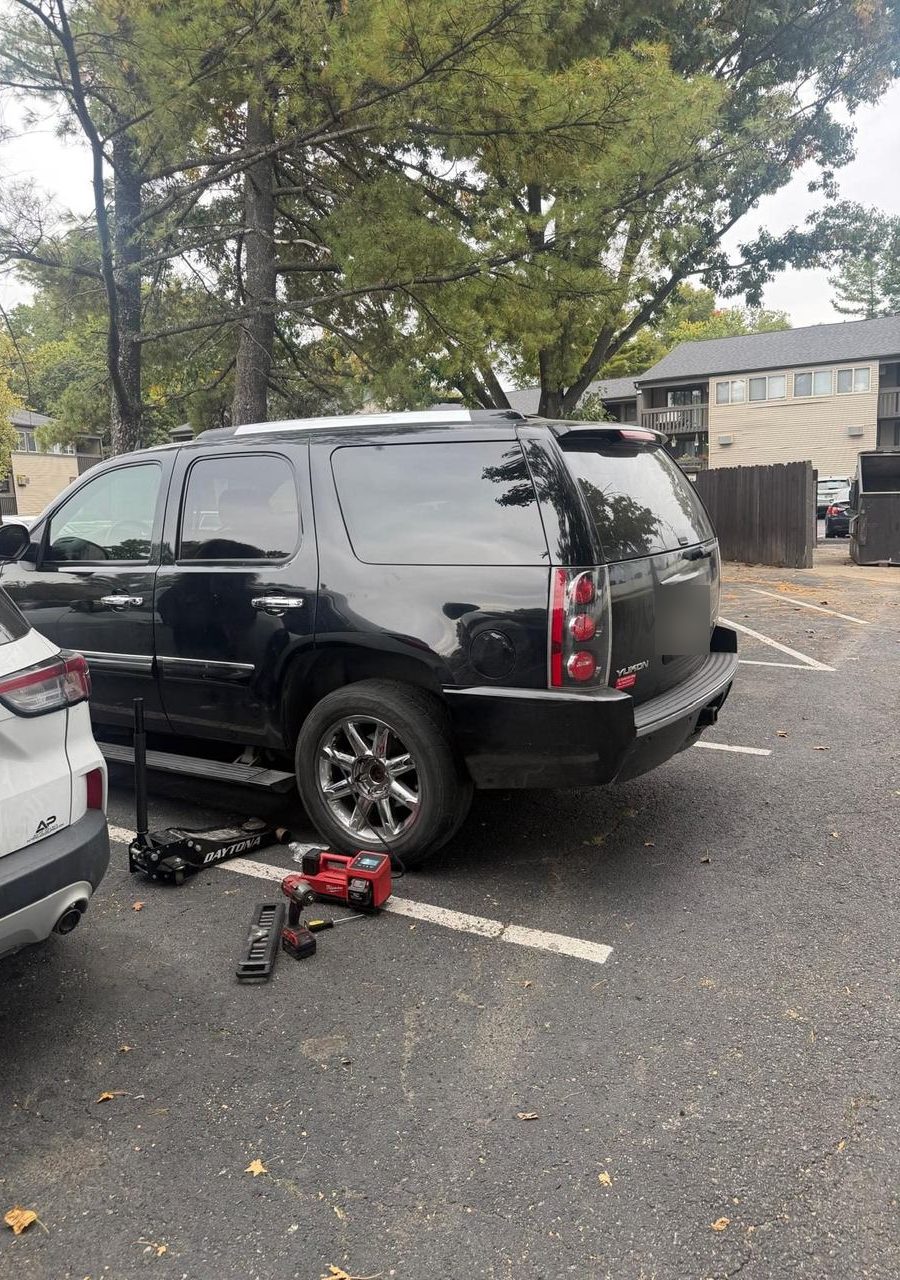
Can the flat be repaired instead? $75 to $150 on site
Often, yes. If the hole is a nail or screw in the tread, a plug on site works in most cases, and an on-site repair with Roadmate is typically $75 to $150. You keep your own tire on the car and your spare stays dry in the trunk.
The industry standard for a permanent fix is a plug-patch from inside, and sidewall or shoulder damage cannot be repaired, per the U.S. Tire Manufacturers Association. More detail in what can and cannot be repaired in a punctured tire.
One morning around school start time, a grandmother found a flat on her Lexus with her grandson waiting to go to school. We came to fit the spare. After inspecting the tire, Hassan saw a nail in the tread and told the grandfather it could be repaired on the spot. We arrived in about 30 minutes, the repair took about 15, and they left for school.
No spare tire? Quote by phone
Many new cars come with no spare, only a sealant kit or nothing at all. If the tire cannot be repaired and there is no usable spare, we can bring a used or new replacement tire to you, or take your tire to a shop, get it replaced, and bring it back to fit it. The price depends on the tire, so we quote it by phone.
It is worth lifting the trunk floor once before you need it. Some drivers find a spare. Others find a foam block and a mystery.
New tire cost: mounting and balancing
This is a tire shop job. Every figure in this section is a market figure, not a Roadmate price. One tire guide puts a new tire at about $50 to $500 or more before labor.
How much to mount and balance tires: $12 to $25 per tire (market figure)
Mounting puts the tire on the wheel. Balancing spins the wheel on a machine and adds small weights so it rolls evenly. One tire guide’s headline figure for both is $12 to $25 per tire.
The same page also lists mounting at $30 to $40 and balancing at $10 to $20, which adds up to $40 to $60. The source disagrees with itself, so ask your shop for its own number. The same site’s replacement guide puts tire installation at $15 to $45 per tire, and CarParts.com quotes $50 to $150 for a typical tire change.
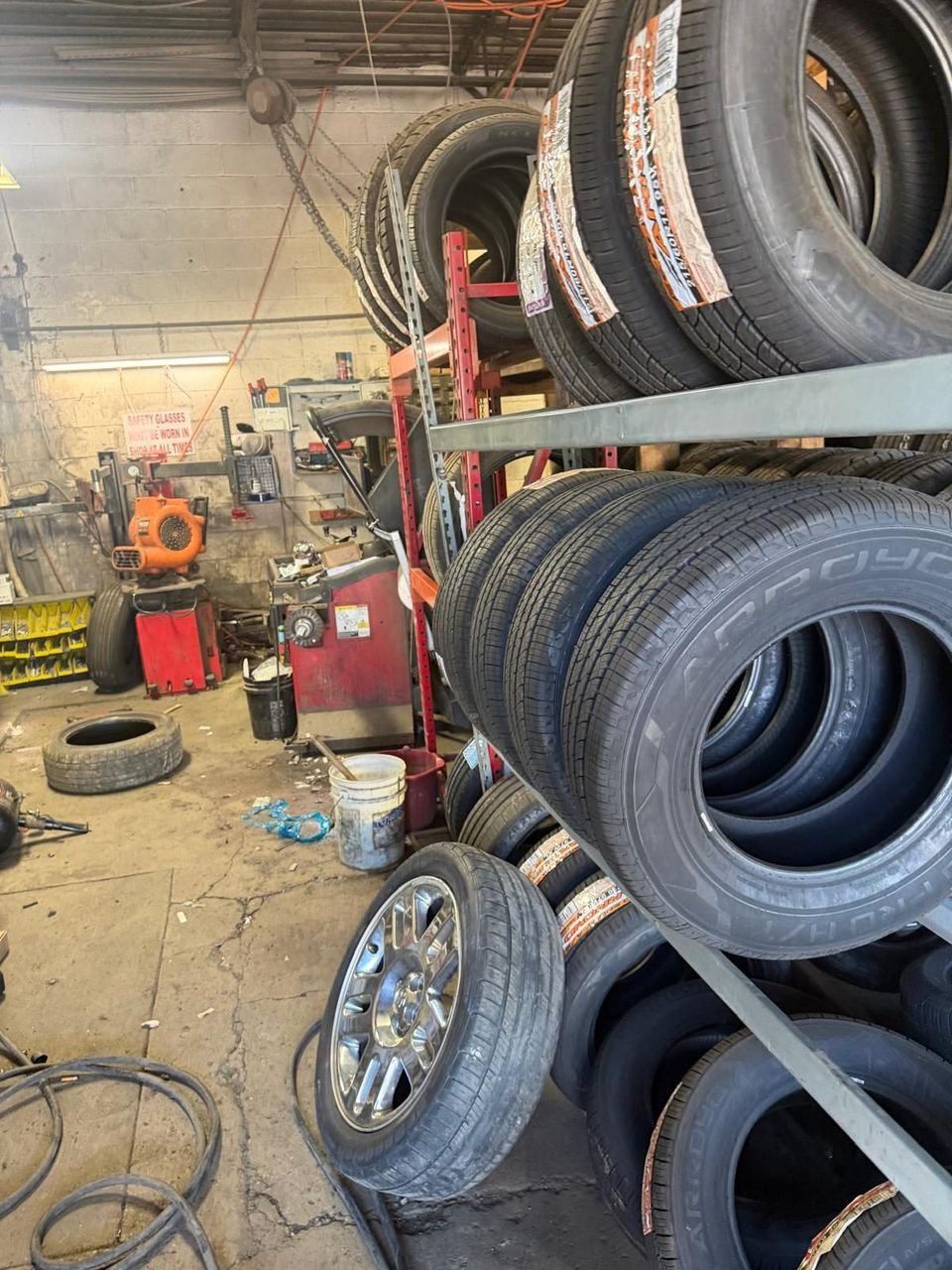
How much does tire balancing cost? $10 to $20 per tire (market figure)
Balancing alone is listed at $10 to $20 per tire. You need it when a new tire goes on, and again if you feel a vibration in the steering wheel at highway speed. Balancing is a posture check for your wheels.
Extras on the bill: valve stems, TPMS, disposal, alignment
- Valve stems: $2 to $5 per tire (market figure).
- TPMS sensor, if one needs replacing: $50 to $100 per sensor (market figure). We do not replace sensors.
- Old tire disposal: $2 to $10 per tire across the two guides (market figure).
- Alignment: not priced in the sources; ask the shop whether your car needs one.
Sources: tiregrades.com, mount and balance (updated July 2026) and tiregrades.com, replacing a tire.
Should you change the tire yourself?
If you have a working spare, a jack, the lug wrench and a safe flat spot away from traffic, changing it yourself costs nothing but time. You do not need us for that, and we would rather say so. Follow how to change a flat tire safely and check where to put the jack on your car first.
Call for help instead when:
- You are on a highway shoulder. Never change a tire on the traffic side.
- The spare is flat, missing or the wrong size.
- A lug nut will not move, or the wheel lock key is missing.
- The ground is soft, sloped or icy.
NHTSA recommends checking tire pressure monthly, and that includes the spare. A spare with no air is just extra luggage.
How long can you drive on the spare?
A donut spare is a loaner, not a lifestyle: plan on short distances at lower speeds, and get the flat repaired or replaced soon. The details are in how long you can drive on a spare tire.
5 ways to keep your tire change cost down
- Check your spare’s pressure once a month, so a roadside call is a quick swap.
- Ask whether the flat can be repaired before you pay for a new tire.
- Buy tires where mounting and balancing are included, and ask for one out-the-door price.
- Keep the wheel lock key in the glove box, not in the garage.
- Replace bald tires before they fail. Our guide on when to replace tires shows how to check.
As Hassan puts it, you cannot plan a flat tire. Good tires prevent some of them, but the rest still turn up at the worst moment.
Flat tire in Columbus?
- Hours: 6 AM to 8 PM daily, Eastern Time.
- Average arrival in Columbus: about 32 minutes, depending on traffic, weather and location.
- Wafa or Saif answers the phone and confirms the price before anyone heads your way.
See mobile tire service in Columbus for details, or what roadside assistance costs for every service. Ohio can serve rain and sleet in the same afternoon, and a flat tire does not wait for the sun.
Frequently asked questions
How much should it cost to change one tire?
If you mean putting your spare on at the roadside, a Roadmate tire change in Columbus is typically $85 to $175. If you mean a new tire at a shop, you pay for the tire plus mounting and balancing, which one source puts at $12 to $25 per tire (market figure).
How much does it usually cost to change all four tires?
That is a shop job: four tires plus mounting and balancing on each. Market figures put one tire at about $50 to $500 or more, so the tires decide most of the total. Ask for one out-the-door price.
How much does it cost to mount and balance tires?
One tire guide puts it at $12 to $25 per tire, though the same page lists mounting and balancing separately at $40 to $60 combined. Both are market figures; ask your shop for its number.
Is it cheaper to repair a flat than to change it?
Usually, yes, when the hole is a small puncture in the tread. Damage in the sidewall or shoulder, or a tire driven flat, means replacing it.
Can I change a tire myself on the highway?
Only if you can get fully off the road, well away from traffic. Never change a tire on the traffic side of a shoulder. If you cannot get safe, stay buckled in with your hazards on and call for help.
Does a roadside tire change include fixing the flat?
No. A tire change puts your spare on, and the flat goes in the trunk. If the flat can be plugged on site, that is a tire repair instead, and you keep driving on your own tire.
The bottom line
A roadside tire change puts your spare on where you stopped, and with Roadmate in Columbus it is typically $85 to $175. A new tire at a shop costs the tire plus mounting and balancing, which market figures put at about $12 to $25 per tire, with some sources higher. Ask about a repair first, and see the full price before anyone drives to you.
Flat tire in Columbus?
Call 6 AM to 8 PM daily. A dispatcher confirms availability, your full price and an arrival estimate before anyone heads your way.
Here is to your next flat being the one that never shows up.