Car Shaking After Snow? Why It Happens and How to Fix It
Published Oct 23, 2026 · 5 min read · By Hassan, Owner of Roadmate Services
The roads are plowed, the sun is out, and your car now drives like a washing machine on spin. A car shaking after snow almost always has snow and ice packed inside the wheels. That weight throws the wheels out of balance, so the car shakes, usually from around highway speed. Clear the wheels or run the car through a car wash, and the shaking should stop.
If it does not stop, the snow was not the whole story. Have the tires and wheels checked.
Quick answer: car shaking after a snow storm
| What you feel | Likely cause | What to do |
|---|---|---|
| Shakes from around highway speed after a snow | Snow or ice packed in the wheels | Clear the wheels or run the car through a wash |
| Steering wheel shakes | Usually the front wheels | Same, then a balance check if it stays |
| Shakes only when you brake | Brake rotors, not snow | Brake check |
| Started after you hit something | Tire or wheel damage | Slow down, pull over somewhere safe and look |
| Gone after the car wash | It was the snow | Nothing else |
Why your car shakes after a snowstorm
A wheel and tire spin smoothly only when their weight is spread evenly. Tire shops get it right with small balance weights fixed to the rim. A clump of frozen slush stuck to one side of the wheel is often far heavier than the weight that was keeping it balanced. A tiny weight losing an argument with a chunk of ice is not a fair fight.
After a Columbus snow, salty slush from the plowed roads splashes into the wheels and freezes there overnight. The shake shows up as you speed up, often on the Outerbelt rather than in the driveway. Felt in the steering wheel, it is likely the front wheels; in the seat, the rear.
Safety first: when the shaking is violent
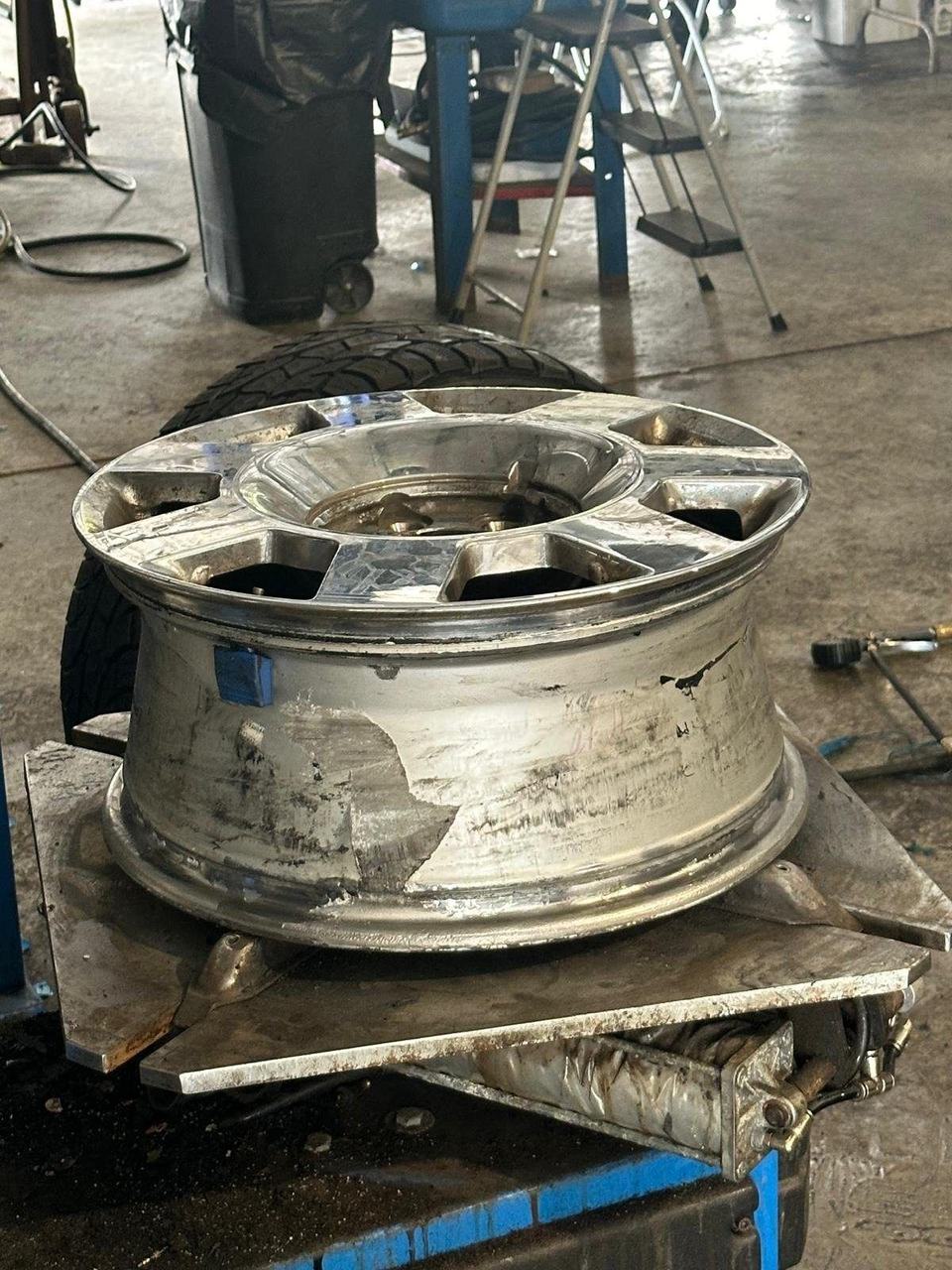
A light shimmer at speed after a storm is usually snow. A hard shake, a thumping noise, or a shake that started right after you hit a pothole or curb is different. Slow down, pull over somewhere safe and look at the tires.
On a highway, get safe, then call. Take the next exit if you can. If you have to stop on the shoulder, pull as far right as you can, turn on your hazards and stay buckled in. Do not kneel beside a wheel on the traffic side of a highway shoulder to chip ice. The NHTSA winter driving tips are worth a read before the first big storm.
How to clear snow and ice from your wheels: 5 steps
- Park somewhere safe and flat, away from traffic, and turn the engine off.
- Put on gloves. Frozen slush is sharp, and so is the inside of a rim.
- Use a snow brush or a plastic ice scraper to knock the ice off the inside of the rim, between the spokes and around the brakes.
- Clear the wheel wells too. Snow packed above the tire can rub on it when you turn and drop back into the wheel later.
- Skip the hammer, the screwdriver and the kettle of boiling water. They can scratch the wheel, damage a brake part or crack cold glass nearby.
The easy option is a car wash with a wheel or underbody spray. Warm water melts what a scraper struggles to reach, between the spokes and behind the rim. A drive-through wash may be the most underrated mechanic in Columbus.
Car still shaking after the snow is gone? Other causes
Clean wheels and still shaking? The snow may have been hiding something:
- A tire bulge: a pothole hidden under slush can break the cords inside a tire. See what a bubble in a tire means.
- A bent wheel: curbs are hard to see under a snowbank.
- A lost balance weight: ice and scraping can knock one off.
- Low tire pressure: cold air drops it. More in tire pressure in cold weather.
- Shaking only when you brake: that points at the rotors, not the snow. See warped rotors.
A balance problem is a tire shop job, not a roadside one, and we will tell you so. Checking pressure once a month, as NHTSA recommends, catches the simplest cause for free. Winter in Ohio is hard on tires; it is hard on everyone, honestly.
When to call Roadmate in Columbus
If you cannot get the ice out yourself, our technicians can knock packed snow and ice out of the wheels on a call, and check the tires while they are there.
Call us when the shaking has turned into a problem you cannot drive on: a flat, a bulge, a damaged tire, or a car stuck in a snowbank. Our estimated Columbus range for a tire change is $85 to $175, and for a tire repair on site $75 to $150.
Stuck in the snow? We winch cars out of snow as well as mud; our estimated winch-out range is $150 to $300 per hour. Our guide to getting a car unstuck from snow covers what to try first.
We work 6 AM to 8 PM daily, Eastern Time, and arrive in about 32 minutes on average, depending on traffic, weather and location. Snow days can be slower, and we will give you a realistic time rather than a hopeful one.
Frequently asked questions
Why does my car shake after a snowstorm?
Slush and salt pack inside the wheels and freeze there. The extra weight on one side throws the wheel out of balance, so the car shakes, usually from around highway speed.
How do I get ice out of my wheels?
Park somewhere safe, turn the engine off and knock it loose with a brush or plastic scraper, or use a car wash with a wheel spray. No hammer, no boiling water.
Is it safe to drive with snow in my wheels?
A short, slow trip to clear it is fine. Speed makes the shaking worse, so clear the wheels as soon as you can.
Will a car wash fix a car shaking after snow?
Often, yes. Warm water sprayed into the wheels melts the packed ice. If the car still shakes afterwards, the cause is something else.
Why is my car still shaking after the snow melted?
The snow may have hidden a pothole or curb that bent a wheel or damaged a tire, or a balance weight came off. Have a tire shop check the balance and the tires.
Can snow damage my wheels or suspension?
Salt and slush left in the wheel wells can freeze into heavy ice. A tire shop advisor quoted by The Weather Network says it can damage fender liners, so wash it off after a storm.
Source for the fender liner answer: The Weather Network, car shaking after a snowstorm.
The bottom line
A car shaking after snow usually has ice packed in its wheels. Clear the wheels or wash the car, and the shake should go. If it stays, or it started after a hit, have the tires and wheels checked. A violent shake on the highway means get safe first, then call.
Flat or damaged tire after the snow?
Call (380) 288-2822, 6 AM to 8 PM daily, Eastern Time. A dispatcher confirms the price and an arrival estimate before anyone heads your way.
May your wheels stay round, clean and too boring to mention.