Tire Cupping: What It Is, What Causes It and What to Do
Published Oct 23, 2026 · 6 min read · By Hassan, Owner of Roadmate Services
A hum that follows you down the road and gets louder with speed is often the first sign. Tire cupping is tread worn into a row of shallow scoops around the tire. It is usually caused by worn shocks or struts or a wheel out of balance, so the tire bounces instead of rolling flat (Michelin).
The fix belongs to a tire, alignment or suspension shop, not a roadside truck, and we will say so. The tire is only the messenger. The suspension usually wrote the message.
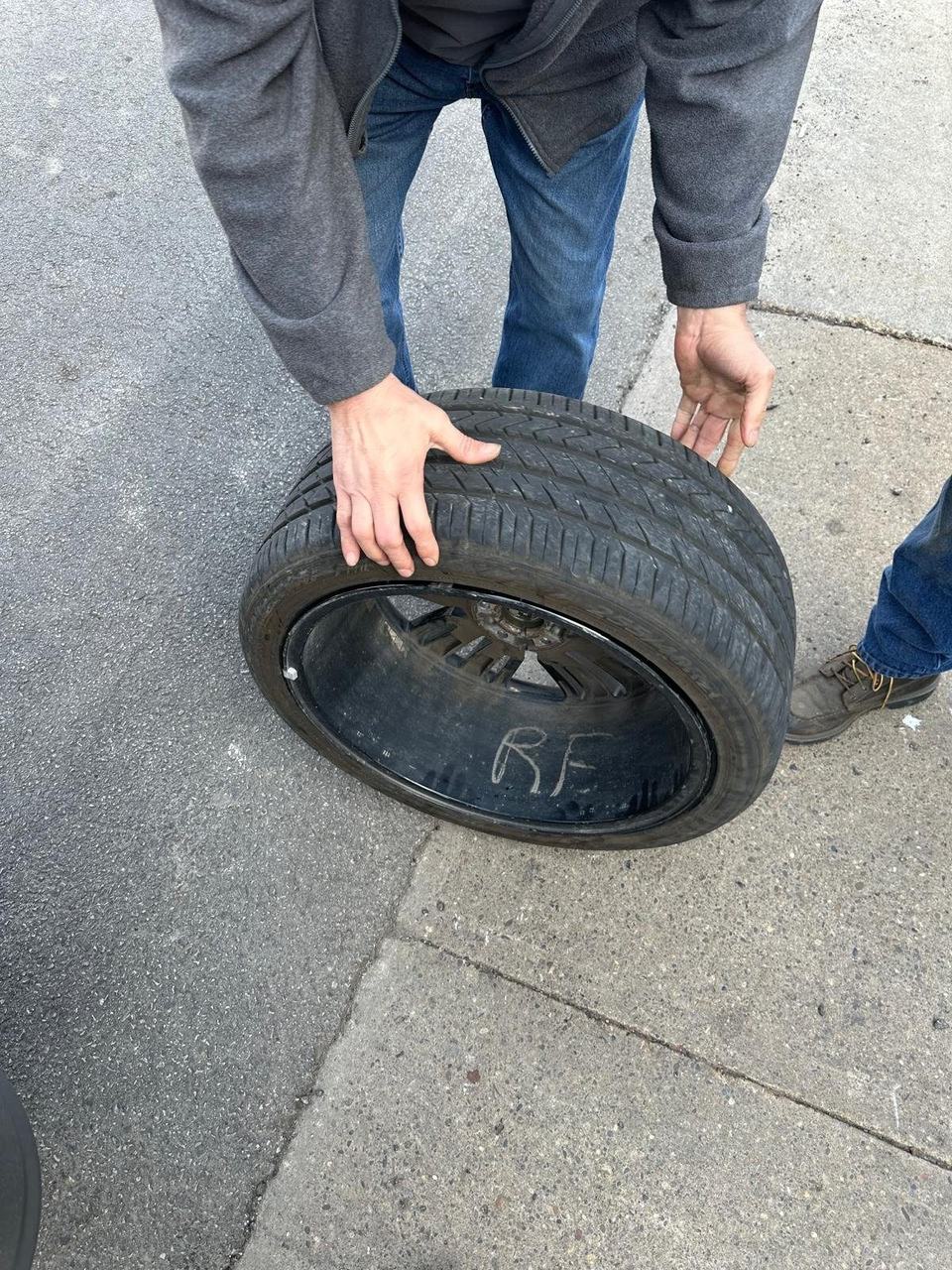
Tire cupping at a glance
| Question | Short answer |
|---|---|
| What it is | Scoops worn into the tread in a repeating pattern |
| Main cause | Worn shocks or struts, or a wheel out of balance |
| Main sign | A hum or rumble that rises and falls with speed |
| Feathering instead? | Tread blocks with a saw edge, usually toe alignment |
| Safe to drive? | To a shop, if there is no bulge, cord or bald patch |
| Fix | Repair the cause, then replace badly cupped tires |
| Who fixes it | A tire, alignment or suspension shop |
What do cupped tires look like?
Look along the tread, not straight at it. Cupped tires have patches that dip in and rise out again, one after another, often near the outer edge. Michelin calls the same wear dipping or scalloping, and says it is most common on the front tires.
With the car parked, run your palm around the tread. Cups feel like gentle waves where the tread should be flat. If the tire looks fine but sounds like a small plane is drafting you, feel it before you decide.
What causes tire cupping?
Cupping starts whenever a tire stops pressing evenly on the road. Something lets it hop, and each landing scrubs off a little more rubber in the same spots.
Worn shocks or struts
This is the most common cause. A tired shock no longer stops the wheel bouncing after a bump, so the tire skips along the road. If the car also floats or dips hard when you brake, the shocks are a strong suspect.
A wheel out of balance or a bent rim
A heavy spot on a wheel makes it hop once per turn. A pothole can bend a rim or knock off a balance weight. Ohio roads after a freeze-thaw week are generous with both.
Worn steering parts and alignment
Loose ball joints, tie rods or bushings let the wheel wobble. Alignment out of spec usually shows as feathering or edge wear first, but it can add to cupping.
Wrong pressure and skipped rotations
Underinflated tires flex and wear unevenly. Tires that stay on the same corner for too long keep the same bad habits. See how often to rotate tires for the intervals.
What does tire cupping sound like?
A rhythmic hum, drone or “wub-wub” that rises and falls with speed, not with engine revs. It is loudest on smooth pavement and can come with a light vibration in the steering wheel or seat. Turning the radio up hides it, but it does not fix it.
A failing wheel bearing makes a similar hum, so a shop should check both. A shake that appears only when you brake points to the brakes instead; see warped rotors.
Tire cupping vs tire feathering
Tire feathering is a different pattern. Each tread block wears smooth on one side and sharp on the other, so your hand glides one way and catches the other, like petting a cat the wrong way. Michelin links that sawtooth or feathered edge to toe alignment (Michelin on sawtooth wear).
| Wear pattern | What you see or feel | Usual cause |
|---|---|---|
| Cupping | Scooped dips around the tread, often near the edge | Worn shocks, struts or other parts; wheel out of balance |
| Feathering | Each tread block smooth on one side, sharp on the other | Toe alignment out of spec |
| Both edges worn | Shoulders worn, center still deep | Running underinflated |
| Center worn | Middle worn, shoulders still deep | Running overinflated |
| One edge worn | Inside or outside shoulder worn smooth | Alignment (camber or toe) |
Cupping and feathering from Michelin. A shop should confirm the cause on your car.
Can you drive on cupped tires?
For a short drive to a shop, usually yes, if there is no bulge, no cord showing and no bald patch. Cupped tires grip and stop worse, most of all in the rain, and the cause keeps chewing on them. Book the check this week, not next season.
A sudden, heavy new vibration at highway speed is different. Slow down, get off the road somewhere safe, then call for help. Do not drive on a tire with a bulge; see bubble in a tire.
Can tire cupping be fixed?
The cause can be fixed. The cups mostly cannot. Rubber that has worn away stays gone.
- Fix the cause first. Shocks or struts, balance, steering parts and alignment, in whatever order the shop finds them. New tires on old shocks just start the clock again.
- Mild cupping: after balancing and a rotation, the noise often settles as the tread wears more evenly.
- Deep cupping: replace the tires, usually in pairs on the same axle. Check the tread depth with when to replace tires.
5 things that prevent cupped tires
- Check pressure monthly, spare included, as NHTSA advises. Our guide on how to put air in tires walks through it.
- Rotate on your owner’s manual schedule.
- Have the wheels balanced after a hard pothole hit or when a new vibration appears.
- Get the alignment checked when the car pulls or after new steering or suspension parts.
- Ask about the shocks and struts when the car bounces, floats or nose-dives under braking.
Five minutes of checks is cheaper than four tires that sing.
Cupping is a shop job. A flat on a worn tire is ours.
We do not balance wheels, align them or replace shocks. Book that with a tire or suspension shop. As Hassan puts it, you cannot plan for a flat, but good tires instead of bald ones avoid some of them. A worn, cupped tire is more likely to be the one that lets you down.
When it does, in Columbus, we fit your spare (estimated $85 to $175) or plug the tire on site when it can be repaired (estimated $75 to $150). On a highway shoulder, get safe first, then call.
We work 6 AM to 8 PM daily, and arrival averages about 32 minutes, depending on traffic, weather and location.
Frequently asked questions
Can you drive on cupped tires?
For a short drive to a shop, usually yes, as long as there is no bulge, no visible cord and no bald patch. Cupped tires grip and brake worse, especially in the wet, and the cause keeps wearing them, so do not leave it for months.
Will cupped tires smooth out on their own?
No. Worn rubber does not grow back. Once the cause is fixed, mild cupping can get quieter as the tire wears more evenly, but deep cups stay until the tire is replaced.
Will balancing fix tire cupping?
Balancing fixes the cause when an out-of-balance wheel is to blame. It does not remove the cups that are already there. If the shocks or struts are worn, balancing alone will not stop it coming back.
Does an alignment fix cupping?
An alignment fixes feathering and edge wear caused by the wheel angles. Cupping is more often worn suspension or balance, so an alignment on its own may not help. Ask the shop to check all three.
Does tire cupping mean bad shocks?
Often, but not always. Worn shocks or struts are the most common cause, because the tire bounces instead of staying flat on the road. A wheel out of balance, a bent rim or worn steering parts can do it too.
More tire guides: how much a new tire costs; nitrogen in tires.
The bottom line
Tire cupping is scooped tread wear, and the hum is usually the first clue. Worn shocks or struts and wheels out of balance cause most of it; feathering points to alignment. Have a shop fix the cause, then replace any tires that are badly cupped.
Flat tire in Columbus?
Call (380) 288-2822, 6 AM to 8 PM daily, Eastern Time. A dispatcher confirms the price and an arrival estimate before anyone heads your way.
Here is to a quiet ride, where the only hum in the car is yours.