Car Maintenance Before a Road Trip: The 12-Point Checklist
Published Nov 9, 2026 · 8 min read · By Hassan, Owner of Roadmate Services
The turkey gets three days of planning. The car carrying everyone to it usually gets a glance at the fuel gauge. Car maintenance before a road trip comes down to 12 checks: tire pressure, tread, the spare, the battery, oil, coolant, washer fluid, wipers, lights, the heater, brakes, and belts and hoses. Ten of them you can do in your driveway. Do the shop items the week before you leave, and the quick checks the day before, with the car cold.
Car maintenance before a road trip: the 12-point checklist at a glance
| Check | What to look for | Who |
|---|---|---|
| 1. Tire pressure | Set cold tires to the number on the sticker inside the driver's door | You |
| 2. Tread depth | Penny test: if you see the top of Lincoln's head, it is time for new tires | You |
| 3. Spare and tools | Spare holds air; jack, lug wrench and wheel lock key are in the car | You |
| 4. Battery | Age, slow cranking, corrosion; test it from year 3 | You, then a test |
| 5. Engine oil | Level on the dipstick, and whether a change is due before the miles | You or a shop |
| 6. Coolant | Level between the marks in the reservoir, engine cold | You |
| 7. Washer fluid | Full, with a winter fluid that will not freeze | You |
| 8. Wiper blades | No streaks, smears or torn rubber | You |
| 9. Lights | Headlights, brake lights, turn signals, hazards | You and a helper |
| 10. Heater and defroster | Warm air and a clear windshield within a few minutes | You |
| 11. Brakes | Grinding, squealing, pulling or a soft pedal | A shop |
| 12. Belts and hoses | Cracks, bulges, leaks or a squeal at start-up | A shop |
| Total: 12 checks | 10 in your driveway, 2 for a shop | Shop items the week before |
Door-sticker pressure and penny test from AAA Club Alliance; battery testing from AAA. Your owner’s manual has the final word for your car.
Road trip car maintenance starts with 3 tire checks
Tires are where most trips go wrong, and they are the easiest thing to check. Give them five minutes and a gauge.
1. Tire pressure: use the door sticker, not the tire
Find the recommended pressure on the sticker inside the driver’s door (AAA Club Alliance). The number molded on the tire is a maximum, not a target. Check when the tires are cold, before you drive. November mornings in Ohio drop pressure overnight, so read our guide to tire pressure in cold weather before you top up.
A low tire never announces itself. It just sulks quietly until you are on the highway with a full car.
2. Tread: the penny test
Put a penny in the tread with Lincoln’s head down. If you can see the top of his head, you are due for new tires (AAA Club Alliance). Check the inside and outside edges too. Wear on one edge usually points to alignment. Our guide on when to replace tires covers tread depth, tire age and the bulges that mean stop now.
3. The spare, the jack and the wheel lock key
The spare is the family member nobody has checked on in years. Make sure it holds air, and that the jack and lug wrench are actually in the car. If your wheels have locking lug nuts, find the key and leave it in the glovebox. Many new cars have no spare at all, so find out what yours has before you need it.
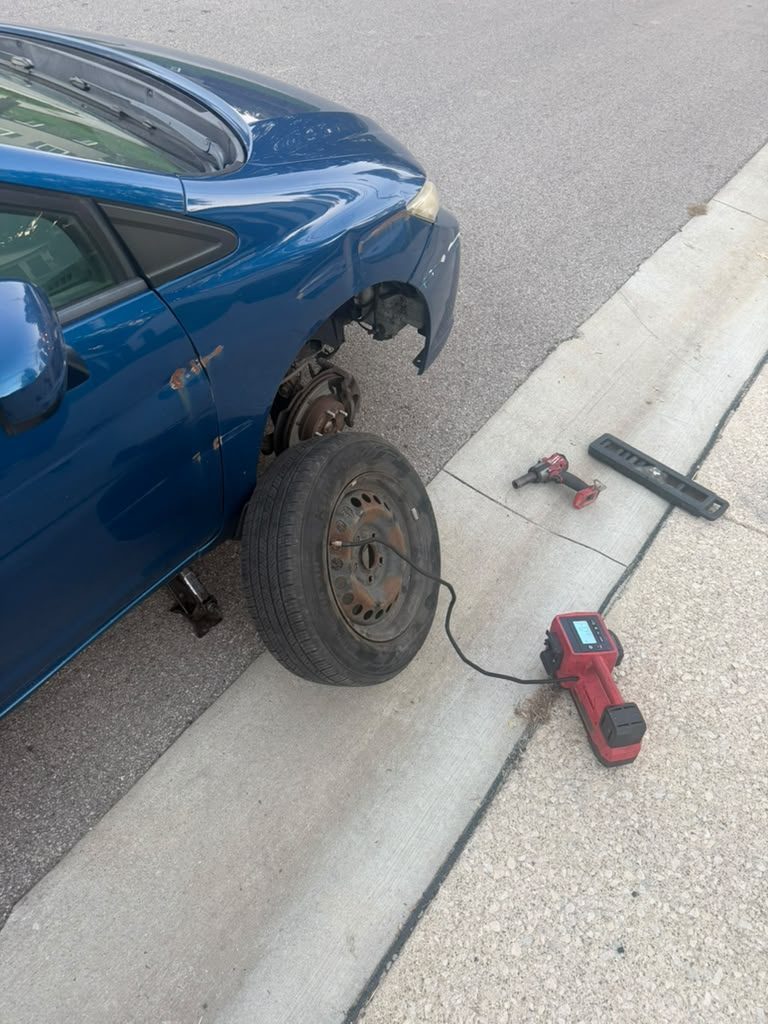
A compact spare, the “donut”, is for getting to a tire shop, not for finishing a trip. Read how long you can drive on a spare tire before you plan on one.
Battery: test it once it is 3 years old
AAA puts a typical battery life at 3 to 5 years and suggests a test every year from year 3 (AAA). A trip is the right moment for that test. A weak battery can start the car at home and still give up on a cold morning in a hotel lot far from your mechanic.
Warning signs: slow cranking, dim lights at start-up, a battery light on the dash, or white and green crust on the terminals. Our list of signs your car battery is dying goes through each one. A battery has excellent timing. It tends to quit the morning everyone is packed, buckled in and already late.
4 fluids to check with the engine cold
- Engine oil. Pull the dipstick, wipe it, push it all the way back in and pull it again (AAA Club Alliance). The level should sit between the marks. If an oil change is due soon, do it before the trip; a long drive can add hundreds or thousands of miles (Les Schwab). More in should you check oil hot or cold.
- Coolant. Look at the level in the see-through reservoir, between the min and max marks. Never open a radiator cap on a hot engine. If it is low, see how to add coolant.
- Washer fluid. Fill it with a winter fluid that will not freeze. See frozen washer fluid if yours already has.
- Brake fluid. Check the level in the reservoir. Low brake fluid can mean worn pads or a leak, so it is a shop visit, not just a top-up. Our low brake fluid guide explains why.
Behind a salt truck on I-71, a full washer tank is worth more than the snacks. Almost.
Wipers, lights and the heater: can you see and be seen?
Take 5 suggests replacing wiper blades every 6 to 12 months (Take 5). The real test is simpler: spray the windshield. Streaks, smears or a chatter across the glass mean new blades. If your wipers squeak in rhythm, they are not keeping time with the radio. They are asking to retire.
For the lights, ask someone to stand behind the car while you press the brake, flip each turn signal and turn on the hazards. Then walk to the front for the headlights and high beams. Since the clocks changed, a lot of the drive home will be in the dark.
Last, run the heater and the defroster for a few minutes. A windshield that fogs and stays fogged is a problem you want to find in the driveway. Our foggy windshield guide has the fix.
2 checks to leave to a shop: brakes, belts and hoses
Not everything is a driveway job, and not everything is a roadside job either. Brakes, belts and hoses need a lift, a light and someone who looks at them every day. At one AAA shop in Ohio, the technicians start recommending new brake pads at 2, 3 or 4 millimeters (AAA Club Alliance).
Book it the week before you leave. If the shop finds something, you still have time to fix it. Mention any noise, pull or vibration you have been living with. The car will not mention it for you, at least not until the worst possible moment.
Car road trip essentials: 8 things to pack
- A phone charger and cable that reach the back seat
- A flashlight with working batteries
- A jump box or jumper cables (see how to use a jump box)
- A small tire inflator
- Warm layers, gloves and a blanket
- Water and snacks
- Reflective triangles
- Your insurance card and your roadside assistance number
Our emergency car kit guide explains each item. Watch the weight as well: the sticker on the driver’s door gives the maximum combined weight of passengers and cargo (Les Schwab). Pack the charger before the pie. The pie will survive the trip either way.
When to do what: the week before, the day before, on the road
The week before
- Shop visit for brakes, belts and hoses, and an oil change if it is due
- Battery test if the battery is 3 years old or more
- New wiper blades or tires if the checks above said so
- Check what your insurance or roadside plan covers out of town
Driving for the holiday? See our Thanksgiving travel guide for Columbus for the forecast and airport parking.
The day before
- Tire pressure on cold tires, spare included
- Oil, coolant and washer fluid levels
- Lights with a helper
- Fill the tank right before you leave; charge an electric car the night before (Les Schwab)
On the road
At each fuel stop, walk around the car and look at the tires. If something goes wrong on the highway, the order never changes: get safe, then call. Pull as far off the road as you can and turn on your hazards. If you cannot get well away from traffic, stay in the car with your seat belt on. Never change a tire on the traffic side of a highway shoulder. If anyone is hurt or the car is in a traffic lane, call 911 first. Our guide to what to do if your car breaks down on the highway has the full steps.
The RV that lost a front tire on I-270
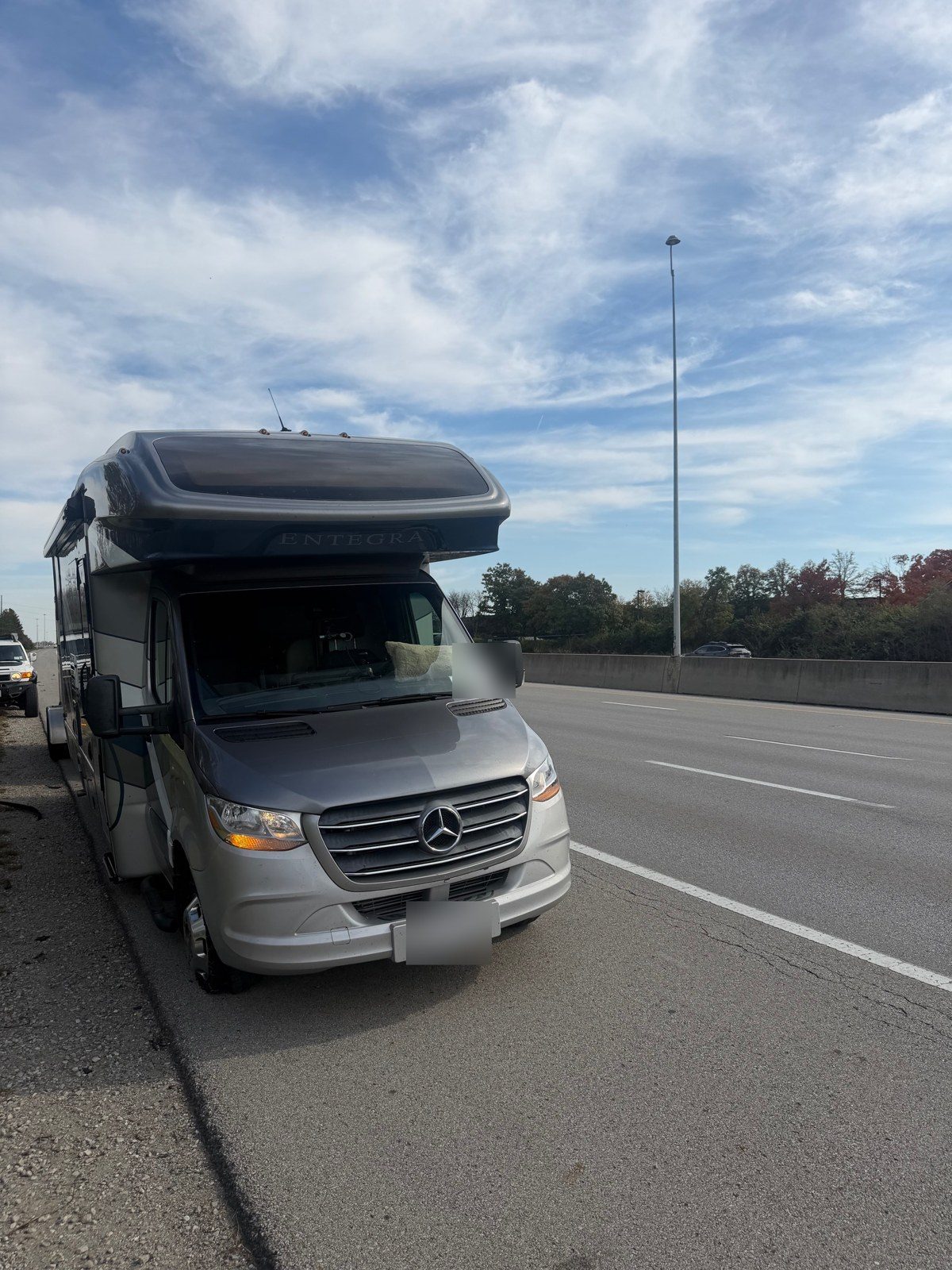
A man and his wife were travelling through Columbus in a Mercedes-based Class C RV, towing an SUV behind it, when a front tire shredded on I-270 West. They got onto the shoulder and called. We got there in about 20 minutes.
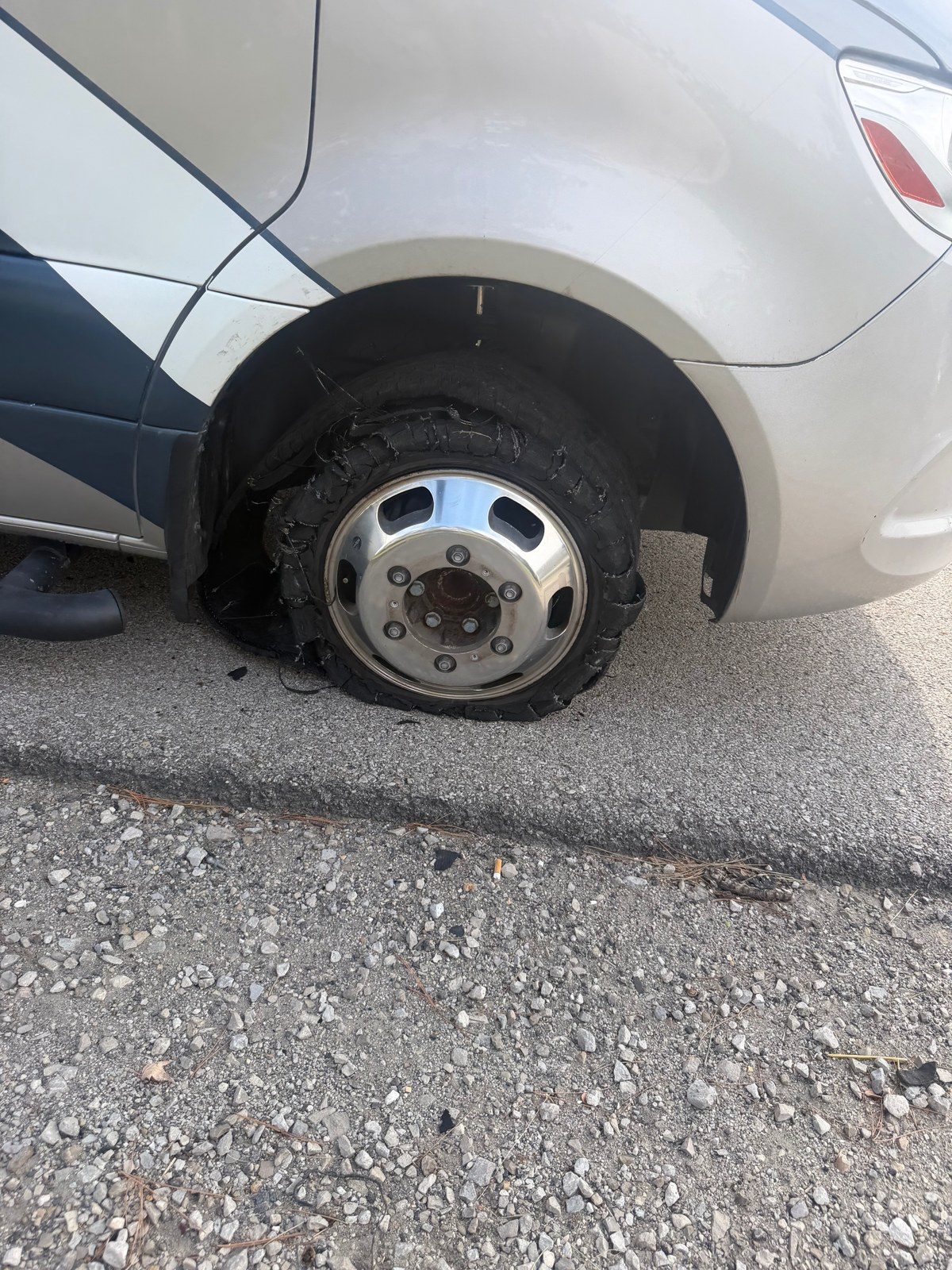
We took the wheel to a tire shop, where the shredded tire took extra time to get off. A new Goodyear went on and was inflated, and we brought it back, mounted it and got them on the road again. No tow needed, even for an RV.
The lesson for anyone heading out for the holiday: on a highway shoulder, get safe, then call. And the tire check in this list is the one that matters most when the vehicle is heavy and loaded.
5 ways to make the trip easier on your car
- Do the checks in daylight, a few days early. Problems found on Wednesday night have nowhere to go.
- Fill up before the tank runs low, not when it is empty. Holiday traffic and winter weather can turn a short gap between exits into a long one.
- Learn how to put air in a tire. Our guide to putting air in tires takes two minutes to read and saves a lot of guessing at a gas station.
- Save your roadside number in your phone. Not in an email you will have to search for with one bar of signal.
- Do the checks before the relatives arrive. Car maintenance goes faster without an audience offering opinions on your tire gauge.
When you do not need us, and when you do
Almost this whole checklist is yours to do, and doing it is the best way to never call anyone on a holiday weekend, us included. Brakes, belts and hoses belong to a shop, not a roadside technician.
If the car lets you down before you leave Columbus, or on the way back in, we can help. A flat tire changed to your spare, through our Columbus tire change service, is estimated at $85 to $175.
A battery jump start is estimated at $75 to $150, and the technician tests the battery, the alternator and the charging system afterwards. We work 6 AM to 8 PM daily in the Columbus area, and our average arrival is about 32 minutes, depending on traffic, weather and location.
For the miles outside Columbus, check what your insurance, car maker or a membership covers before you go. If you drive long distances often, a membership can make sense; our membership vs pay-per-use comparison lays out when.
Frequently asked questions
What maintenance should I do before a road trip?
Check tire pressure and tread, the spare and its tools, the battery, oil, coolant, washer fluid, wipers, lights and the heater. Have a shop look at the brakes, belts and hoses if anything sounds or feels off. Most of the list takes minutes in your driveway.
How long before a road trip should I service my car?
Book any shop work the week before, so a problem it finds can still be fixed in time. Leave the quick checks, like tire pressure and fluids, for the day before you leave, with the engine and tires cold.
Should I get an oil change before a road trip?
If a change is due soon, yes: do it before the miles, not after. Les Schwab points out that a long trip can add hundreds or thousands of miles. If the change is not due, check the level on the dipstick and top it up if it is low.
When should I check tire pressure before a long drive?
Check it cold, before you drive, and set it to the number on the sticker inside the driver's door, not the number on the tire. Cold weather lowers tire pressure, so a reading from a warm afternoon can be low by the next frosty morning.
What are the car road trip essentials to pack?
A phone charger, a flashlight, a jump box or jumper cables, a tire inflator, warm layers or a blanket, water and snacks, and reflective triangles. Do not overload the car: the sticker on the driver's door shows the maximum weight of passengers and cargo.
What should I do if my car breaks down on the trip?
Get safe, then call. Pull as far off the road as you can, turn on your hazards, and stay buckled in if you cannot get well away from traffic. Then call your roadside provider, or 911 if anyone is hurt or the car is in a traffic lane.
The bottom line
Car maintenance before a road trip is 12 checks, and 10 of them happen in your driveway: tire pressure, tread, the spare, the battery, four fluids, wipers, lights and the heater. Book brakes, belts and hoses with a shop the week before. Do the quick checks the day before, cold. If something still goes wrong on the highway, get safe, then call.
Flat tire or dead battery before the trip?
Call (380) 288-2822, 6 AM to 8 PM daily, Eastern Time. A dispatcher confirms the price and an arrival estimate before anyone heads your way.
Check it this weekend, and the only thing overheating this Thanksgiving will be the oven.