Trailer Tires vs Car Tires: Why Your Trailer Needs ST Tires
Published Oct 24, 2026 · 7 min read · By Hassan, Owner of Roadmate Services
The last boat trip of the season is the one to storage, and it is the one nobody plans tires for. Trailer tires vs car tires, in short: a trailer needs ST (Special Trailer) tires, not P (passenger car) tires. ST tires have stiffer sidewalls built to carry weight and resist sway. Put a car tire on a trailer and, under the federal tire rule, its load rating drops by about a tenth.
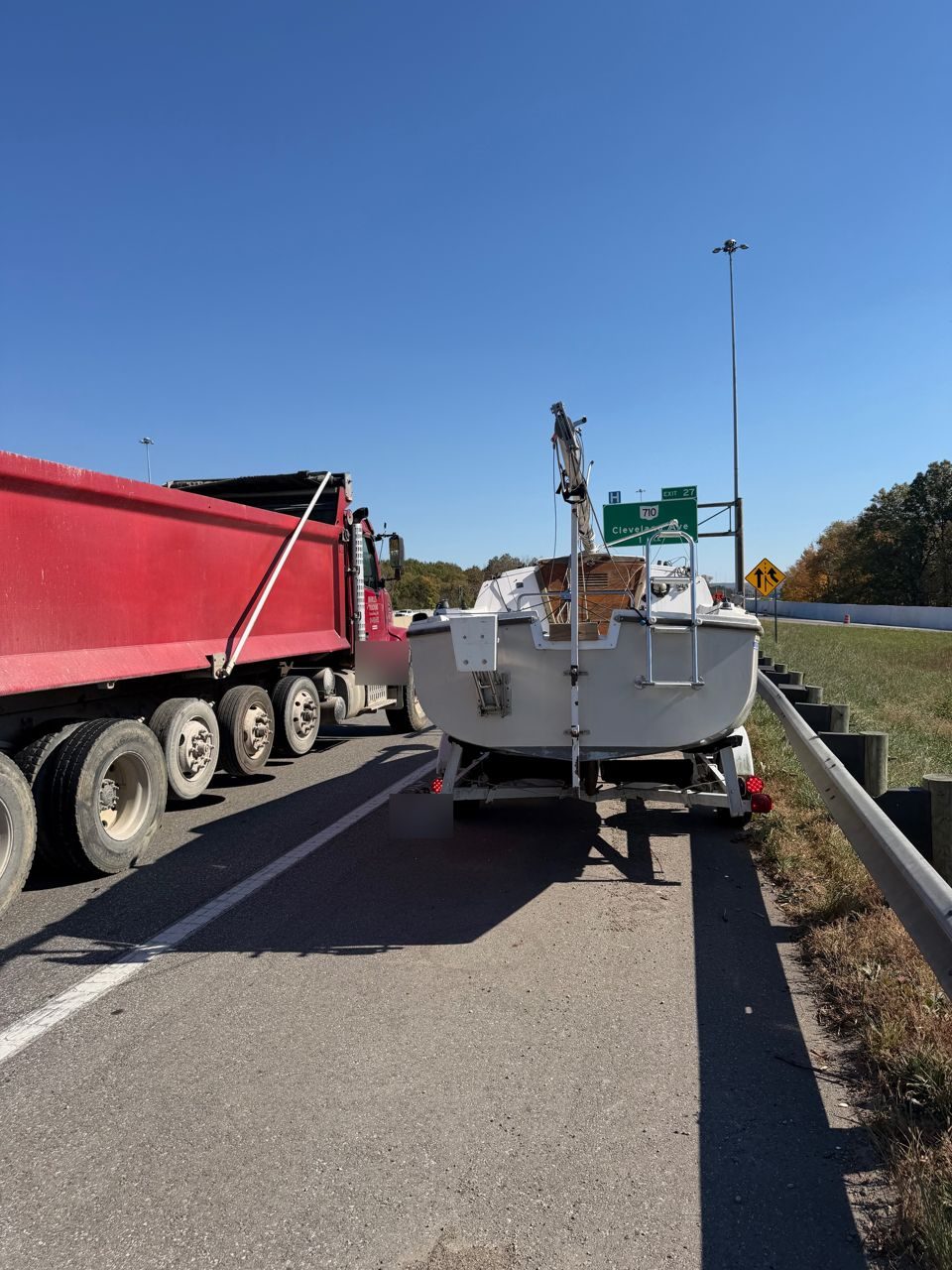
We saw what that looks like today, on I-270 on the north side of Columbus: a boat trailer on 7-year-old car tires, one of them blown out on the side. Below: the differences, how old is too old, that job, and what to check before you tow.
Quick answer: ST vs P tires at a glance
| ST trailer tire | P car tire | |
|---|---|---|
| Letters before the size | ST (Special Trailer) | P (Passenger) |
| Built for | Trailers: boat, utility, camper, car hauler | Cars, SUVs and minivans |
| Sidewall | Stiffer, made to carry weight and resist sway | More flex, for grip and cornering |
| Load on a trailer | Full rating on the sidewall | Rating divided by 1.10 (about 91%) |
| Speed | 65 mph unless the tire is marked higher | Higher, by speed rating letter |
| Use the other way round | Not on cars or light trucks | Not on trailers |
| Bottom line | Use on every trailer | Keep on the car |
Sources: Tire Rack trailer tire guide, 49 CFR 571.120, S5.1.2 and etrailer, checked October 2026.
The letters sit right in front of the size, so it takes five seconds to check. For the rest of the numbers on the sidewall, see tire numbers explained. Matching tires to the job sounds obvious until you notice how many trailers roll around on whatever was in the garage.
Can you put car tires on a trailer?
You can bolt them on, and they will hold air, but you should not. A car tire is built to flex so the car can grip, steer and brake. A trailer does none of those things on its own. It just carries weight and gets pulled, so a flexing sidewall lets it lean and sway instead.
The load numbers agree. The federal rule on fitting tires to trucks, buses and trailers says that when a passenger car tire is installed on a trailer, its load rating is divided by 1.10. So a P tire on a trailer is credited with about 91% of the load printed on its sidewall. On a loaded boat trailer, that missing tenth is exactly where you do not want to be short.
It works the other way too. Tire Rack says ST tires are not intended for cars or light trucks. Each tire is very good at one job and quietly bad at the other one, a bit like a canoe paddle at a barbecue.
Why trailers need ST tires: sidewall, load and sway
etrailer explains that a tire’s type comes from its construction, not its size: the same size can be made as an ST or a P tire. The ST version gets the stiffer sidewall that handles a trailer’s vertical load. The P version gets the flex a car needs for traction and cornering.
- Load: ST tires carry their full rated load on a trailer. P tires lose about a tenth of it.
- Sway: a stiffer sidewall keeps the trailer tracking straight behind you.
- Pressure: Tire Rack says low pressure can dangerously overload a trailer tire, and to check trailer tire pressure before each trip, cold.
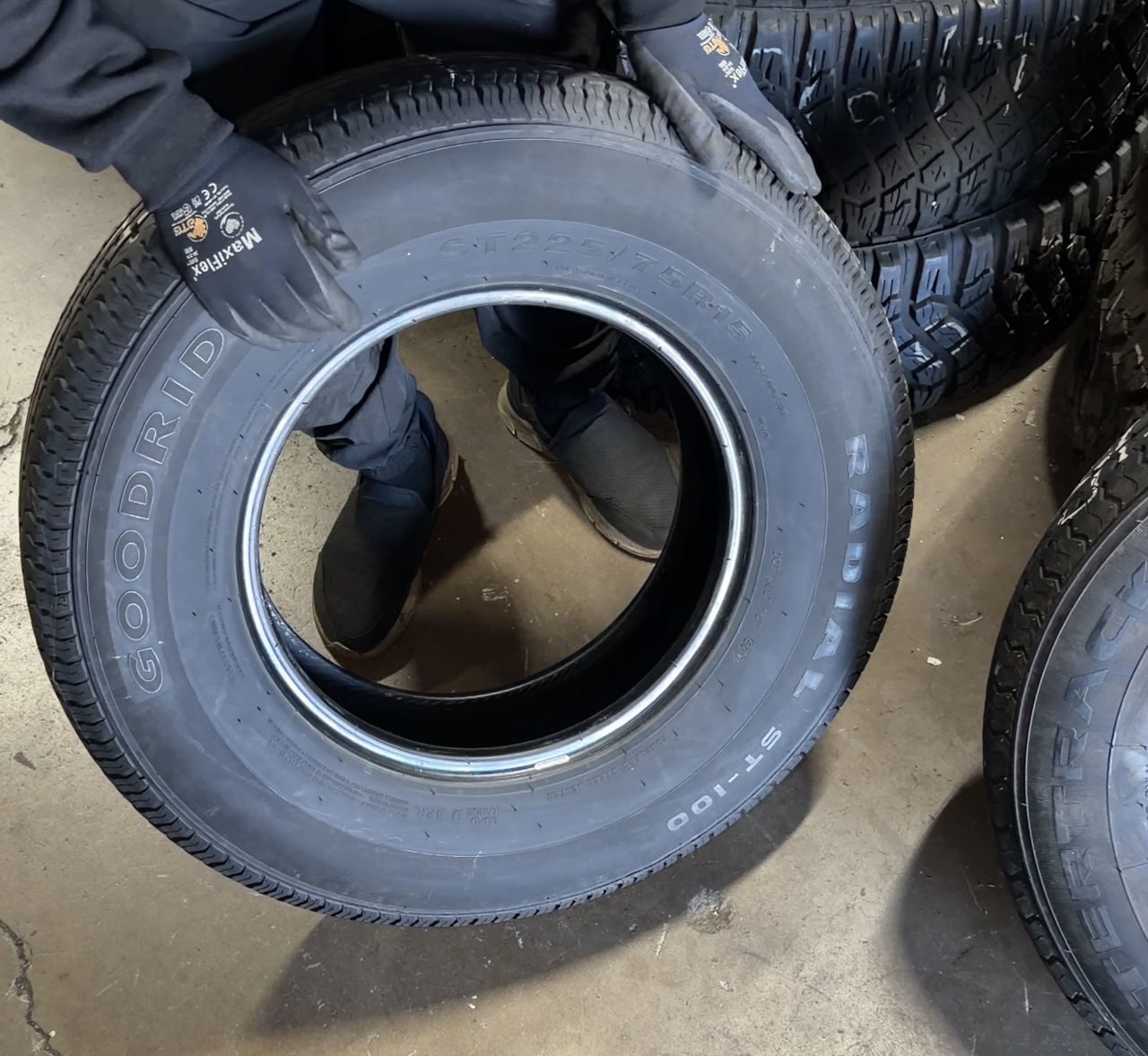
ST tire speed rating: 65 mph unless marked
Tire Rack says that unless an ST tire carries its own speed rating, industry standards rate it to 65 mph. Some newer ST tires are marked higher, so read the sidewall. If you tow faster than your tires are rated for, the tires are the part that pays for it. Check yours before the next long run on I-71 or I-70.
Your car may feel happy at 70. The trailer tires behind it are reading a different rulebook, and they wrote it in small print.
How old is too old for trailer tires?
Younger than most people think. Trailer tires sit for months, out in the sun or on one spot of a driveway, and then work hard for a few weekends. The Michigan Department of Environment, Great Lakes, and Energy says they can degrade in 3 to 5 years even when not used, and that tires older than 5 to 6 years should be discarded even if the tread looks good. The PJ Trailers owner’s manual says to consider new trailer tires after 3 years and puts the average life at about 5.
To find the age, read the last four digits of the DOT code: week, then year. Our guide on how to tell the age of a tire shows where to look. Small cracks in the sidewall are another sign, covered in dry rot tires. Deep tread on a trailer tire proves only that it has not been anywhere, which is not the same as being ready to go somewhere.
A boat trailer on I-270 with car tires
Today a driver was taking his sailboat to winter storage on I-270 east, on the stretch above I-71, just before exit 27 (Cleveland Avenue). A trailer tire blew. He was not from the area, he had a boat behind him, and he was not sure what to do. He called us. We told him 15 to 20 minutes and got there in about 20. We would rather give a number we can keep.
The shoulder there is very narrow. There was almost no room between the trailer and the guardrail, and the trailer was not fully off the lane. We parked behind it with flashers on and put out a warning triangle and a cone. One of our team stood behind the trailer in a high-vis jacket, moving cars out of the right lane. We asked for the lane to be closed and had the job done before help got there. We worked as fast and as carefully as we could, and then got everyone off the road.
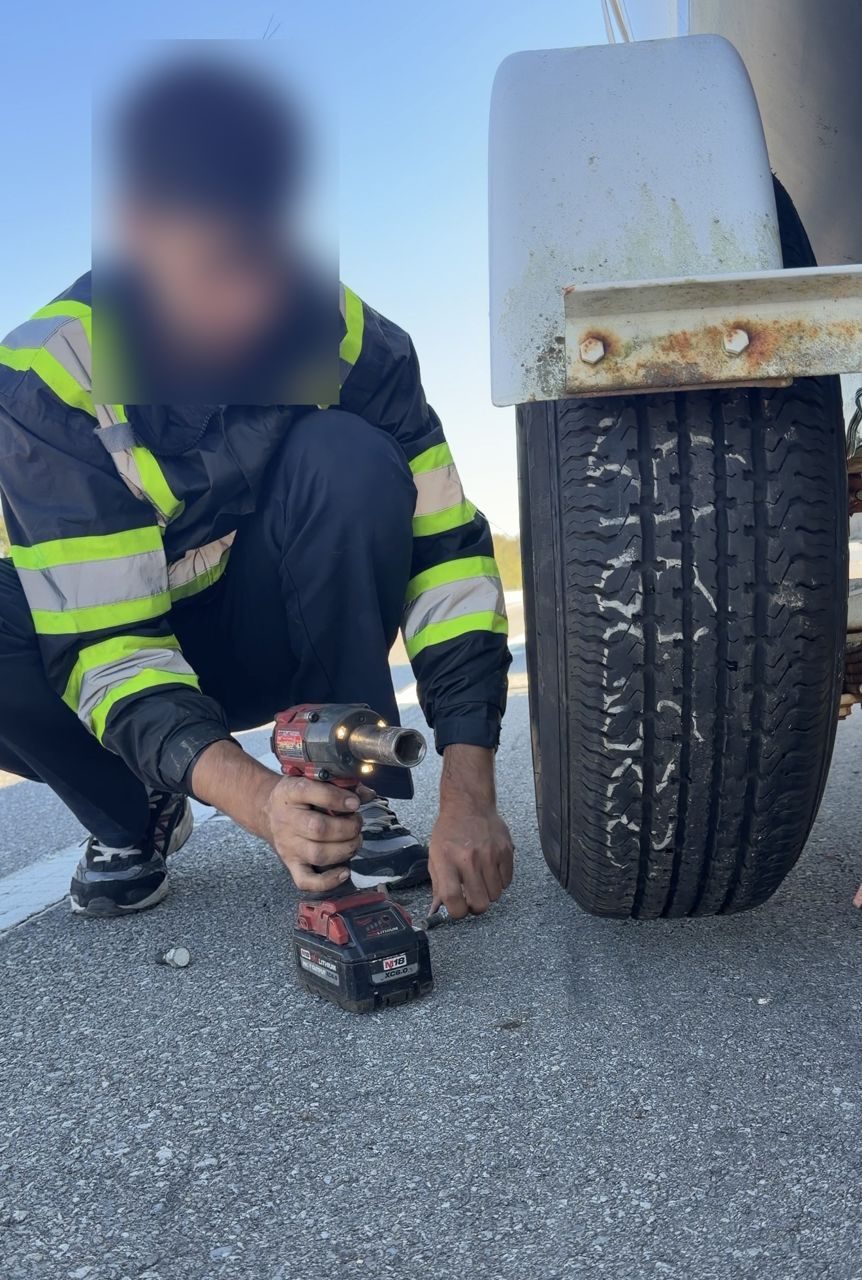
The tire had blown out on the side and was shredded. Both tires turned out to be P tires, car tires, made in week 19 of 2017, about 7.5 years old and cracked. He did not know trailers take different tires. Most people do not, until a day like this.
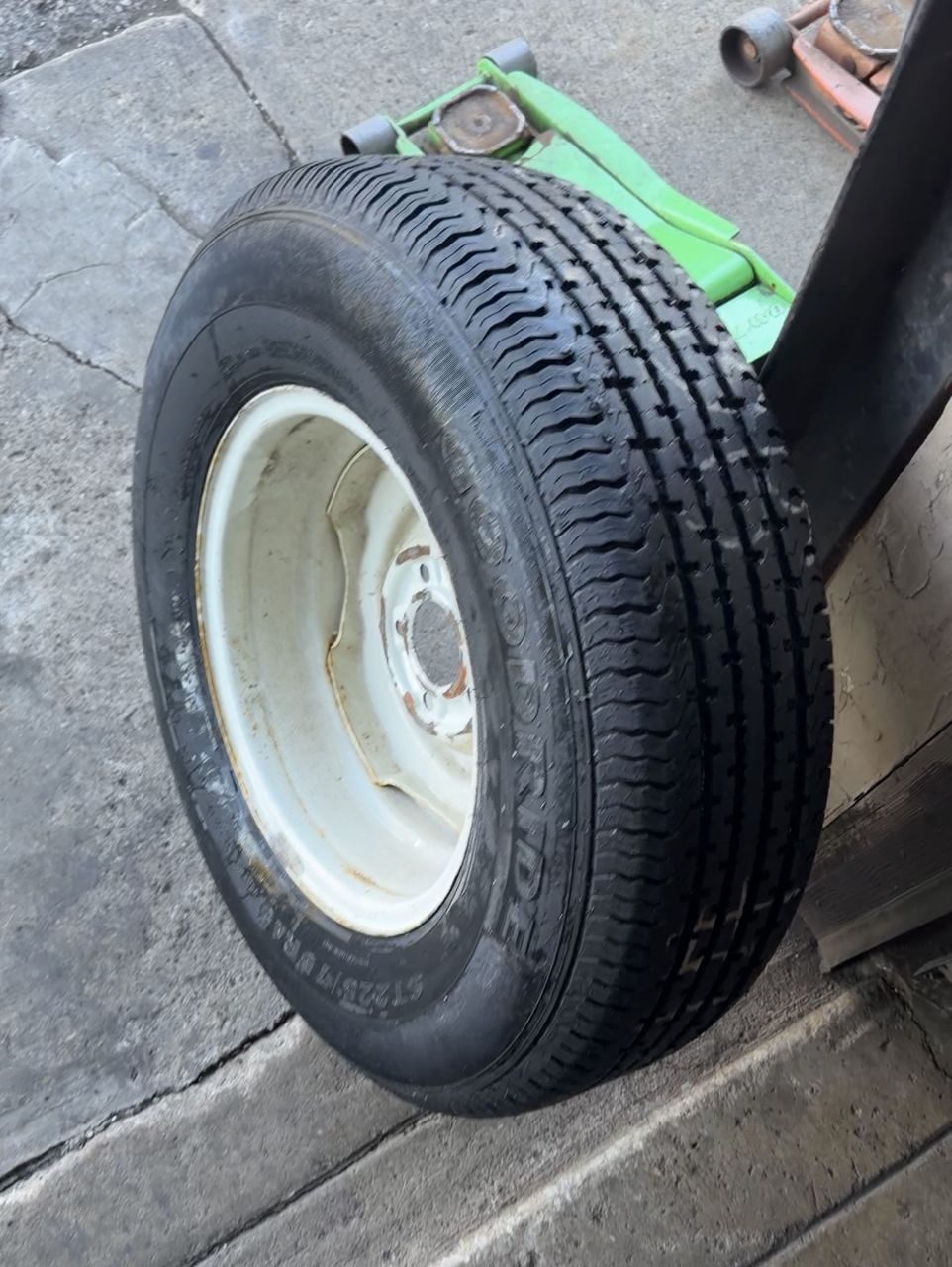
One had failed, but the other was just as old and had carried the same load, so he chose to replace both. Hassan took both wheels to a tire shop we work with. The shop mounted two good used ST225/75R15 trailer tires from week 5 of 2025; he wanted to save money, and they were in good shape. Hassan brought them back and put them on. The whole job took about an hour and a half, and the total was $450: about $100 per tire plus $250 for the service.
At the end he thanked us for the work, asked Hassan if he was the owner, liked that he was, and told him to be safe on the road. Then he was on his way with the boat. Every call like this is a person having a hard day, not just a flat tire, and staying calm is half the job.
If a trailer tire blows on the highway
Get safe, then call. Hold the wheel straight, ease off the gas and do not brake hard. Let the car and trailer slow down, then signal and move as far right as you can, or take the exit if you can reach it safely. Hazards on.
- On a narrow shoulder, do not stand between the trailer and traffic.
- If you cannot get fully off the lane, stay buckled in with hazards on and call for help.
- Do not change a tire on the traffic side of a highway shoulder on I-270, I-71 or I-70.
- If anyone is hurt, call 911 first.
Our tire blowout guide has the full steps, and our I-270 breakdown page covers the Outerbelt.
5 things to check before a long tow
- The letters: ST in front of the size on every trailer tire, including the spare.
- The age: the last four digits of the DOT code. Plan on new tires well before they look worn.
- The sidewalls: cracks, bulges or cuts mean replace, not “one more trip”. See tire sidewall damage.
- The pressure: checked cold, before the trip, to what the trailer maker lists.
- The speed rating: 65 mph unless the tire says otherwise.
A trailer spare that has hung under the tongue since the day the boat was new is less of a spare and more of a souvenir. Check its date too.
When you do not need us: a good spare, the tools for the trailer’s lug nuts, and a safe spot well away from traffic, such as a parking lot. Plenty of owners change a trailer tire themselves.
Trailer tire help in Columbus
If the tire goes on a shoulder, or there is no usable spare, we can come out. When a tire needs replacing, we take the wheel to a tire shop, get it done and bring it back to fit it, as on the boat trailer. Trailer tire calls are quoted by phone, before anyone drives to you. We work 6 AM to 8 PM daily and arrive in about 32 minutes on average, depending on traffic, weather and location. See our mobile tire service in Columbus.
Trailer tire questions
Can you put car tires on a trailer?
You should not. A passenger (P) tire is built to flex for grip and steering, and a federal tire rule divides its load rating by 1.10 when it is fitted to a trailer. Fit the ST size shown on the trailer's placard or in its manual.
What is the difference between ST and P tires?
ST tires are made only for trailers. They have stiffer sidewalls to carry weight and resist sway, and they are rated for 65 mph unless the tire is marked higher. P tires are made for cars and flex more so the car can grip, steer and brake.
Can you put trailer tires on a car?
No. Tire Rack says ST tires are not intended for cars or light trucks. They are not designed for the steering, braking and cornering a car tire handles every day.
Are LT tires better than ST tires on a trailer?
ST is the type made for trailers, and it is what the trailer maker plans for. Some owners fit light truck (LT) tires to heavier trailers, but a change of tire type should be checked by a tire shop against the trailer's load and the tires' ratings.
How long do trailer tires last?
Usually not as long as the tread suggests. The Michigan Department of Environment, Great Lakes, and Energy says trailer tires can degrade in 3 to 5 years even when not used, and to discard tires older than 5 to 6 years. Read the age from the DOT date code on the sidewall.
Should you replace both trailer tires if one blows?
Often, yes. The other tire is the same age, ran the same miles and carried extra load after the first one failed. On trailers with more than one axle, Tire Rack says to replace at least the tire next to the failed one on the same side.
The bottom line
Trailers take ST tires, not car tires. ST tires have stiffer sidewalls for the load, a 65 mph rating unless marked higher, and the full load rating on the sidewall; a car tire on a trailer loses about a tenth of its rating. Trailer tires age out before they wear out, so check the DOT date before a long tow. If one old tire blows, the other one is usually close behind.
Trailer tire down near Columbus?
Get safe first, then call, 6 AM to 8 PM daily. A dispatcher confirms the job, the price and an arrival estimate before anyone heads your way.
May the only thing that drifts this season be the boat, and only once it is on the water.