How to Plug a Tire With a Repair Kit (and When Not To)
Published Oct 24, 2026 · 7 min read · By Hassan, Owner of Roadmate Services
Somewhere on your commute, a screw was lying on its side, waiting for exactly your tire. Here is how to plug a tire: if the hole is up to 1/4 inch and in the tread of a tubeless tire, find the leak, ream the hole, push in a plug from a tire repair kit, trim it, inflate to the pressure on your door placard and check for bubbles. It takes 7 steps and a few tools.
A hole in the sidewall or the shoulder is different. Do not plug it: fit the spare and see a tire shop. Below: which holes you can plug, what is in a tire repair kit, the steps, and when to leave it to someone else.
Quick answer: can this tire be plugged?
| Damage | Plug it? |
|---|---|
| Nail or screw in the middle of the tread, hole up to 1/4 inch | Yes, with a plug kit |
| Hole near the edge of the tread (the shoulder) | No: use the spare, then a tire shop |
| Cut, bulge or hole in the sidewall | No: the tire needs replacing |
| Hole bigger than 1/4 inch, or a tear | No |
| Tire driven flat for a distance | Only after an inside inspection at a shop |
| Tire already full of sealant | No: it goes to a shop |
Size and location limits from the U.S. Tire Manufacturers Association and AAA, checked October 2026.
If the screw is still in the tire, leave it there until you are ready to plug. Right now it is doing a surprisingly decent impression of a plug itself.
Get safe before you plug anything
On a highway shoulder, get safe, then call. Do not plug or change a tire on the traffic side of a shoulder on I-70, I-71 or I-270. Pull as far right as you can, or take the next exit, hazards on.
- Work only on firm, level ground, away from traffic.
- Put the car in Park (or in gear for a manual) and set the parking brake.
- Block the wheel diagonally opposite the flat if you have a chock or a solid block.
- If the hole is not in the tread, stop here and fit the spare instead.
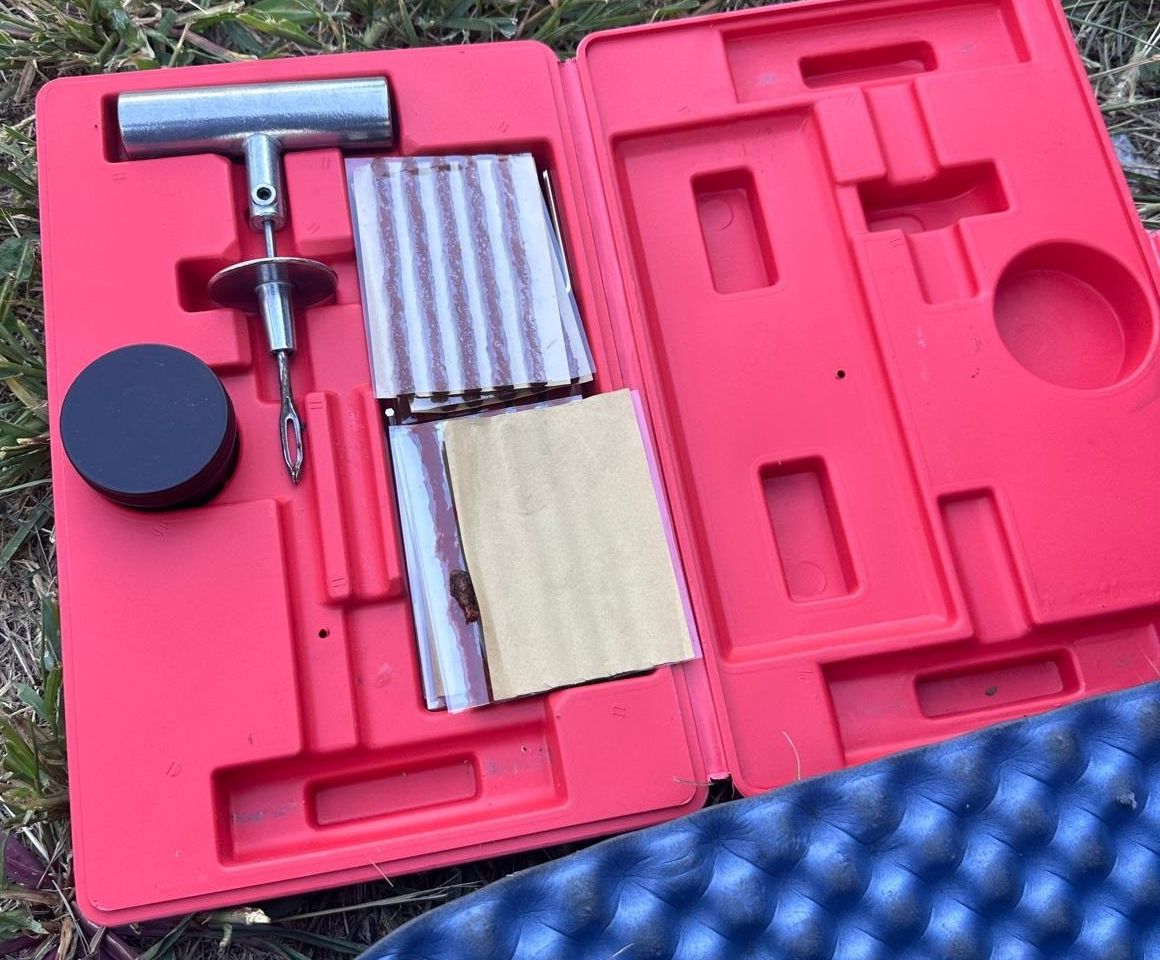
What is in a tire repair kit (about $10 to $25, market figure)
AAA puts a plug kit with a T-handle reamer, insertion tool and plugs at $10 to $25. That is a market figure, not a Roadmate price. Most flat tire repair kits hold the same parts:
- Reamer: a T-handle with a rough, spiral tip that cleans and shapes the hole.
- Insertion tool: a T-handle with an open eye at the tip that carries the plug in.
- Plugs: sticky brown strings, sometimes called tire plug strips.
- Rubber cement or lubricant: in many kits, to help the plug go in and seal.
- Knife or blade: to trim the tail.
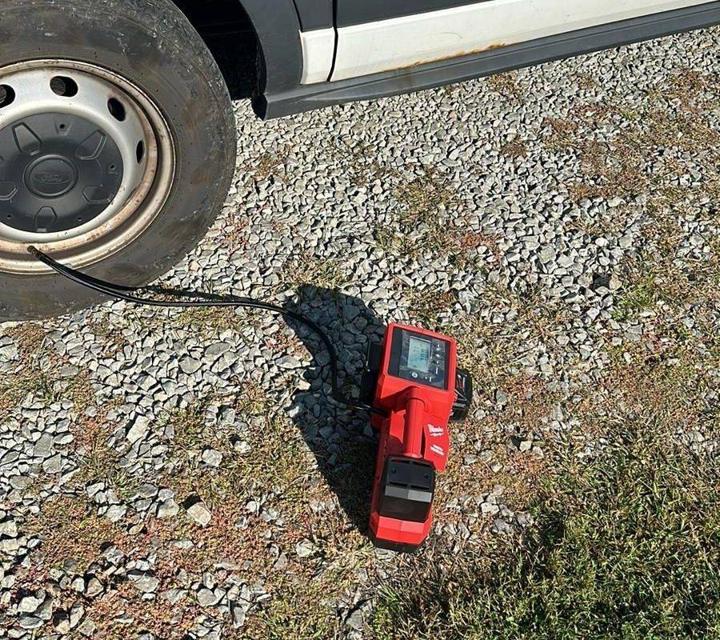
You also need pliers, soapy water in a spray bottle, a tire gauge and an air source: a portable inflator or a gas station pump. A kit with no way to add air is a very organised way to stay flat.
How to plug a tire in 7 steps
- Find the hole. Look for the nail or screw. If you cannot see it, spray soapy water on the tread and watch for bubbles. Mark the spot with chalk or a pen.
- Pull the object out. Use pliers and pull straight out, following the angle it went in. The tire will start to lose air, so have the kit open first.
- Ream the hole. Push the reamer in along the same angle and work it in and out several times. This cleans the hole and roughens it so the plug grips.
- Load the plug. Thread one plug string through the eye of the insertion tool until it sits in the middle. Coat it with cement if your kit has it.
- Insert the plug. Push the tool into the hole with steady force until most of the plug is inside, leaving a short tail outside. Then pull the tool straight out, without twisting. The plug stays in.
- Trim the tail. Cut the tail close to the tread with the kit blade.
- Inflate and test. Inflate to the pressure on the sticker inside the driver’s door, not the number on the sidewall. Spray soapy water on the plug. No bubbles means it is sealed. Check the pressure again the next day.
The reamer step is where most first-timers hesitate. Shoving a metal spike into a tire you are trying to save goes against every instinct, which is how you know you are following the instructions.
Can you plug a tire without taking it off? Yes, if you can reach the hole. If the hole is against the ground, roll the car forward a little, or lift it using the right jack point. If the tire is very low, see how to put air in tires before you start.
6 times you should not plug a tire
- The hole is in the sidewall. A sidewall flexes with every turn of the wheel and a plug will not hold. See tire sidewall damage.
- The hole is in the shoulder, where the tread curves into the sidewall. The USTMA limits repairs to the tread area.
- The hole is bigger than 1/4 inch, or it is a cut or a tear rather than a round hole.
- The tire was driven flat. Driving on no air can damage the tire inside where you cannot see it. A shop needs to take it off and look.
- It is too close to an old repair. The USTMA says repairs must not overlap.
- The tire is full of sealant. After a can of Fix-a-Flat, we generally do not plug it on site; the tire goes to a shop.
Run-flat tires depend on the maker and the damage. Read can you plug a run flat tire before you try. For the full repair-or-replace decision, see how to fix a punctured tire. A sidewall cut does not get a second opinion from a plug kit, however hopeful you feel holding one.
Is a tire plug permanent?
A plug in the tread works in most cases; that is the repair we do on site. The industry standard is stricter. The USTMA calls for the tire to come off the wheel, an inside inspection, and a plug-patch, and says a plug alone is not an acceptable permanent repair. AAA calls a plug a temporary fix.
Our honest advice: plug it, then have a tire shop look at it at your next service and fit a plug-patch if they recommend one. For lifespan and the plug vs patch details, read how long a tire plug lasts.
Tire plug cost: DIY kit, shop or on site
| Option | Cost |
|---|---|
| DIY plug kit (market figure, AAA) | $10 to $25 |
| Plug at a shop (market figure, eBay Motors) | $25 to $30 |
| Tire repair on site (Roadmate, Columbus) | $75 to $150 |
Market figures from AAA and eBay Motors, checked October 2026. Shop prices assume your car is already at the shop. Full comparison in our tire patch cost guide.
When you do not need us: a tread puncture, a kit, a safe level spot and an air source. That is a job you can do yourself, and plenty of drivers do.
Tire plug on site in Columbus
If you would rather not, or the tire is somewhere awkward, we come to you. One Columbus morning around school start time, a grandmother found a flat on her Lexus in the driveway. We went to fit the spare, about 30 minutes after the call, but the nail was in the tread, so Hassan repaired it on the spot in about 15 minutes. She skipped the tire shop and got her grandson to school. That is one job, not a promise for every tire.
Our estimated range for tire repair on site in Columbus is $75 to $150, and for a tire change with your spare it is $85 to $175. When a tire cannot be repaired and there is no usable spare, we take it to a tire shop, get it replaced and bring it back to fit it (quoted by phone). We work 6 AM to 8 PM daily and arrive in about 32 minutes on average, depending on traffic, weather and location. See our mobile tire service in Columbus. NHTSA’s tire safety page explains pressure checks and tread wear if you want to keep the next screw from finding you.
Tire plug questions
How do you plug a tire with a kit?
Find the hole with soapy water, pull out the nail or screw, and push the reamer in and out to clean the hole. Thread a plug through the insertion tool, push it in with a short tail left outside, and pull the tool straight out. Trim the tail, inflate to the pressure on the door placard and check for bubbles.
Can you plug a tire without taking it off?
Yes. For a puncture in the tread, the wheel can stay on the car as long as you can reach the hole. That is how a roadside plug works. If the hole sits against the ground, roll the car a short way or lift it with the jack at the point your owner's manual shows.
How long does a tire plug last?
A good plug in the tread often lasts a long time, and it works in most cases. The tire industry's permanent standard is a plug-patch fitted from inside, so have a shop look at the tire at your next service. Our guide to how long a tire plug lasts has the details.
Is plugging a tire safe?
It is safe when the hole is small, round and in the tread of a tubeless tire, and the tire holds pressure afterwards. It is not safe in the sidewall or shoulder, on a hole bigger than 1/4 inch, or on a tire that was driven flat and damaged inside.
Can you drive on a plugged tire on the highway?
Once the tire holds the door-placard pressure and passes a soapy-water leak test, yes. Check the pressure again the next day. If it keeps losing air, or you feel a vibration, get it to a tire shop before more highway miles.
What is the difference between a tire plug and a patch?
A plug fills the hole from outside, with the tire still on the car. A patch seals the inner liner from inside, so the tire has to come off the wheel. A plug-patch does both in one piece. Our tire patch cost guide compares what each one costs.
The bottom line
You can plug a tire yourself when the hole is up to 1/4 inch, round and in the tread. Ream it, insert the plug, trim it, inflate to the door-placard pressure and test with soapy water. Sidewall, shoulder, big holes and tires driven flat need a shop or a new tire. A plug works in most cases, and a shop check at your next service covers the rest.
Want the plug done where your car is parked?
Call 6 AM to 8 PM daily. A dispatcher confirms availability, your full price and an arrival estimate before anyone heads your way.
May the next screw you meet be the one holding a shelf up at home.