Why Is My Car Shaking? 8 Causes, From Tires to Brakes
Published Nov 20, 2026 · 8 min read · By Hassan, Owner of Roadmate Services
Your car is trying to tell you something. It just only speaks in vibrations. If you are asking why is my car shaking, the answer in most cases is the wheels and tires: a tire out of balance, a worn or damaged tire, low pressure, a bent wheel or loose lug nuts.
When the shake happens tells you the rest. A shake at highway speed points at tire balance. A shake when you accelerate points at the axles, engine mounts or engine. A shake only when you brake points at the brakes. The 8 causes below cover all of them, and which ones mean stop driving now.
Quick answer: why your car is shaking, by when it happens
| When it shakes | Most likely cause | Who fixes it |
|---|---|---|
| At highway speed (about 50 to 70 mph) | Tire out of balance, worn tire | Tire shop |
| At almost every speed, getting worse | Loose lug nuts, bent wheel, tire bulge | Stop now, then roadside or tire shop |
| When you accelerate | CV axle, engine mounts, misfire | Mechanic |
| Only when you brake | Warped rotors, worn pads | Brake shop |
| Steering wheel shakes | Usually the front wheels or alignment | Tire shop |
| Seat and floor shake | Often the rear wheels or driveshaft | Tire shop or mechanic |
| At idle, parked | Spark plugs, engine mounts, air filter | Mechanic |
| Rule of thumb | Mild and at one speed: book a tire shop. Sudden, strong or getting worse: pull over and check. | |
Built from Firestone Complete Auto Care, Cars.com and Chase, checked November 2026. General guidance, not a diagnosis.
Cars.com puts it simply: a vibration while driving is almost always caused by something that rotates, most often the wheel and tire. A coffee in the cup holder makes a decent vibration meter, as long as the lid is on.
A sudden, violent shake: get safe first
A shake that starts suddenly, gets stronger, or comes with a thumping noise or the car pulling to one side can mean a tire is failing or a wheel is coming loose. Do not wait to see if it settles.
- Hold the wheel firmly and ease off the gas. Do not brake hard.
- Get safe, then call. On I-70, I-71 or I-270, take the next exit if the car will make it, or pull as far onto the shoulder as you can.
- Turn on your hazards. On a highway shoulder, stay buckled in with the doors closed while you wait.
- Do not change a tire or tighten lug nuts on the traffic side of a highway shoulder. If anyone is hurt or the car is stopped in a lane, call 911 first.
- Once you are somewhere safe, look at each tire for a bulge, a tear or a wheel that looks out of line.
Our guide to what to do if your car breaks down on the highway has the full checklist.
Car shaking while driving: 8 common causes
1. A tire out of balance (the most common cause)
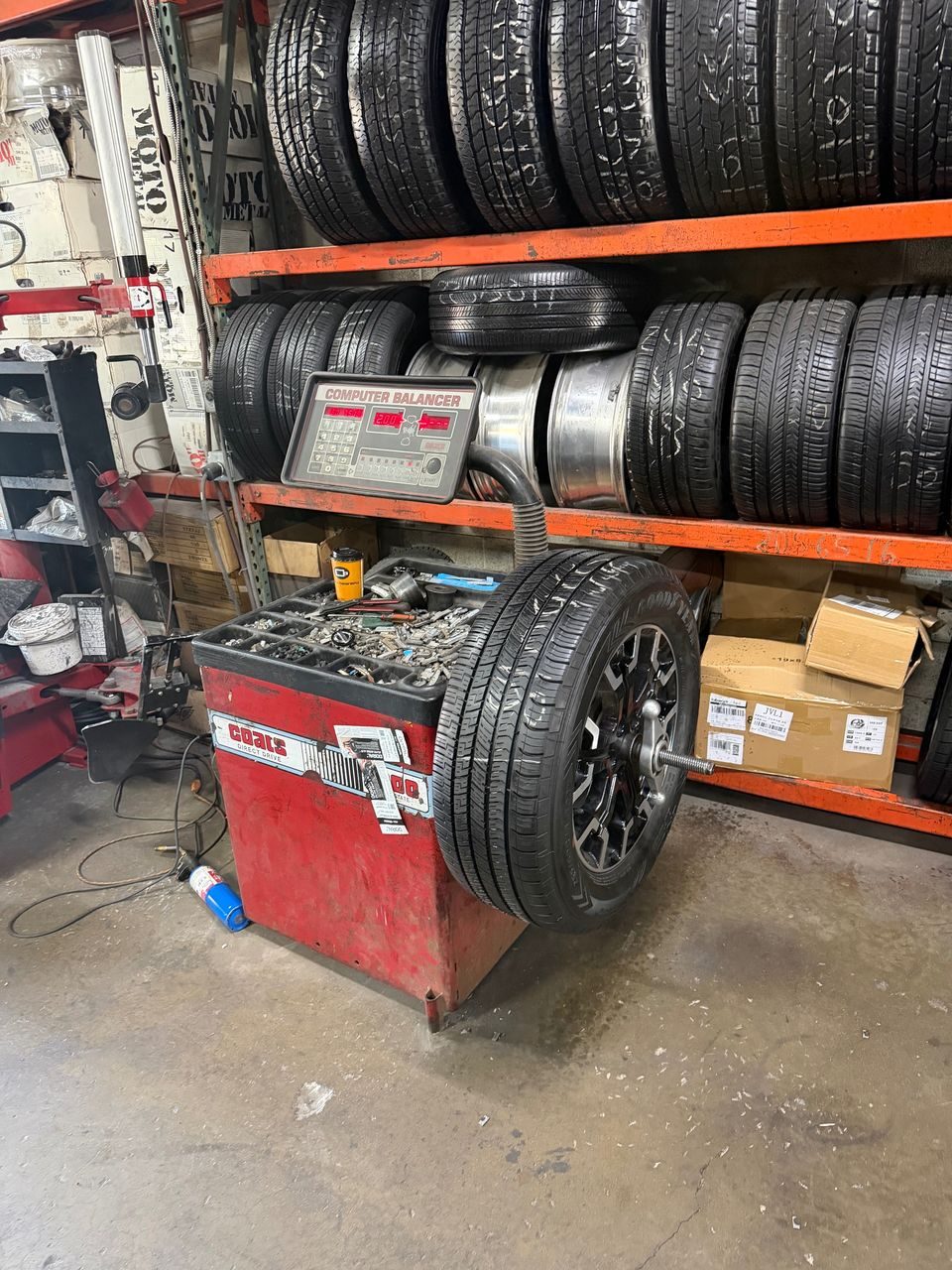
Every wheel and tire has a few heavier spots. A tire shop evens them out with small weights clipped or stuck to the rim. When a weight falls off or the tire wears unevenly, the wheel wobbles as it spins. Cars.com calls a wheel or tire imbalance the most likely cause, and usually an easy one to diagnose.
It tends to show up only in a band of speeds. Cars.com gives the example of 50 to 70 mph, easing off above that. Firestone says tire imbalance can be felt in the steering wheel, the floor and the seats. A few grams in the wrong place can make a whole SUV feel like a washing machine on the spin cycle.
2. A worn, cracked or damaged tire
Uneven wear, cupping (a scalloped pattern in the tread) and tread separation all make a tire run out of round. Cars.com lists sidewall bubbles and tread separation among the causes you can spot yourself. A bubble means the cords inside the tire are broken; our post on what a bubble in a tire means explains why it should not be driven on.
One fall job shows how this goes. A man in Johnstown called us for one new tire on his Nissan Pathfinder. When Hassan got there, the front tire had cracks in it, and the tire on the other side of the axle was worn too. He called the owner, suggested replacing both so they matched, and with his OK took both wheels to a tire shop, had two new tires mounted and balanced, brought them back and put them on in the driveway.
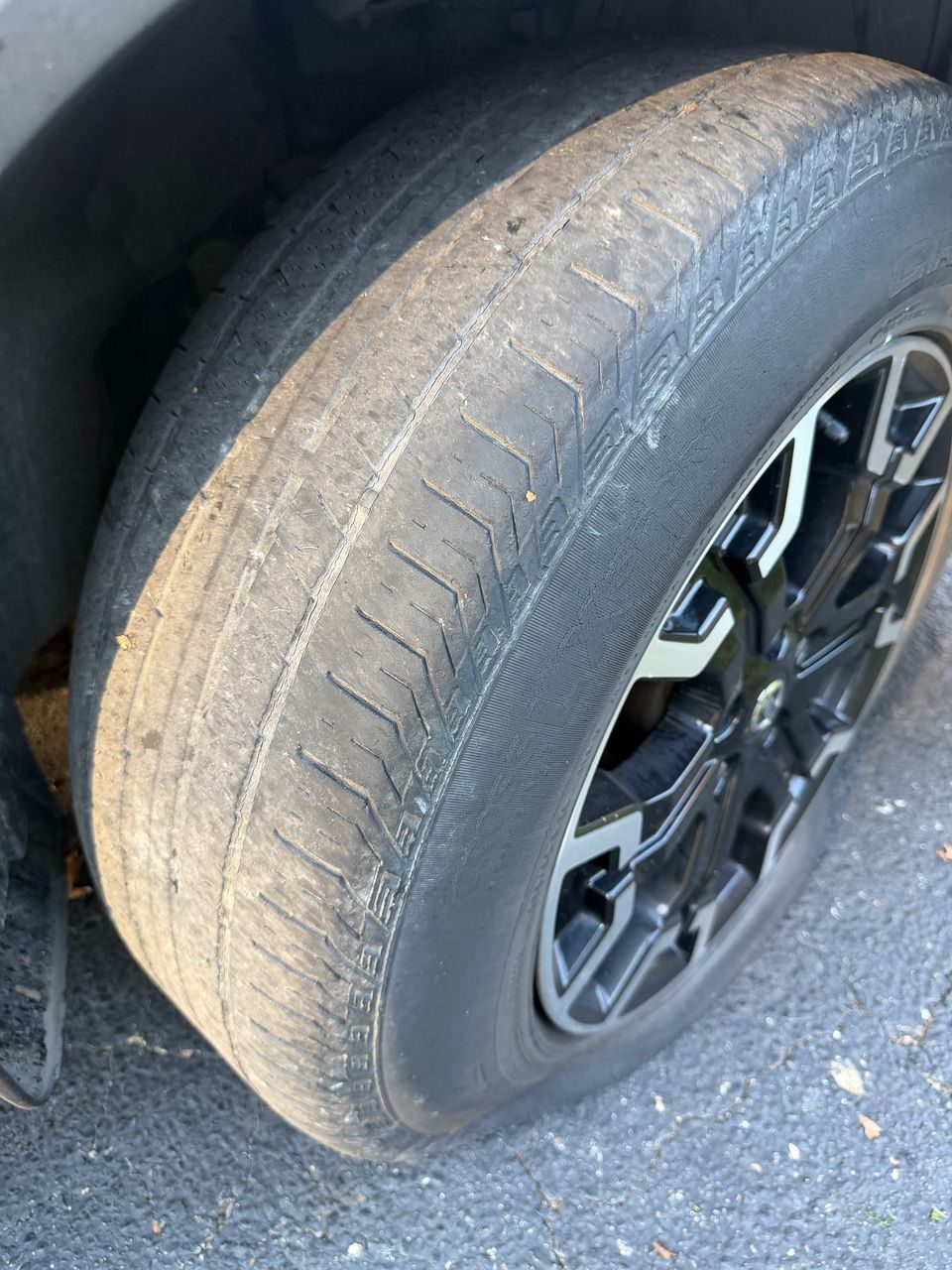
The lesson: replace tires in pairs on the same axle when the other one is worn too, and have new tires balanced. Our guide to how long tires last helps you spot when yours are close.
3. Low or uneven tire pressure
A soft tire flexes more and can make the car wobble or wander, especially if one side is much lower than the other. Cars.com puts tire pressure on its list of simple checks. Use a gauge on cold tires and fill to the number on the sticker inside the driver's door, not the number on the tire. Our guide on how to put air in your tires walks through it. Tires lose air quietly; they never send a text first.
4. Loose lug nuts
This is the dangerous one. A wheel with loose lug nuts wobbles on its studs and can come off. Firestone flags it especially at speeds over 55 mph, and Cars.com notes it can cause a vibration at almost all speeds. It often shows up shortly after a tire change or a tire shop visit.
If you suspect it, stop somewhere safe and check that every nut is tight with the lug wrench. If a nut is stripped or a stud is damaged, do not drive on it. Our post on stripped lug nuts covers what happens next.
5. A bent or cracked wheel
Columbus potholes and curbs bend wheels every spring. A bent rim makes the tire wobble at almost every speed and can leak air slowly. A crack is worse: it cannot be repaired at the roadside, and the wheel has to be replaced. Our post on a cracked rim explains the signs.
6. Wheel alignment and worn suspension or steering parts
Chase links misaligned wheels to a shaking steering wheel. Bad alignment mostly makes a car pull and wears tires unevenly, and that uneven wear is what you end up feeling. Worn shocks, struts, ball joints or tie rods let the wheels move where they should not. If you hold the wheel slightly to one side just to go straight, your car has developed opinions about lanes.
7. CV axles, the driveshaft and wheel bearings
Firestone lists a worn CV axle among the causes of shaking when you accelerate, and Cars.com adds wheel bearings, a rear driveshaft and its center bearing, and CV joints. A clicking noise in tight turns often goes with a worn CV joint. A hum that grows with speed often goes with a wheel bearing. All of these are mechanic jobs.
8. Brakes: shaking only when you brake
If the car is smooth until you press the brake pedal, the brakes are the suspect. Firestone and Chase both name warped or damaged rotors and worn pads. You may feel it as a pulsing pedal or a shaking steering wheel. Our post on warped rotors covers it in detail.
Car shaking at high speeds, when accelerating or at idle
Car shaking at high speeds
A shake that starts around highway speed and fades as you go faster or slower is classic tire balance. Firestone also lists loose lug nuts, worn tires and worn suspension parts for shaking over 55 mph. If it started the day after a tire change, check the lug nuts first.
Car shaking when accelerating
Shaking that comes on with the gas pedal and eases when you lift off points at the parts that carry engine power: CV axles, engine mounts and the engine itself. A misfiring engine shakes as well, and if the check engine light is flashing, stop driving as soon as it is safe.
Car shaking at idle or when parked
If the car shakes standing still, the wheels are off the hook. Firestone lists worn spark plugs, loose engine mounts, faulty fuel injectors and a clogged air filter. That is a job for a mechanic, not a tire shop.
Car shaking after snow
Packed snow and ice stuck inside a wheel throw it out of balance until it melts. If that sounds like your morning, see car shaking after snow.
6 things to check yourself before you call anyone
Do these parked somewhere safe and flat, engine off, away from traffic.
- Note when it shakes. Speed, accelerating or braking, steering wheel or seat. Firestone and Cars.com both start with these questions, and so will any shop.
- Check the pressure in all four tires with a gauge, cold.
- Look at each tire for bulges, cracks, cords showing or uneven wear.
- Look at each wheel for a dent, a crack or a missing balance weight (a clean rectangle on the rim where one used to be).
- Check the lug nuts are all there and tight, especially after recent tire work.
- Clear mud, snow or ice packed inside the wheels.
The cheapest tool on this list is a tire gauge, and it finds more problems than its price suggests.
What we can and cannot fix for a shaking car in Columbus
We will be straight with you: wheel balancing, alignment, suspension, axles, brakes and engine work are not roadside jobs, and we do not do them. A tire shop or mechanic is the right call for those. Nobody wants a wheel balanced on the shoulder of I-270, least of all the wheel.
What our technicians do, 6 AM to 8 PM daily:
- Change a damaged tire to your spare. Our Columbus tire change service is estimated at $85 to $175.
- Plug a repairable puncture on site, estimated at $75 to $150.
- No usable spare? We take the tire to a shop, have it replaced and bring it back to fit it. Quoted by phone.
- Replace a stripped lug nut or damaged stud on site, and inflate low tires.
- Tow the car to your mechanic when it should not be driven. Towing is estimated at $125 to $275 for about 1 to 15 miles; longer tows are quoted by phone.
When you do not need us: if the shake is mild, steady and only at one speed, the car is safe enough to drive gently to a tire shop for a balance check. Save the roadside call for a tire that is damaged, a wheel you do not trust, or a car that should not be driven at all.
Frequently asked questions
Is it safe to drive a car that is shaking?
A mild vibration at one speed is usually a balance problem you can drive to a tire shop with. A shake that is new, strong, getting worse or comes with a thump or pulling is not safe to keep driving on. Slow down, pull over somewhere safe and check the tires and lug nuts.
Why does my car shake at 60 mph?
A shake that shows up around highway speed and fades above or below it is most often a wheel or tire out of balance. Cars.com notes the vibration often sits in a range such as 50 to 70 mph. A tire shop checks the balance on a balancing machine.
Why does my car shake when I accelerate?
Shaking that comes on when you press the gas and eases when you let off often points at a worn CV axle, damaged engine mounts or an engine misfire, according to Firestone. These are mechanic jobs. If the check engine light is flashing as well, stop driving as soon as it is safe.
Can low tire pressure make my car shake?
Yes. Cars.com lists tire pressure among the simple causes you can check yourself. A tire that is low, or much lower than the one on the other side, can make the car wobble and wander. Check all four with a gauge when the tires are cold.
Can bad alignment cause shaking?
Alignment mostly makes a car pull to one side and wear tires unevenly. Chase links misaligned wheels to a shaking steering wheel, and the uneven wear it causes can lead to vibration over time. A tire shop or alignment shop can check it.
Why did my car start shaking after I hit a pothole?
A hard hit can bend a wheel, knock off a balance weight or break the cords inside the tire, which shows as a bulge in the sidewall. Pull over somewhere safe and look at the tire. A bulge means the tire should be replaced, not driven on.
The bottom line
Most shaking cars have a wheel or tire problem: balance, wear, pressure, a bent wheel or loose lug nuts. A shake at highway speed usually means balance; one when you accelerate points at axles, mounts or the engine; one when you brake points at the rotors. A mild shake can go to a tire shop. A sudden or growing one means pull over somewhere safe and check before you go any further.
Damaged tire or a car you should not drive?
Call (380) 288-2822, 6 AM to 8 PM daily, Eastern Time. We arrive in about 32 minutes on average, depending on traffic, weather and location, and the dispatcher confirms the price before anyone heads your way.
Here is to a smooth ride, a quiet steering wheel and a coffee that stays in the cup.