What to Do When You Get a Flat Tire: 4 Steps, in Order
Published Nov 11, 2026 · 8 min read · By Hassan, Owner of Roadmate Services
It starts with a thump, then a pull to one side, then the dash lights up like it has news. What to do when you get a flat tire comes down to 4 steps, in order: get the car somewhere safe, make yourself visible, check the damage and what you have to fix it with, then change it, inflate it or call for help. The order matters more than the speed.
This guide is the decision part: what to do first, and which fix fits your flat. The wrench-in-hand part lives in our step-by-step guide to changing a flat tire safely.
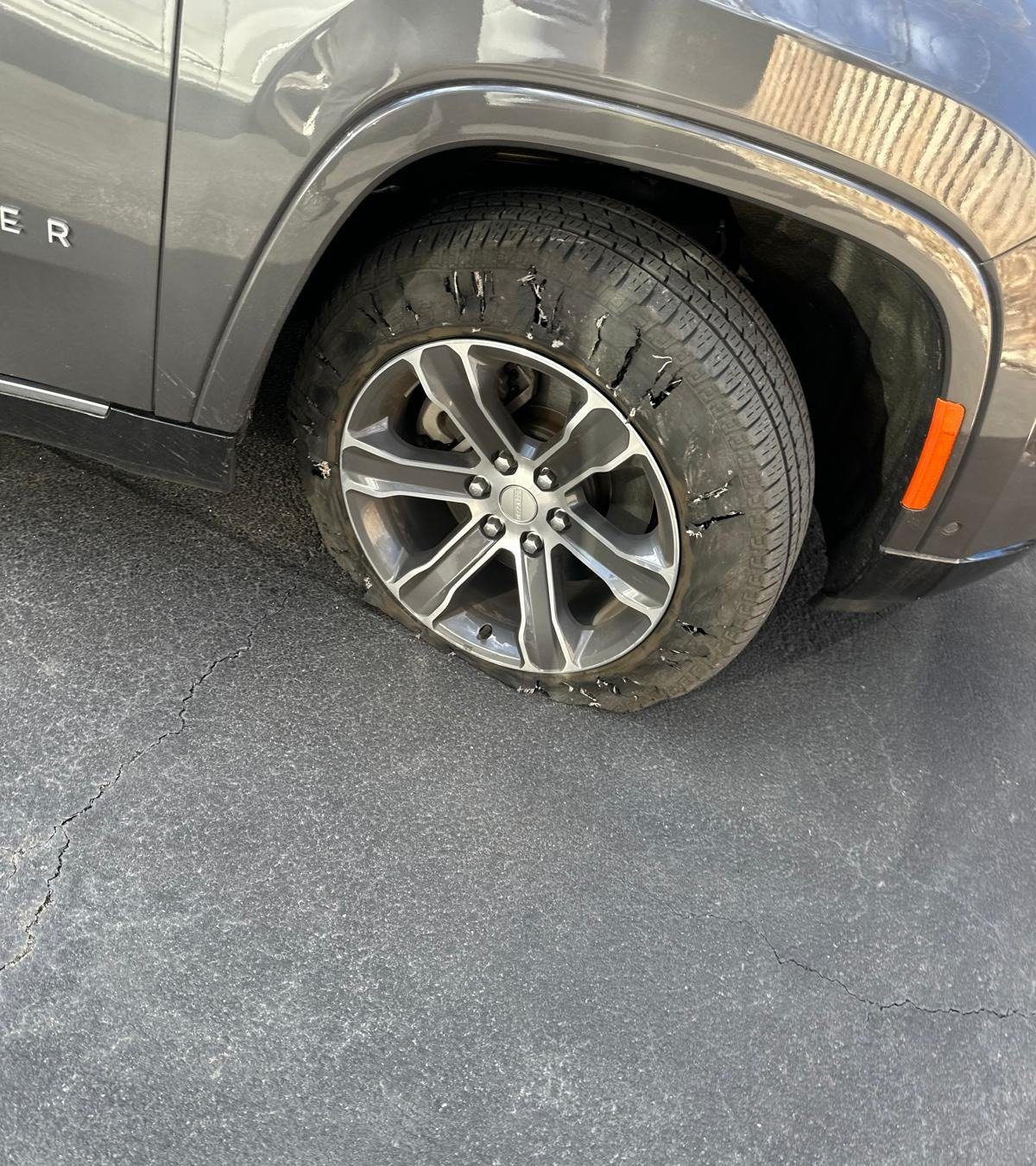
What to do with a flat tire: 7 situations at a glance
| Your situation | What to do |
|---|---|
| Tire goes flat while you are driving | Ease off the gas, steer straight, signal and pull off the road. No hard braking. |
| On a highway shoulder | Get safe, then call. Stay buckled in with hazards on if you cannot get well away from traffic. |
| Parked, safe spot, good spare | Change it yourself, or call if the lug nuts or jack fight back |
| Low but not flat, no damage you can see | Add air and watch it; a slow leak still needs a check |
| Nail or screw in the tread | Often repairable: leave the nail in and do not drive on it flat |
| Cut or bulge in the sidewall | Replace the tire; sidewalls are not repaired |
| No spare in the car | Repair on site if possible, or the tire goes to a shop and comes back |
| Total: 4 steps every time | Get safe, be seen, check the damage and the spare, then change, inflate or call |
Repair limits from the U.S. Tire Manufacturers Association and AAA. Your owner’s manual has the final word for your car.
Step 1: what to do if you get a flat tire while driving (get safe, then call)
A tire that goes flat at speed pulls the car toward the flat side. Your job for the next ten seconds is simple:
- Hold the steering wheel firmly and keep the car straight.
- Ease off the gas. Do not slam the brakes; let the car slow down first, then brake gently.
- Signal and move to the shoulder, an exit ramp or a parking lot, whichever you can reach safely.
- On I-70, I-71, I-270 or SR-315, get as far right as the shoulder allows. If you cannot get well away from traffic, stay in the car with your seat belt on and call from there.
- If anyone is hurt or the car is stuck in a traffic lane, call 911 first.
A few hundred feet at low speed to reach a safe spot is fine. A few miles is not; more on that in can you drive on a flat tire. If the tire went with a bang, read our tire blowout guide too.
Step 2: make the car easy to see
Turn on your hazard lights as soon as you are stopped. Set the parking brake. If you have reflective triangles and can place them without walking into traffic, put them behind the car. At night, leave the parking lights on as well.
Ohio law tells drivers to move over a lane, or slow down with caution, when they pass a stopped emergency vehicle or road service vehicle with flashing lights (Ohio Revised Code 4511.213). A private car with only its hazards on is not on that list, so do not count on traffic giving you room. Never change a tire on the traffic side of a highway shoulder.
Step 3: what to do when you have a flat tire: check 3 things
Once you are safe and parked, look before you lift anything. Three answers decide the whole plan.
1. Where is the damage?
A nail or screw in the flat part of the tread is the good news version. A cut, bulge or tear in the sidewall is not repairable. If the rubber is shredded, the tire was driven flat and is done. Leave any nail where it is; it is doing a bit of the plugging for you.
2. What kind of spare do you have, if any?
Open the trunk floor, or look under the back of the car on trucks and many SUVs. You may find a full-size spare, a compact “donut”, an inflator kit with sealant, or nothing at all. Many new cars have no spare. Some have run-flat tires instead. Finding out on the shoulder is a surprise nobody enjoys, a bit like discovering the umbrella is in the other car.
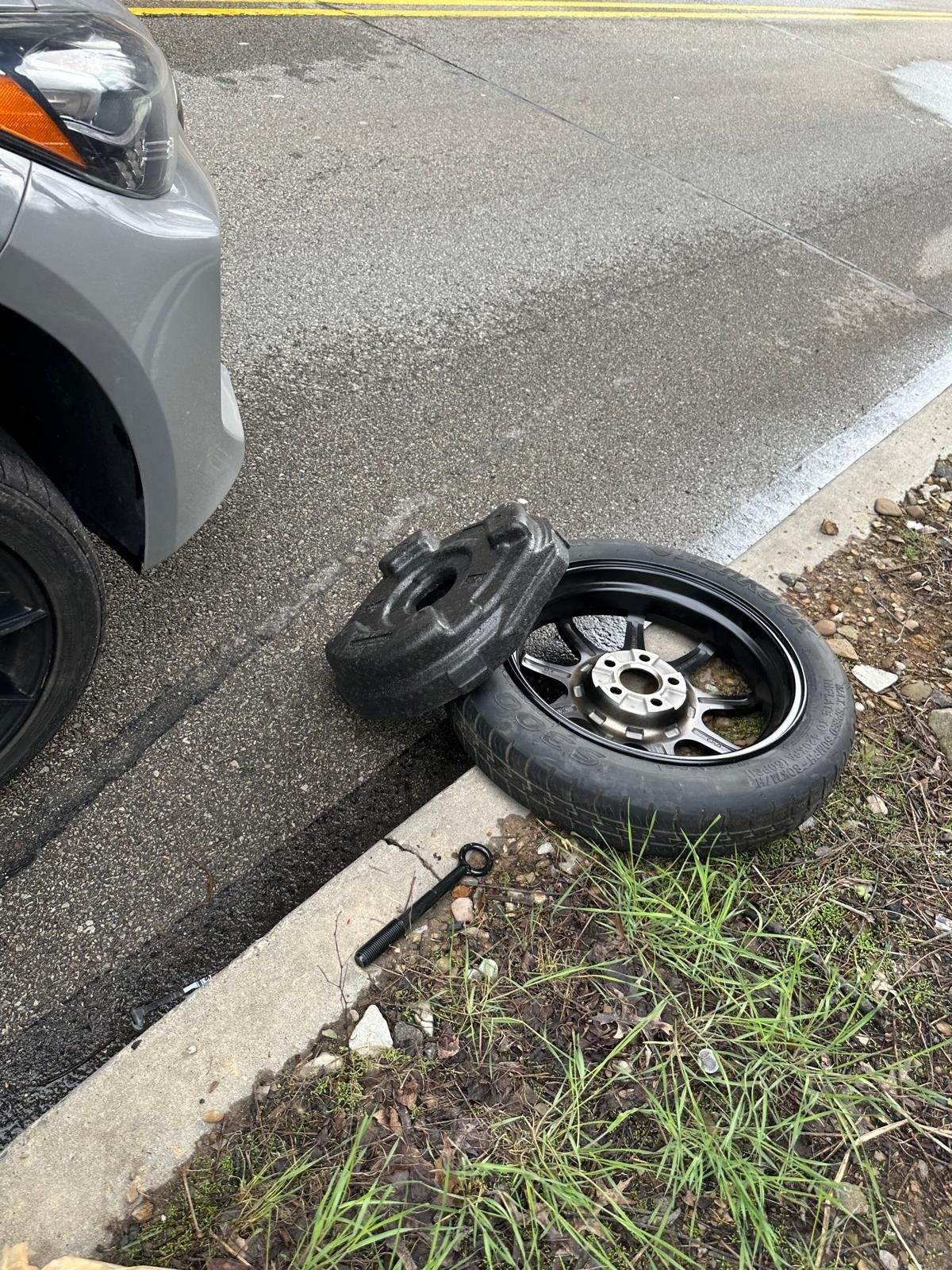
3. Do you have the tools, and the wheel lock key?
You need the jack, the lug wrench and, if your wheels have locking lug nuts, the key for them. That key usually lives in the glovebox, the center console or the spare tire well. If it is missing, see lost wheel lock key; we carry a tool that removes the lock.
Step 4: pick 1 of 3 fixes
Fix 1: change to the spare
If the car is on flat, solid ground away from traffic and the spare holds air, this is a job most drivers can do. Our step-by-step tire change guide covers loosening the nuts, jack points and the star pattern. A donut is a short-trip spare; check how long you can drive on a spare tire before you plan your week around it.
Fix 2: add air and get it checked
If the tire is low rather than flat and you can see no damage, an inflator can get you moving. Fill it to the number on the sticker inside the driver’s door, not the number on the tire. Our guide to putting air in your tires walks through it. If it is low again tomorrow, it has a leak, however innocent it looks.
Fix 3: call for help
Call when you are on a highway, the spare is flat or missing, a lug nut will not move, or you just do not want to kneel in November slush. That last reason is allowed. A sealant can is another option for a small puncture, but read does Fix-a-Flat work first: a tire full of sealant usually cannot be plugged at the roadside and goes to a shop instead.
What to do if you have a flat tire and no spare
No spare does not have to mean a tow. In Columbus we have three answers, depending on the damage:
- Repairable puncture: we plug it where the car is. A plug works in most cases.
- Tire beyond repair: we take the wheel to a tire shop, have the tire replaced, bring it back and fit it. That is quoted by phone.
- Replacement brought to you: we can bring a used or new tire. The dispatcher will ask for your tire size, which is printed on the sidewall (see tire size explained).
Take a photo of the tire size before you call. It saves a lot of squinting at a sidewall in the dark.
Car flat tire: plug, patch or replace?
The U.S. Tire Manufacturers Association limits repairs to the tread area, with a puncture no larger than 1/4 inch (6 mm) across (USTMA). AAA says a hole in the sidewall or shoulder is unsafe to repair, and a tire driven flat may be damaged inside even if it looks fine (AAA).
Our on-site repair is a plug, and it works in most cases. The industry standard for a permanent repair is a plug-patch fitted from inside the tire at a shop; USTMA calls a plug alone an unacceptable repair, and AAA calls it a temporary, emergency fix. We tell you which one your tire needs, even when the answer is the cheaper job. For the do-it-yourself version, see how to plug a tire.
Nails, for the record, are never in the middle of the road where you could avoid them. They wait in the one spot your tire was always going to roll over.
The flat that turned into a blowout on I-270 North
Get safe, then call. One of our late-October calls shows why the first step matters. An engineer was driving home from a work site and likely picked up a nail. The tire lost air as she drove, she kept going, and it blew. She called from I-270 northbound in Columbus.
We put her spare on in under 30 minutes. The shoulder was tight, so we used her car’s own jack instead of our floor jack, because speed mattered more than comfort that close to traffic.
The lesson: when a tire starts losing air, pull over as soon as it is safe. A nail in the tread can often be plugged. The same tire driven until it blows is a new tire.
5 mistakes that turn a flat into a bigger bill
- Driving on it “just to the next exit”. A short distance at low speed is fine. Miles on a flat cost you the tire, and sometimes the wheel.
- Pulling out the nail. It is the only thing slowing the leak.
- Jacking the car on soft ground or a slope. Grass, gravel and hills move. Use solid, flat pavement; see where to put a jack on a car.
- Treating a donut like a real tire. It is a bridge to the tire shop, not a new lifestyle.
- Skipping the spare check at home. Check its pressure when you check the other four. The spare does not complain when it is flat. It waits until you need it.
When you do not need us, and when you do
If you are parked somewhere safe, the spare holds air and the lug nuts come loose, you do not need us. Change it, drive gently to a tire shop and have the flat looked at. That is the cheapest flat tire there is.
Call us when the car is on a highway shoulder, the spare is flat or missing, a lug nut or wheel lock will not come off, or you simply would rather not. Through our Columbus tire change service, putting on your spare is estimated at $85 to $175.
An on-site tire repair is estimated at $75 to $150. A dispatcher confirms the price before anyone heads your way, and a highway location can cost more. We work 6 AM to 8 PM daily in the Columbus area, and our average arrival is about 32 minutes, depending on traffic, weather and location. For a breakdown that is not a tire, see what to do if your car breaks down on the highway.
Frequently asked questions
What should you do immediately after getting a flat tire?
Hold the wheel straight, ease off the gas and let the car slow down without hard braking. Signal and pull as far off the road as you can, then turn on your hazards. On a highway, get safe first and call from inside the car if you cannot get well away from traffic.
Can I drive on a flat tire to a gas station?
Only if it is very close and you go slowly, and even then you may ruin the tire. AAA warns that driving on a flat can destroy the sidewall structure, even when no damage shows. A tire that could have been plugged often ends up as a replacement after a mile on the rim.
Should I pull the nail out of my tire?
No. The nail is partly plugging the hole, and pulling it usually turns a slow leak into a flat. Leave it in, add air if you can, and get the tire looked at.
What do you do if you get a flat tire and have no spare?
Check whether the car has a tire inflator kit in the trunk instead of a spare. If not, call for help. In Columbus we plug the tire on site if it can be repaired; if not, we take it to a tire shop, have it replaced and bring it back to fit it.
Can a flat tire be repaired, or does it need replacing?
A puncture in the tread up to 1/4 inch across can usually be repaired, according to the U.S. Tire Manufacturers Association. Damage in the sidewall or shoulder, a larger hole, or a tire driven flat means a new tire.
Who do I call when I get a flat tire?
If anyone is hurt or the car is in a traffic lane, call 911. Otherwise call a roadside service, your insurer's or car maker's roadside line if you have one, or a tire shop if the car is parked safely. In Columbus you can call Roadmate at (380) 288-2822, 6 AM to 8 PM daily.
The bottom line
When you get a flat tire, get safe first, then make the car easy to see. Check where the damage is, what spare you have and whether the tools and wheel lock key are there. Then change it, inflate it or call. Stop early: a nail in the tread is often a plug, while a tire driven flat is a new tire.
Flat tire in Columbus?
Call (380) 288-2822, 6 AM to 8 PM daily, Eastern Time. A dispatcher confirms the price and an arrival estimate before anyone heads your way.
Check your spare this weekend. It has been waiting patiently for some attention.